Cork Bark Elm Bonsai Care
Ulmus parvifolia 'Corticosa'
The cork bark elm is a Chinese elm cultivar with the same beginner-proof, fast, forgiving nature - plus deeply ridged, corky, ancient-looking bark that develops young. All the ease of a Chinese elm, with instant character.
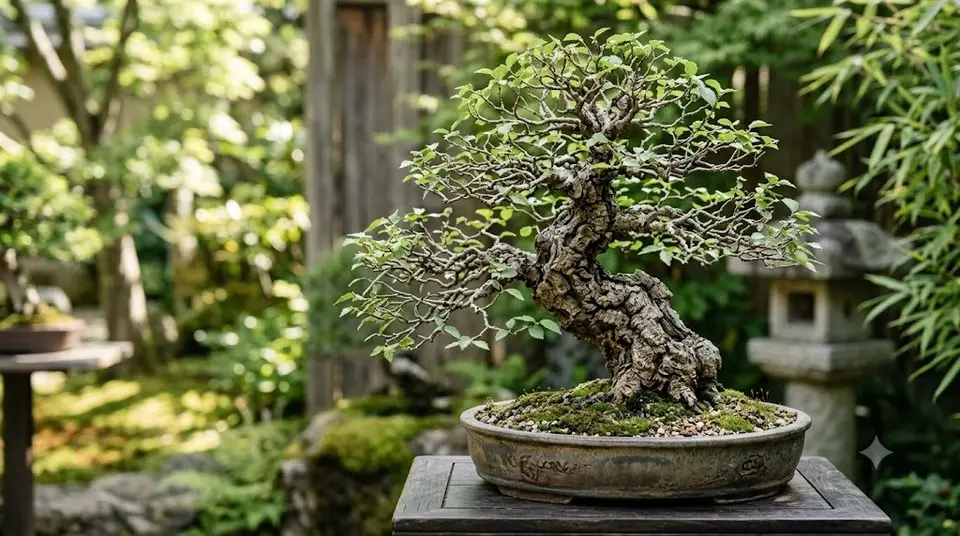
The cork bark elm gives you everything that makes the Chinese elm the great beginner's bonsai - vigour, fast fine ramification, tolerance of hard pruning, and adaptability to indoors or out - with one glorious bonus: deeply fissured, corky, ancient-looking bark that develops on quite young trees. It is the shortcut to a tree that looks a century old in a handful of years, and it is just as forgiving as its plain-barked parent.
Overview
A Chinese elm cultivar with rugged, deeply ridged corky bark that ages fast, plus tiny serrated leaves and superb fine ramification. As tough and forgiving as the Chinese elm - character included.
Light & position
Bright light - a very sunny windowsill indoors, or a good spot outdoors with some shade from fierce sun. Pick indoor or outdoor and keep it consistent.
Watering
Keep the soil moist but not soggy - water thoroughly when the surface starts to dry. Thirsty in summer, possibly daily; reduce in winter.
Pruning & shaping
Its great strength: cut back hard and it buds back all over, building fine twigging fast. Trim new shoots to one or two leaves through the season. Ideal for practising clip-and-grow, and the corky bark rewards even a young trunk.
Wiring
Young shoots wire well and set quickly; watch for wire biting into the thickening bark. Much shape is built by pruning.
Repotting & soil
Repot every 1-2 years in spring into free-draining bonsai soil, trimming roots. Elms recover very well from root work.
Feeding
Feed regularly through the growing season; the vigorous growth is hungry. Ease off in winter, especially if kept cool.
Winter & seasonal care
Adaptable: indoors it stays semi-evergreen; outdoors in a mild climate it takes a cool rest and may drop some leaves, which is healthy. Protect the pot from hard frost. Keep conditions consistent.
Common problems & pests
Leaf drop from a sudden change of conditions is common but recovers. Blackspot, aphids and red spider mite can appear. Root rot from constantly wet soil is the main real danger.
FAQ
Indoor or outdoor? Both work - pick one and keep conditions consistent, like any Chinese elm.
Does the corky bark come naturally? Yes - it's a genetic trait of this cultivar and develops even on young trunks, giving instant age.
Bonsai tools and training wire are sharp - keep them away from children. Some bonsai species (and their sap, leaves or seeds) are toxic to pets if chewed; check before keeping one where animals reach. This is general growing guidance; specifics vary by climate and individual tree.
Kit for bonsai work
Links go to Amazon or a partner store (such as Adagio Teas) and may earn us a commission at no extra cost to you. As an Amazon Associate we earn from qualifying purchases. We link gear types, not sponsors' picks: you choose the exact product.