Brush Cherry Bonsai Care
Syzygium paniculatum
The brush cherry is a handsome, easy bonsai with glossy leaves flushed coppery-red when new, fluffy white flowers and edible berries - happy indoors in a bright spot or outside in warm, frost-free weather.
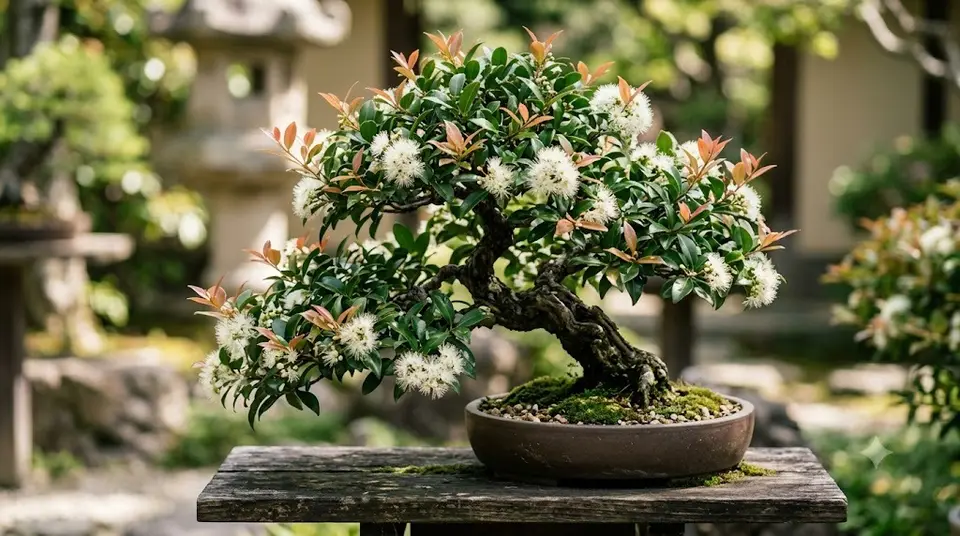
The brush cherry is a lush, glossy-leaved bonsai grown for its flushes of coppery-red new growth, its fluffy little white powderpuff flowers, and the small edible reddish berries that can follow. Tough and fast, it takes hard pruning well and thrives in a bright indoor spot or outdoors where it is frost-free. It is one of the more rewarding, forgiving flowering bonsai for a beginner.
Overview
A vigorous subtropical evergreen with glossy leaves, coppery-red new growth, white powderpuff flowers and small edible berries. Fast, tough and takes hard pruning - a rewarding, forgiving choice.
Light & position
Bright light - a sunny windowsill indoors, or outdoors in warm, frost-free weather. Good light keeps growth compact, colours the new leaves and encourages flowering.
Watering
Keep the soil evenly moist but not soggy; it likes more consistent moisture than many bonsai and dislikes drying out completely. Water when the surface starts to dry; reduce a little in winter.
Pruning & shaping
Vigorous and back-buds readily, so cut back regularly to build dense ramification and enjoy repeated flushes of red new growth. Pruning after flowering keeps it tidy while allowing the blooms.
Wiring
Young shoots wire well and set quickly; the bark marks, so remove wire in time. Much shaping is also done by pruning given its vigour.
Repotting & soil
Repot every 1-2 years in spring into free-draining bonsai soil, trimming roots. It recovers well from root work.
Feeding
Feed regularly through the growing season with a balanced feed for its fast growth; ease off in winter, more so if kept cooler.
Winter & seasonal care
Frost-tender: indoors keep it above about 10°C, bright and away from cold draughts; outdoors year-round only where frost-free. Bring it in before the first frost.
Common problems & pests
Leaf drop from a sudden change or from drying out is the usual complaint. Scale, aphids and, outdoors, psyllids can appear. Root rot from constantly wet soil is the main danger despite its love of moisture.
FAQ
Indoor or outdoor? Both work while frost-free - a bright indoor spot, or outside in warm weather.
Are the berries edible? Yes - the small reddish berries of the brush cherry are edible, though it's grown mainly for its foliage and flowers.
Bonsai tools and training wire are sharp - keep them away from children. Some bonsai species (and their sap, leaves or seeds) are toxic to pets if chewed; check before keeping one where animals reach. This is general growing guidance; specifics vary by climate and individual tree.
Kit for bonsai work
Links go to Amazon or a partner store (such as Adagio Teas) and may earn us a commission at no extra cost to you. As an Amazon Associate we earn from qualifying purchases. We link gear types, not sponsors' picks: you choose the exact product.