Bahama Berry Bonsai Care
Nashia inaguensis
The Bahama berry (moujean tea) is a prized indoor bonsai with tiny aromatic leaves that smell of vanilla and citrus, quick-gnarling bark, tiny white flowers and orange berries - lovely, but it wants steady warmth, humidity and moisture.
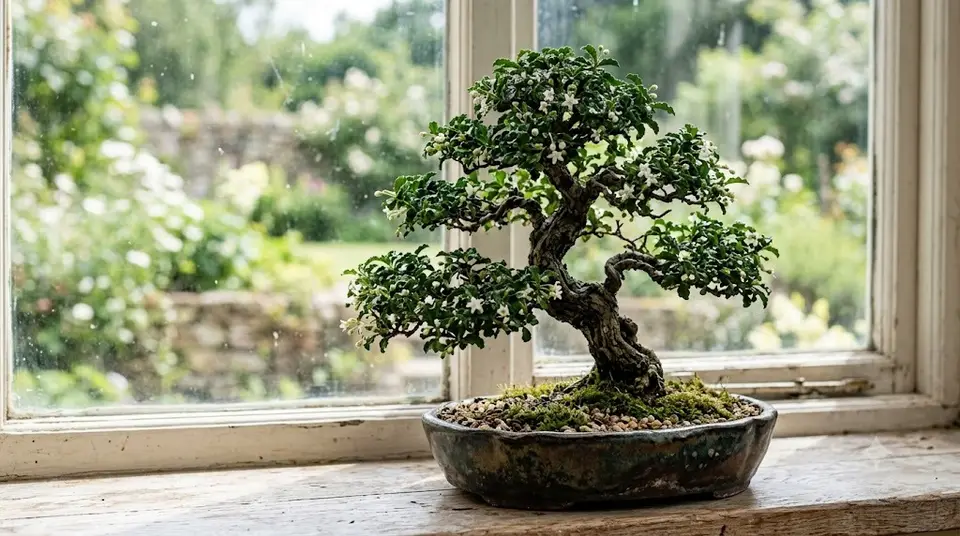
The Bahama berry, or moujean tea, is a connoisseur's indoor bonsai: minute crinkled leaves that release a sweet vanilla-citrus scent when brushed, bark that gnarls and ages remarkably fast, plus tiny fragrant white flowers and little orange berries. It packs the look of an ancient tree into a tiny plant - but it is thirsty and warmth-loving, and sulks if it dries out or chills. Reward its needs and it is a fragrant jewel.
Overview
A tropical Caribbean shrub with tiny aromatic leaves, fast-gnarling bark, tiny white flowers and orange berries - superb for small (shohin) bonsai, but demanding about warmth, humidity and moisture.
Light & position
Bright light (a sunny windowsill) with steady warmth and good humidity. It can summer outdoors in warm, sheltered conditions.
Watering
Keep the soil consistently moist - Bahama berry is thirsty and drops leaves fast if it dries out. Never let the fine roots dry through, and never leave it waterlogged. A humidity tray helps.
Pruning & shaping
Trim little and often through the growing season - it back-buds readily and the tiny leaves reduce to make a convincingly ancient canopy. The bark thickens and fissures unusually quickly.
Wiring
Young shoots wire well; work while flexible, as older twigs are brittle. Watch for marks on the thin bark.
Repotting & soil
Repot every 1-2 years in spring into free-draining but moisture-retentive bonsai soil, trimming roots modestly. Keep it warm and humid afterwards.
Feeding
Feed regularly at modest strength through the growing season; ease off in winter.
Winter & seasonal care
A warmth-lover: keep it indoors above about 15°C in winter, bright, humid and away from cold draughts and radiators. It takes no cold dormancy.
Common problems & pests
Leaf drop from drying out, cold draughts or low humidity is the classic complaint - steadiness and moisture fix it. Spider mite in dry indoor air; whitefly and scale can appear. Root rot from soggy soil is a danger despite its thirst.
FAQ
Why do the leaves smell? Brush them and they release a sweet vanilla-and-citrus scent - the leaves are even used to make a tea.
Why is it dropping leaves? Almost always drying out, low humidity or a cold draught - keep it warm, humid and evenly moist.
Bonsai tools and training wire are sharp - keep them away from children. Some bonsai species (and their sap, leaves or seeds) are toxic to pets if chewed; check before keeping one where animals reach. This is general growing guidance; specifics vary by climate and individual tree.
Kit for bonsai work
Links go to Amazon or a partner store (such as Adagio Teas) and may earn us a commission at no extra cost to you. As an Amazon Associate we earn from qualifying purchases. We link gear types, not sponsors' picks: you choose the exact product.