Plant ID Apps Compared
Plant identification apps compared - PictureThis, Pl@ntNet, Seek, Google Lens, iNaturalist: what each is for, what a published test on toxic plants found, how to take a photo an app can use, and why no app should decide what you eat.
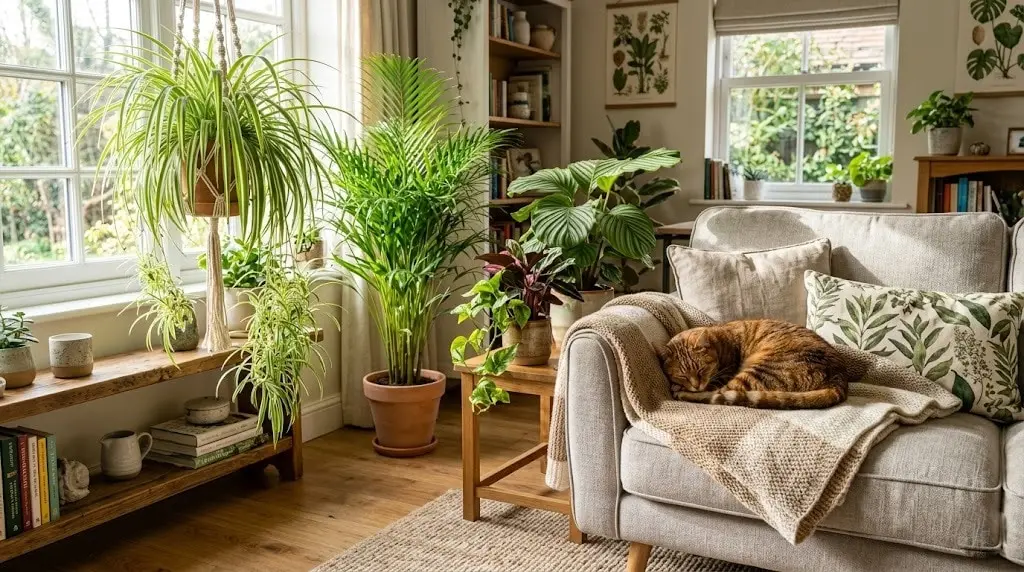
Point a phone at a leaf and an app will offer a name within seconds - often right, sometimes confidently wrong. The useful questions are which app suits which job, and how far to trust the answer. If you would rather match a plant to your conditions than name one you already own, our plant finder approaches it from the other direction.
Not medical advice. This is a reading guide, not health advice. Any plant can set off a reaction in some people, herbal teas can interact with medicines, and misidentification is a real risk - check with a doctor or pharmacist if you take medication or are pregnant, and never eat a plant you have not identified with certainty.
We did not run an accuracy test of our own, so there are no percentages of ours on this page. Where a figure appears, it comes from a published study and is linked.
How These Apps Work
An app compares your photo with a large set of labelled plant pictures and returns the species it finds most similar, usually with a few alternatives. That has three consequences:
- It can only suggest plants it has pictures of. An app built mostly on wild European plants will be weaker on tropical houseplants, and the reverse.
- The part of the plant matters. Flowers and fruit are more distinctive than a single leaf.
- The photo matters. A blurred, dim or cluttered picture gives a poor answer in any app.
The Five Apps
PictureThis
A commercial app aimed at gardeners and houseplant owners. Besides a name, its maker says it gives information on disease, toxicity and care. It is free to download and try; the full set of features is sold by subscription, and the app prompts for it. Check the price in your own app store before you start a trial.
Suits: someone who wants names and care notes in one place and is willing to pay.
Pl@ntNet
A citizen-science project. Its site describes it as open and free to everyone, funded by donations, and run by four French research organizations - CIRAD, INRAE, Inria and IRD. You choose a regional flora and photograph a leaf, flower, fruit or bark; photos that users share feed the project’s open data. It gives a name and pictures to compare, not care advice.
Suits: wild plants, weeds and trees; anyone who wants a free app with no subscription.
Seek
A simpler app from the team behind iNaturalist, aimed at families and beginners: point the camera and it suggests what you are looking at - plants, and also animals and fungi - with badges for what you find. When it is not confident it stops at a broader group, such as the genus, which is honest and occasionally frustrating.
Suits: children, walks, and learning the common species around you.
Google Lens
Not a plant app, but the image search built into Google’s apps and many Android cameras. It will name common plants and show you web results at the same time. It also returns shopping results, and it keeps no plant list for you.
Suits: a quick first guess with nothing new to install.
iNaturalist
A community as much as an app. You upload an observation, the software suggests a name, and other people - some of them expert botanists - confirm or correct it. That takes hours or days, and it is the only option here in which a person checks the answer. Observations are public by design.
Suits: wild plants where you want a reliable identification and are not in a hurry.
How Accurate Are They?
It depends on the plant, the photo and the app, and independent tests are few. One was run by toxicologists, who photographed 17 commonly encountered toxic plants with three apps - at least ten specimens of each species, with a botanist confirming the identifications. PictureThis identified every specimen correctly for 10 of the 17 species, Pl@ntNet for 8 of the 17, and PlantSnap for 1 of the 17.
Read that both ways. The better apps were often right. And the best of them still made at least one mistake on 7 of 17 poisonous species - which is exactly why an app’s answer is a suggestion, not a verdict.
When Apps Struggle
- Cultivars. An app will usually stop at the species - Monstera deliciosa - without telling one variegated form from another.
- Hybrids. Garden plants are often crosses; the app picks the nearest parent.
- Seedlings and young plants, whose leaves differ from the adult’s.
- Poor photos.
- Fragments - a single leaf with no context.
For a difficult plant, photograph several parts - the whole plant, a leaf from above and below, a flower if there is one - and try more than one app. When two agree, check the result against a full description: our houseplant care library has profiles for the common ones.
Free or Paid?
Pl@ntNet, Seek, Google Lens and iNaturalist cost nothing. PictureThis is the one that charges, for convenience and care information more than for the name itself. A sensible way to begin is with a free app, adding a second for a cross-check, and paying only if you find you want the extras.
Privacy
A photo sent for identification leaves your phone, and a photo taken outdoors may carry its location. Before sharing:
- Read what the app says it does with your photos. Pl@ntNet and iNaturalist exist to build shared, open datasets, and iNaturalist observations are public.
- Check the location settings if you photograph plants at home or rare plants in the wild.
A Practical Routine
- First try: a free app, with a clear photo of a flower or a whole leaf.
- Second opinion: a different app.
- For a wild plant that matters: post it to iNaturalist and wait for people to confirm it.
- Then check the name against a proper description before you act on it.
Frequently Asked Questions
Which is the most accurate plant ID app?
There is no settled answer. In the one published comparison we cite, on toxic plants, PictureThis was correct more often than Pl@ntNet, and neither was right every time. Results depend heavily on the plant and the photo.
Is there a free alternative to PictureThis?
Pl@ntNet, Seek, Google Lens and iNaturalist are all free.
How do I take a photo that gets a good identification?
In focus, in good light, with the plant filling the frame and a plain background if you can manage it. Include a flower or fruit when there is one, and take separate pictures of different parts.
Can I use an app to tell edible plants from poisonous ones?
No. In the study above, even the best app misidentified at least one specimen of 7 out of 17 toxic species. Never eat a plant on the strength of an app. Use a field guide and a person who knows the plants.
Can an app tell me if a plant is safe for my pets?
An app gives you a name. Look that name up in the ASPCA’s plant lists - our pet-safe houseplants guide links to them.
Recommended Gear on Amazon
- Phone macro lens - browse current options and reviews on Amazon.
- Houseplant identification book - browse current options and reviews on Amazon.
- Waterproof plant labels - browse current options and reviews on Amazon.
As an Amazon Associate, we earn from qualifying purchases - at no extra cost to you. This helps us keep producing free, in-depth guides.