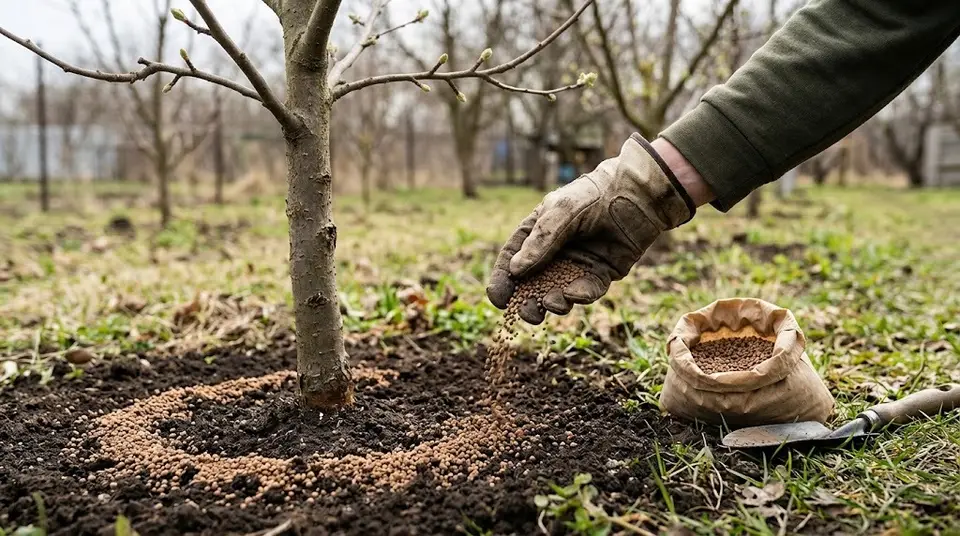
Fertilizer for Pine Trees and Shrubs
When pines, arborvitae and other evergreens need fertilizer (often never), when to apply it and how much, from extension experts, plus fertilizers for evergreens and acid-loving shrubs compared from their makers' labels.
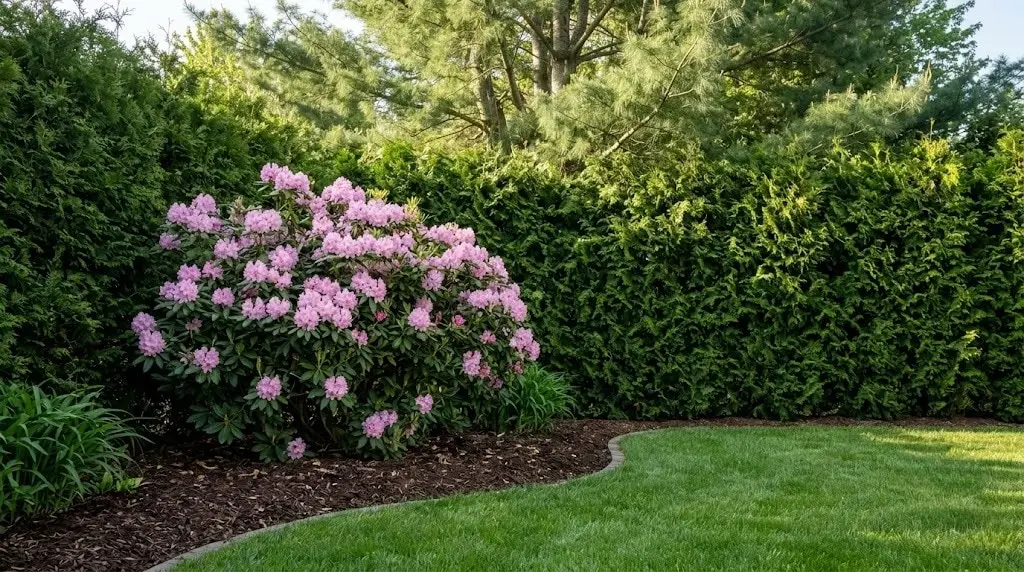
Pines, arborvitae and other established evergreens usually need no fertilizer at all. An Ask Extension answer from Clackamas County, Oregon, says that mature trees and shrubs normally need fertilizing only if a soil test shows a missing nutrient or the plants show signs of stress (Ask Extension, Oregon). When a young conifer does need feeding, an extension expert answering from Colorado advises a complete fertilizer in early spring, before new growth starts, at half the rate on the label, and never after July (Ask Extension, Colorado).
Do Your Trees and Shrubs Need Fertilizer?
Conifers need fewer nutrients than broadleaved trees, the Colorado answer says, so they do not need frequent fertilizing, especially native species. Once they are mature, they need it only if a soil test shows a shortage. The Oregon answer adds that where rain is heavy, as west of the Cascades, the nutrient that runs short is usually nitrogen, because it dissolves in water. It also points to pH: if the soil pH is too high, plants struggle to take up nutrients, which a soil test will show.
When to Fertilize Pines and Arborvitae
- Early spring, before new growth begins. Both answers agree: the Colorado expert says after the snow melts and before growth starts; the Oregon one says spring, before the plant’s period of growth.
- Never after July. The Colorado answer says not to fertilize conifers after July; the Oregon one warns that fall feeding can push out growth that frost then damages.
- Never a drought-stressed tree. The Colorado expert says never to fertilize drought-stressed trees. Water first.
How Much: 10-10-10 and Other Complete Fertilizers
The Colorado answer gives two ways to keep the dose low: half the rate on the fertilizer’s label, or 0.05 to 0.1 lb of nitrogen per 100 square feet, with a slow-release granular product a good choice. A 10-10-10 is a complete fertilizer of the kind it describes; at 10% nitrogen, 0.05 to 0.1 lb of nitrogen is 1/2 to 1 lb of 10-10-10 per 100 square feet. The Oregon answer notes that when nitrogen is the only thing missing, blood meal will replace it, and that a layer of compost adds nutrients and improves the soil.
Fertilizers for Evergreens and Acid-Loving Shrubs Compared
| Product | Analysis | For, as the maker lists | What the maker says | Links |
|---|---|---|---|---|
| Dr. Earth Acid Lovers 3-4-3 | 3-4-3, dry | Azaleas, camellias, rhododendrons, maples, hollies, gardenias, hydrangeas, blueberries, evergreens and ferns | Organic (OMRI listed); beneficial microbes and mycorrhizae; 4, 12 and 25 lb bags; feed containers every 6 weeks | See on Amazon · Maker’s page |
| Down to Earth Acid Mix 4-3-6 | 4-3-6, with calcium, magnesium and sulfur | Blueberries, raspberries, rhododendrons, azaleas, hydrangeas, evergreen trees and shrubs | Organic, from cottonseed meal, fish bone meal and seaweed; early spring, and again when blooms appear | See on Amazon · Maker’s page |
| Espoma Holly-tone | Not in the page text | Acid-loving plants, among them pine, spruce, fir, hemlock, juniper, holly, azaleas and blueberries | Organic, slow-release; elemental sulfur to acidify the soil; spring and fall, half the rate in fall; trees 1 lb per inch of trunk diameter, tripled from 3 in | See on Amazon · Maker’s page |
| Espoma Evergreen-tone | Not in the page text | All evergreen trees and shrubs | Organic, slow-release; elemental sulfur; spring and fall, half the rate in fall; shrubs 1 cup per foot of dripline width | See on Amazon · Maker’s page |
| Espoma Plant-tone | Not in the page text | Flowers, vegetables, trees and shrubs; the one Espoma recommends for arborvitae and boxwood | Organic, slow-release; trees and shrubs in spring and fall | See on Amazon · Maker’s page |
| Any balanced 10-10-10 | 10-10-10 | A complete fertilizer, as the Colorado answer advises | At half the label rate, or 1/2 to 1 lb per 100 sq ft (see above) | See on Amazon |
How we put this together. The advice comes from two answers by extension experts on Ask Extension, a question service of the US Cooperative Extension system, linked above. The products are compared on what each maker states on its own product page, checked on 26 October 2026; we have not trialed them on our own trees. Espoma’s pages give no analysis in their text, so those cells say so. There are no prices here: the Amazon link searches for the exact product, and we may earn a commission if you buy through it.
The makers and the extension experts do not quite agree on timing. Down to Earth says fall feeding of its Acid Mix promotes root growth and winter hardiness, and Espoma feeds its evergreen products in spring and fall at half the rate in fall; the Oregon answer warns that fall fertilizer can spur growth that frost damages. For evergreens, the extension advice to feed in spring and stop after July is the more cautious of the two.
Fruiting Trees and Shrubs
Fruit trees are a different case, with rates by tree age; see fertilizing fruit trees. Down to Earth lists mango among the fruit its Fruit Tree mix is for, and its Citrus Mix for citrus and avocados. For blueberries and other acid-loving shrubs, both products in the table above are labeled for them.
Questions About Fertilizing Trees and Shrubs
What is the best fertilizer for pine trees? Usually none, for an established tree. If a soil test or poor growth says otherwise, a complete, slow-release fertilizer in early spring at half the label rate, as the Colorado answer advises.
Is 10-10-10 good for arborvitae? It is a complete fertilizer of the kind the extension answers describe. Arborvitae does not need an acid fertilizer: Espoma says arborvitae and boxwood are evergreens that do not require acid soils, and recommends its general Plant-tone for them rather than Holly-tone. Use it in spring, at no more than 1/2 to 1 lb per 100 square feet, and only if the plant needs it.
When should I fertilize evergreens? In early spring, before new growth begins, and not after July.
Recommended Gear on Amazon
- Soil test kit - browse current options and reviews on Amazon.
- Soil pH meter - browse current options and reviews on Amazon.
- Organic compost - browse current options and reviews on Amazon.
As an Amazon Associate, we earn from qualifying purchases - at no extra cost to you. This helps us keep producing free, in-depth guides.