Grow a gourd birdhouse.
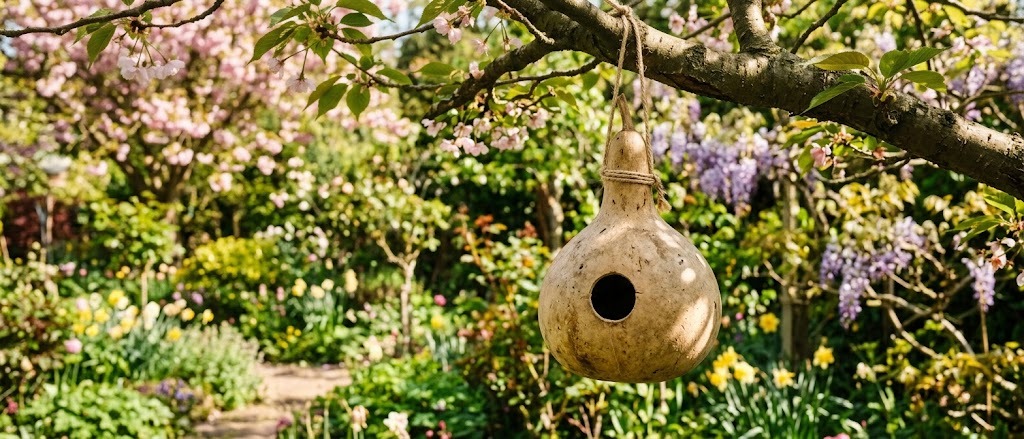
People were hanging gourds for birds long before anyone built a wooden box - purple martins in North America have nested in them for centuries. The build is honestly easy; the craft is in the growing, the curing and the one hole you have to get right.
This page starts where a cured gourd exists. For varieties to plant and the long slow cure - the part that takes a season and a winter - start at the gourd growing page and come back here in spring with something hard and rattling.
What you need
🎃 Materials
- A cured bottle gourd. Birdhouse type, fully cured: light for its size, seeds rattling, skin hard as wood. Growing your own takes a season plus a winter of curing - see the gourd page.
- Exterior finish. Outdoor paint, or simply oil - or nothing; bare gourds weather to a driftwood grey and last years.
- Hanging wire or cord. Through the neck, strong enough to survive a storm.
🧰 Tools
- Drill with hole saw. Or a sharp knife worked slowly - the entrance hole is the one cut that must be round and right-sized.
- Dust mask. Gourd dust is genuinely irritating - sand and cut outdoors, mask on.
- Sandpaper and steel wool. For cleaning the cured skin and smoothing cut edges.
The build, step by step
1Clean the cured shell
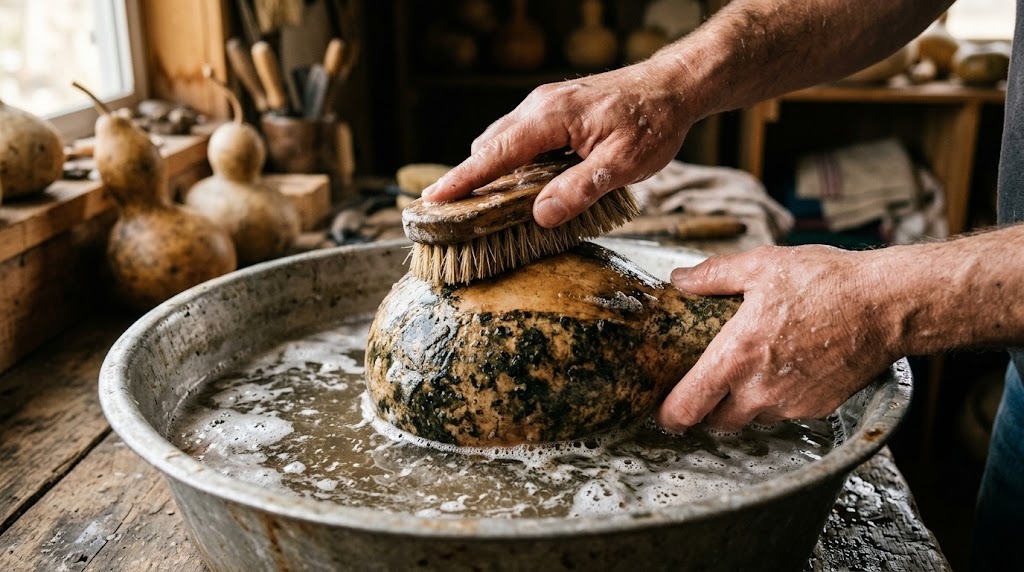
A cured gourd comes out of winter looking terrible - blotched with mould in grey and black continents. That mottling is normal and most of it is only on the surface. Soak the gourd in warm water with a splash of vinegar for fifteen minutes, then scrub with steel wool or a rough scourer until the waxy outer skin and the mould lift together, revealing the hard tan shell underneath. Some dark staining goes all the way in and stays; plenty of people like it, and paint covers it if you do not. Let the shell dry completely before any cutting.
2Drill the entrance
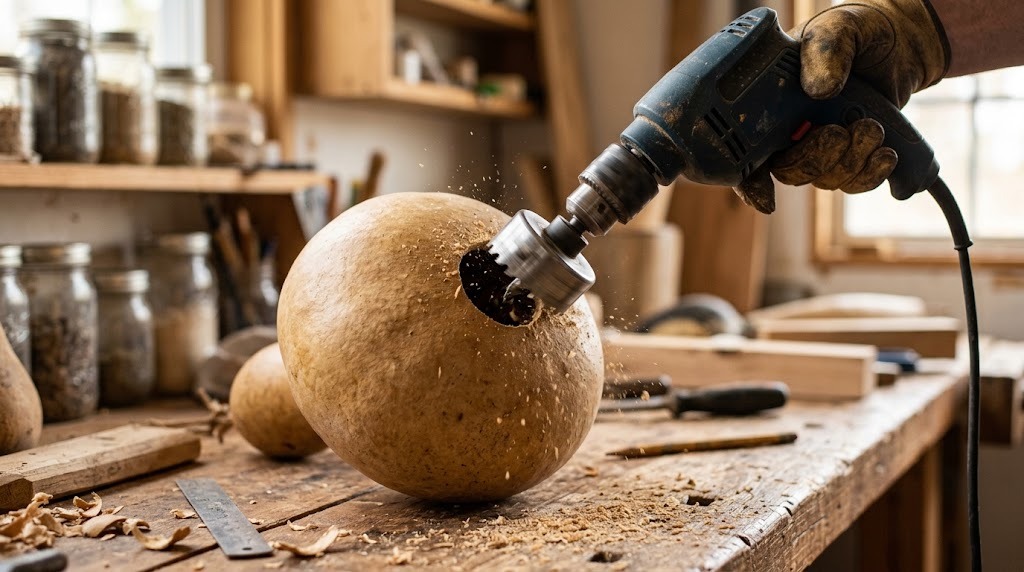
The hole size decides the tenant, and it matters more than anything else on the page. Around 1 1/8 in (29 mm) suits wrens and stays too small for house sparrows; 1 1/4 in (32 mm) opens it to chickadees, nuthatches and titmice; 1 1/2 in (38 mm) and up invites bluebirds, tree swallows - and sparrows and starlings, which is a real trade-off in some regions. Place the hole in the fat lower belly of the gourd, slightly above centre so rain cannot pool at the sill, and drill with a hole saw at slow speed, mask on. No perch: a peg below the hole helps predators and pest birds far more than the residents, and cavity nesters simply do not need one.
3Empty the inside
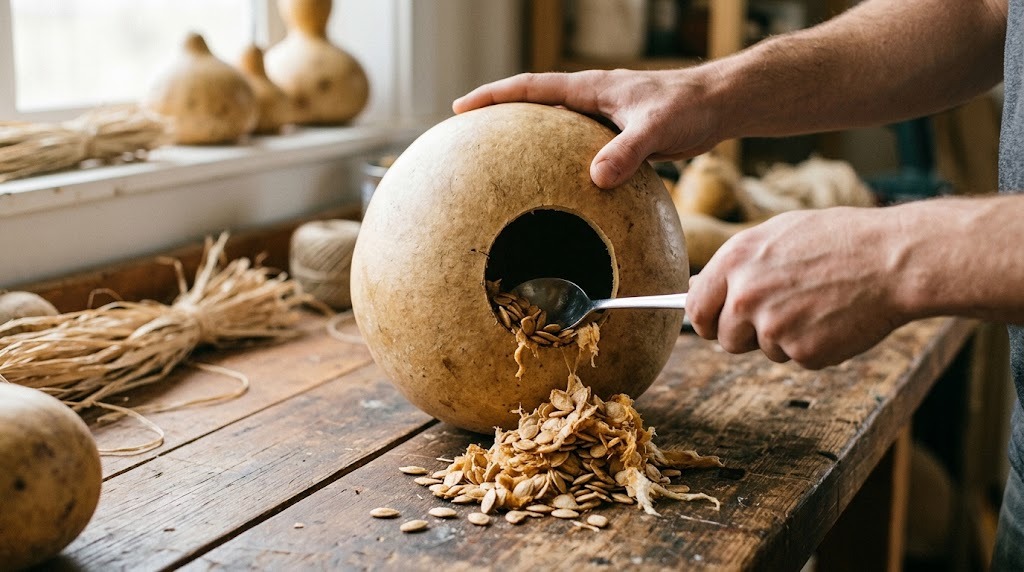
Through the entrance hole, break up the dried pulp and shake out the seeds - a long spoon, a bent wire, and patience. The papery inner membrane clings; get out what comes willingly and do not fight for the rest, the birds will not mind. Save a dozen of the flattest, plumpest seeds in an envelope: they are next year's crop, and a single vine yields more birdhouses than one garden can hang. Wear the mask for this step too - the inside dust is worse than the outside.
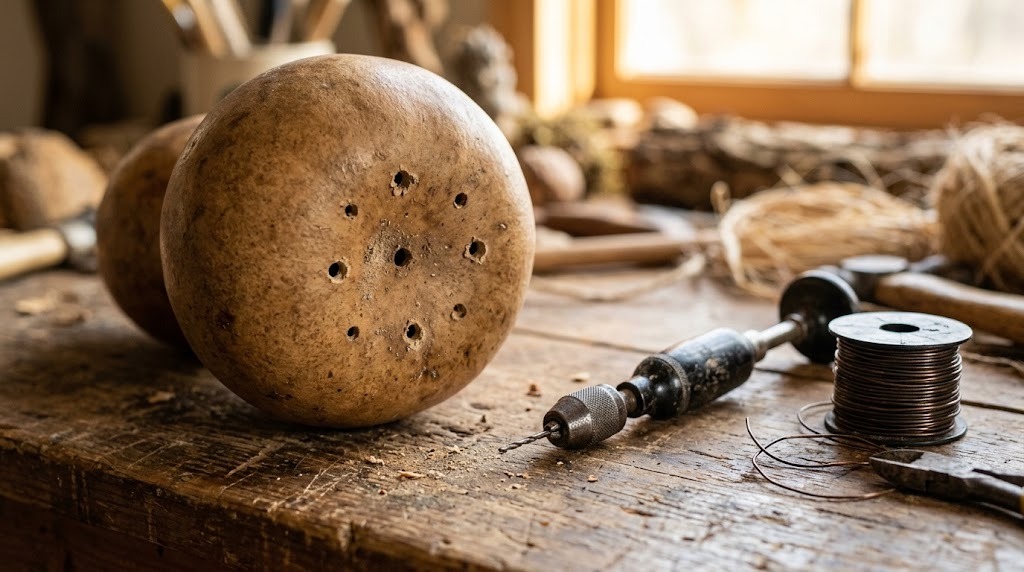
4Drainage and hanging holes
Three or four small holes (about 1/4 in) in the very bottom let rain out - a birdhouse without drainage becomes a cup, and a wet nest is a dead nest. Two holes through the top of the neck, opposite each other, take the hanging wire. Some people add two small ventilation holes high on the shoulders in hot climates. Smooth all the cut edges with sandpaper so nothing snags a feather.
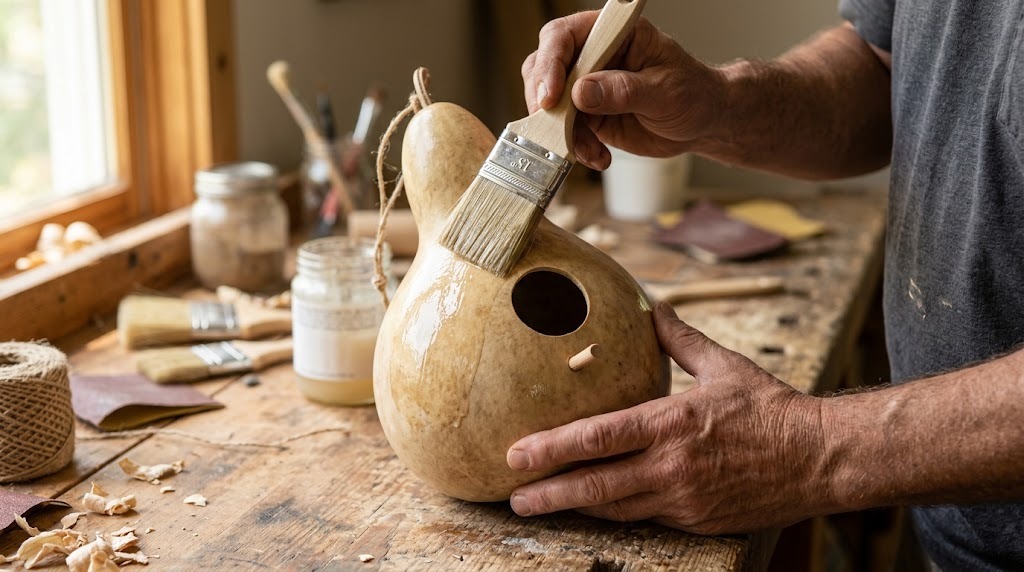
5Finish the outside
Bare gourds last surprisingly well - the shell is essentially a wooden bottle - and weather to grey over a couple of seasons. Paint extends the life and, in sun, colour matters: white or pale shades keep the interior noticeably cooler, which the traditional all-white purple-martin gourd racks of the American South figured out generations ago. Use exterior paint on the outside only; leave the inside bare. Oil or outdoor varnish is the halfway option that keeps the gourd looking like a gourd. Whatever the finish, let it cure fully in the air before hanging.
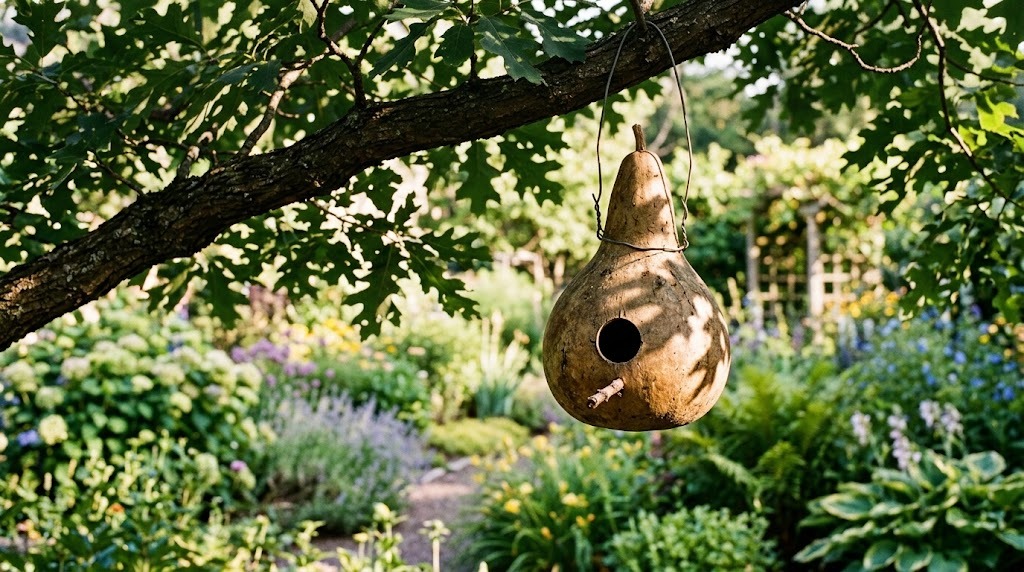
6Hang it right
Height and placement beat decoration every time: wren gourds do well at 6-10 ft near shrub cover, bluebird and swallow gourds want open ground, and everything nests better with the entrance facing away from the prevailing weather. Hang the gourd so it can swing a little - purple martins actively like swaying gourds, and most small birds tolerate it - but not where a cat or a raccoon can reach from a branch. Then leave it alone; a house checked daily is a house nobody moves into.
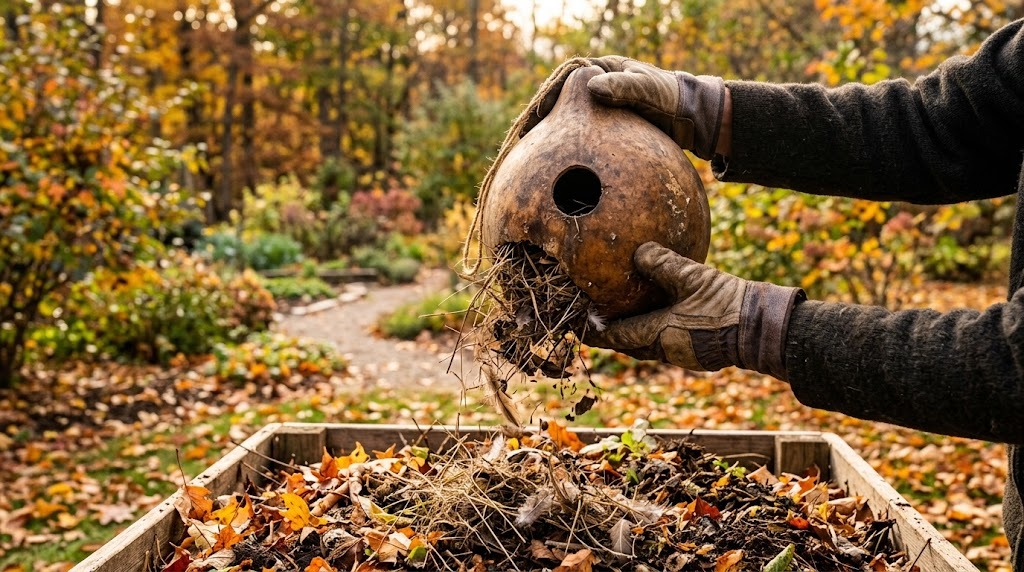
7The autumn clean-out
Each year after the last brood fledges, take the gourd down, pull out the old nest, scrub the inside with dilute vinegar, dry it in the sun and rehang or store it for spring. A well-made gourd house does five to ten seasons; when one finally cracks, its replacement is already on the vine. This is the quiet appeal of the whole craft - a birdhouse that is itself grown in the garden it serves.