Instruments from the garden.
Before brass and strings there were gourds, canes and seed pods, and most of the world's percussion is still botanical. This page builds one instrument properly - the gourd shaker, the maraca's garden ancestor - and then tours everything else a garden will play.
It is the most forgiving craft on the whole hub: an instrument that sounds wrong is retuned by pouring the seeds out and trying different ones. Children have understood this for roughly ten thousand years.
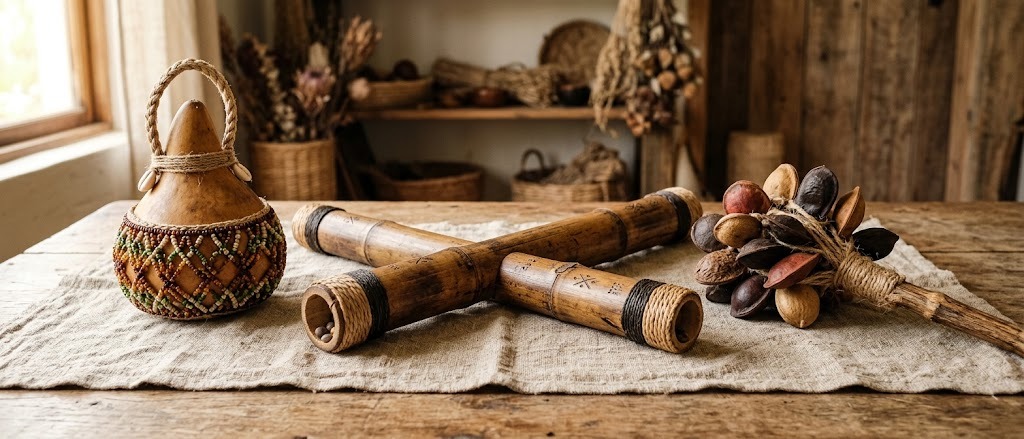
What you need
🎶 Materials
- A cured gourd with a handle shape. Dipper and bottle gourds are born maracas - a bulb with a neck to hold. Fully cured: light, hard, seeds rattling.
- Fill. The instrument is the fill. Its own dried seeds are the traditional voice; dried beans thump, rice hisses, small pebbles crack. Mix and audition.
- Glue or wax. To seal the fill hole once the voice is right.
🧰 Tools
- Drill. One small hole; a dust mask with it, as with all gourd work.
- Sandpaper. For the skin and the hole edge.
The builds, step by step
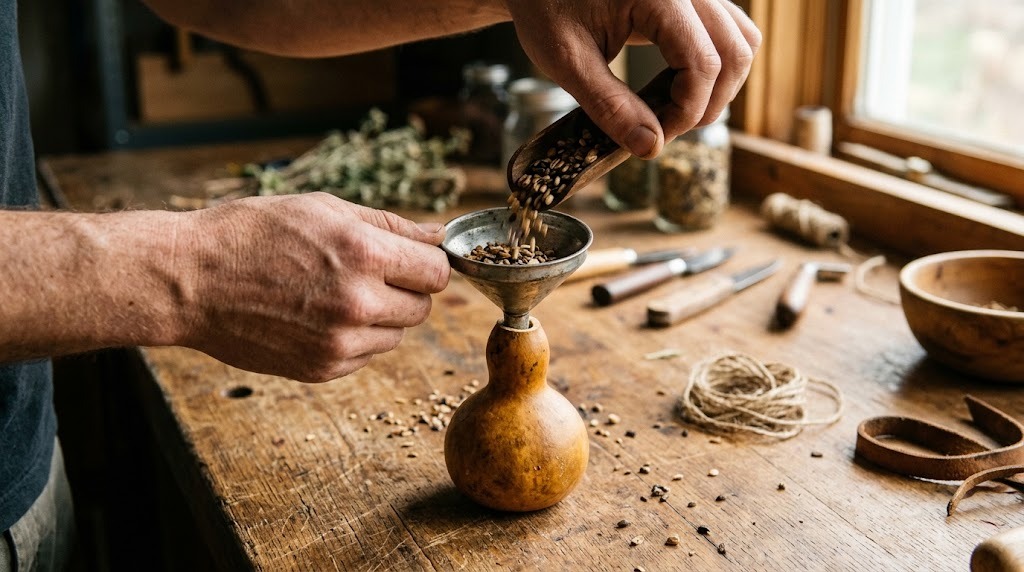
1Build a gourd shaker
The world's most-made instrument, and an afternoon's work once the gourd is cured. Clean the shell as for any gourd craft (soak, scrub, dry - mask on for the dust). Drill one small hole where it will not show, shake the loose dried pulp and original seeds out - and save those seeds. Now audition voices: pour a spoonful of fill in, tape the hole, shake, listen; empty and try the next. Fewer, larger objects give a slow fat rattle; many small seeds give a hiss like rain. When the sound makes you smile, glue a plug in the hole, sand it flush, and either wax the shell plain or burn and paint the geometric bands that make it look like it came from a market stall - because that is exactly how the ones on market stalls are made.
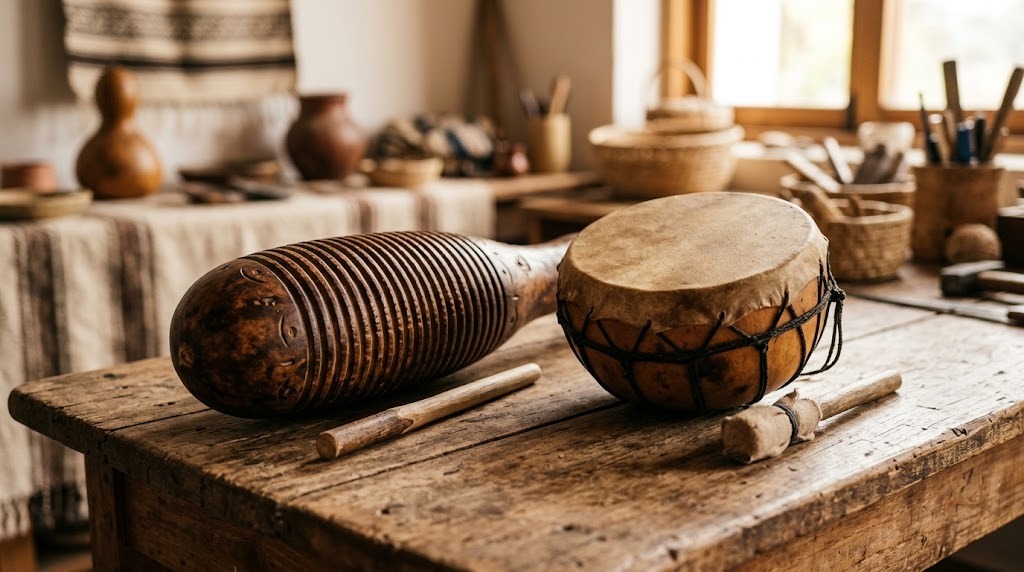
2Where gourds go from there
Once you can make a shaker, the whole gourd-instrument family opens up as variations. A shekere is a big round gourd with the rattle on the outside - a loose net of beads woven around the shell, which you can knot yourself from garden twine and seeds. A guiro is a long gourd with parallel grooves filed across it, scraped with a stick. A water drum is half a big gourd floating cut-face-down in a bowl of water, tapped. And the majestic end of the line - calabash kora bodies and sitar resonators - are the same plant grown huge, which is a multi-year gardening flex more than a woodworking one.
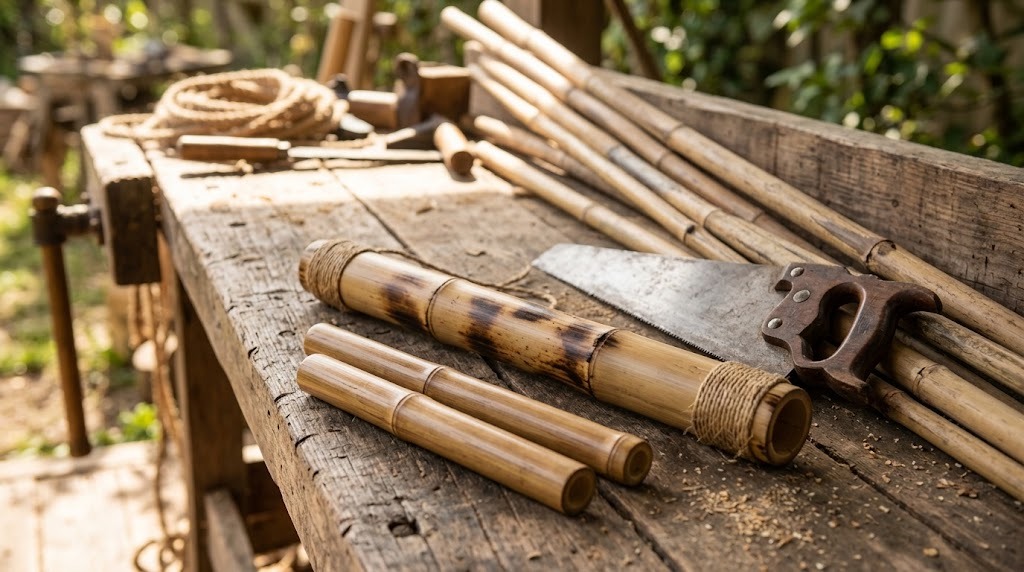
3Bamboo: the percussion section
A stand of bamboo is an orchestra waiting for a saw. Cut between the nodes and you have open tubes that clack (claves) or, hung in a row from longest to shortest on a cord, a wind chime or a rough xylophone - tune by shortening: the shorter the tube, the higher the note. Cut just below a node so the tube keeps one closed end and it becomes a stamping tube, thumped end-on against the ground, which entire Pacific musical traditions are built on. Dry bamboo rings brighter than green; split bamboo makes the slap-sticks. None of this needs a measurement, only a saw and an afternoon of listening.
4Bamboo: a simple flute, honestly described
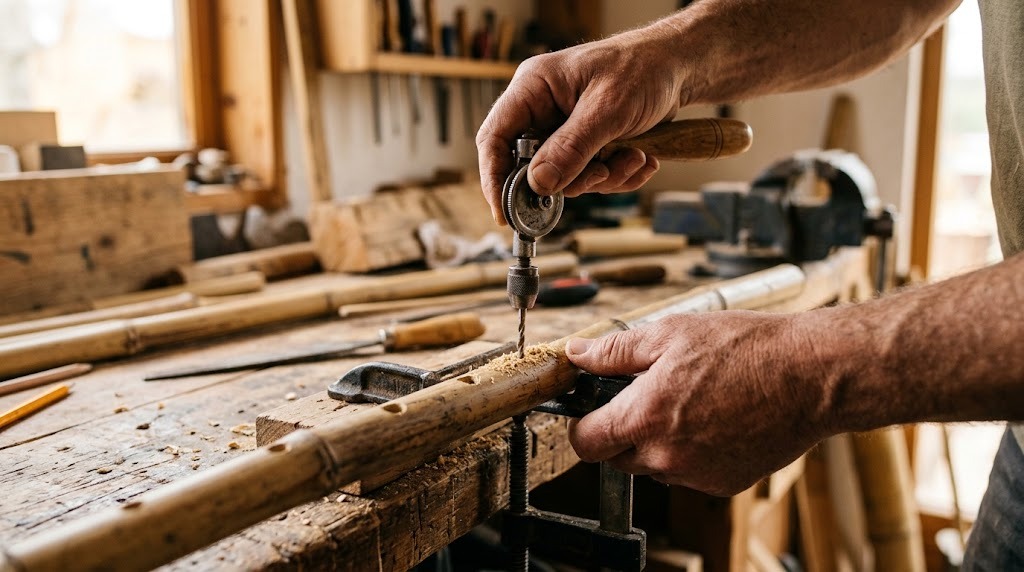
A bamboo flute is one internode with the natural node left closed at one end, a blowing hole near that closed end, and finger holes down the tube - and it is the one instrument on this page where craft meets real acoustics. The honest version: drilling holes is easy, placing them so the notes land in tune is a craft flute-makers spend years on. The garden path in: make a node-closed tube, cut the blowing edge, and enjoy it as a one-note train whistle; then, if the sound bites you, follow a proper flute-maker's hole-spacing chart for your tube's exact bore and length rather than guessing. Panpipes dodge the whole problem - one note per tube, tuned by length, no finger holes at all - and are the best first bamboo wind project for exactly that reason.
5The small stuff: pods, husks and stems
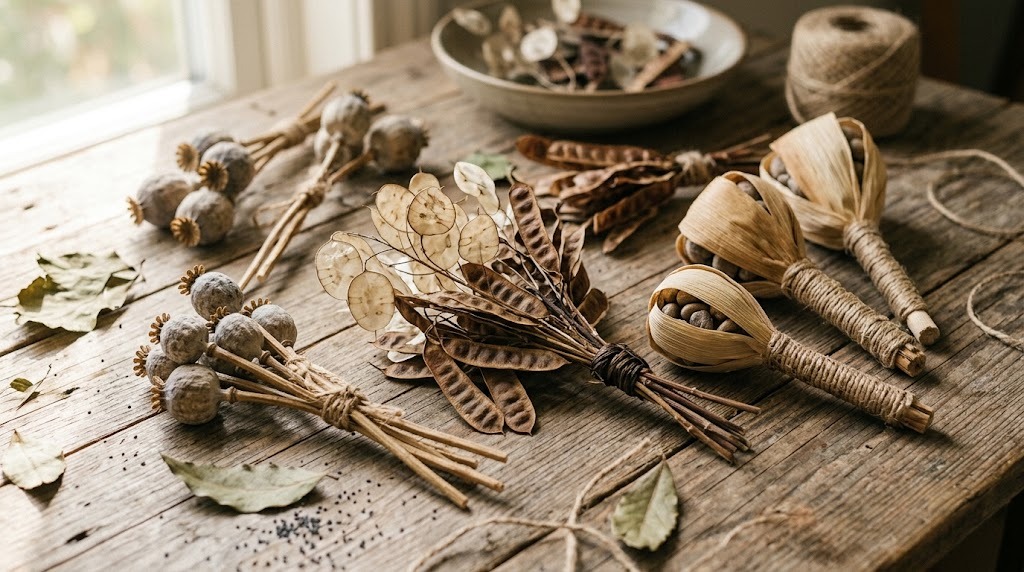
The rest of the garden joins in as found percussion. Poppy heads are nature's maracas exactly as they stand - dried on the stem, seeds inside. Big flat honesty (lunaria) stems rustle like brushes. Nigella pods rattle darkly. Corn husks braided into a tight plait and shaken give a dry whisper. Seed-filled tins are the folk shaker of every country childhood, and a row of dried okra pods strung on a cord was the original vibraslap. A basket of these on a shelf is a percussion section for a rainy afternoon, total cost nothing.
6Grow next year's band
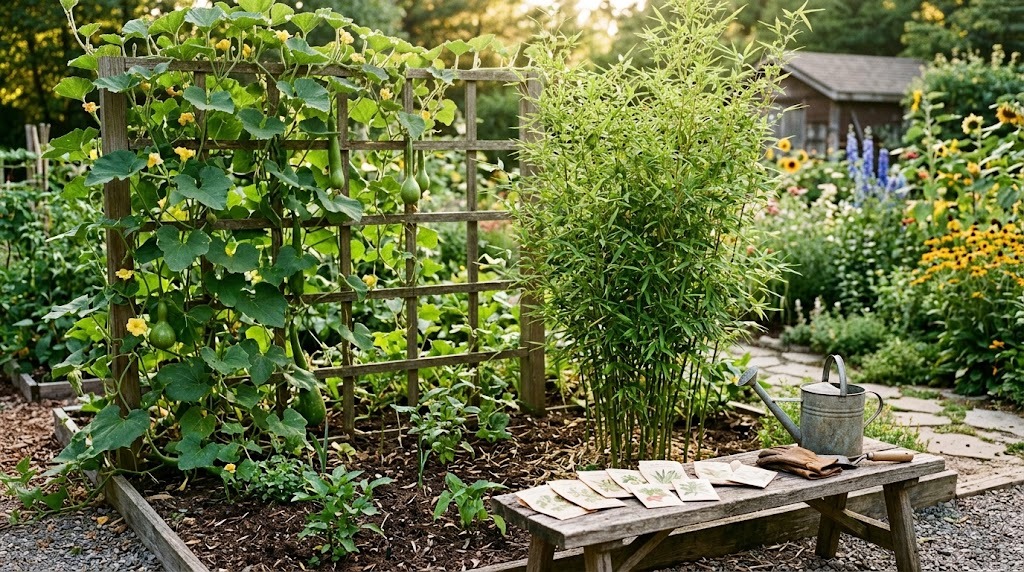
Once the bug bites, the seed order changes: a dipper gourd vine for shakers (one vine = a family's worth), a birdhouse gourd let grow big for a shekere, a patch of breadseed poppies left to dry standing, and - where climate and a contained bed allow - a clumping bamboo for the percussion section. Everything on this page except the tuned flute is child-friendly to make and impossible to make wrong, which is why plant instruments are the classic school-holiday craft across most of the world.