The plants that wash.
Before soap came in bars it grew in borders. A whole family of plants makes saponins - natural detergents that foam in water - and the gentlest of them, soapwort, is still what textile conservators trust with museum lace. This is washing you can brew like tea.
Everything taught on this page is water-infusion mild. The one soap craft that is not - real bar soap, made with lye - is described honestly at the end and deliberately not taught here.
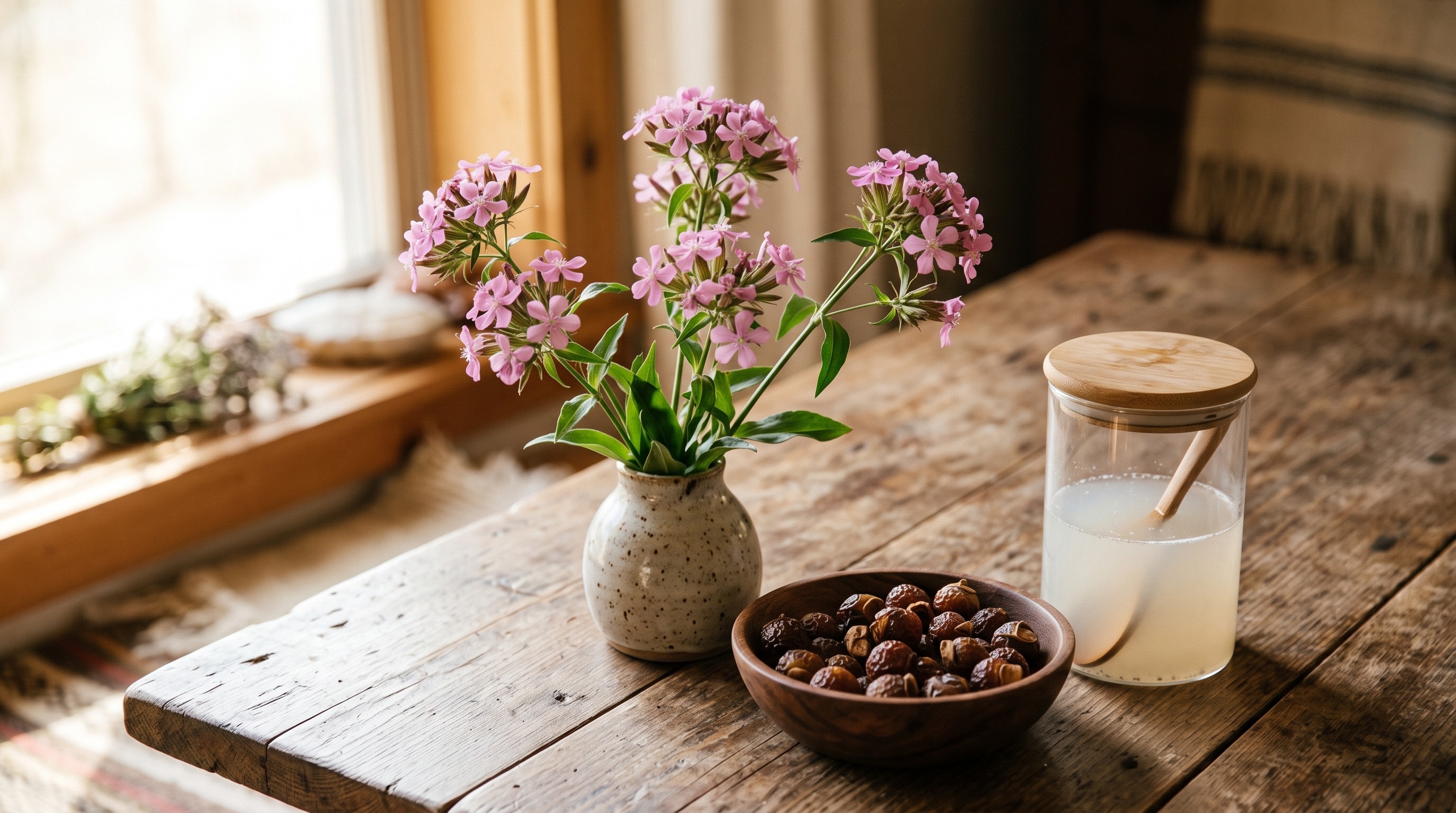
What you need
🧼 Materials
- Soapwort. Saponaria officinalis - the plant literally named for this job. A cottage-garden perennial that spreads keenly; the washing power lives in root and leaf.
- Soap nuts. Dried Sapindus fruit shells - bought dry, since the tree is tropical. The strongest plant saponin source you can easily get.
- Conkers (horse chestnuts). Free by the bucket every autumn, and a genuine traditional laundry soap across parts of Europe.
🧰 Tools
- A pot and a sieve. Saponin extraction is tea-making, nothing more.
- A jar or pump bottle. Plant washes keep only days - small batches, in the fridge.
- A small cloth bag. For soap nuts going into the washing machine.
The craft, step by step
1How plants wash: saponins
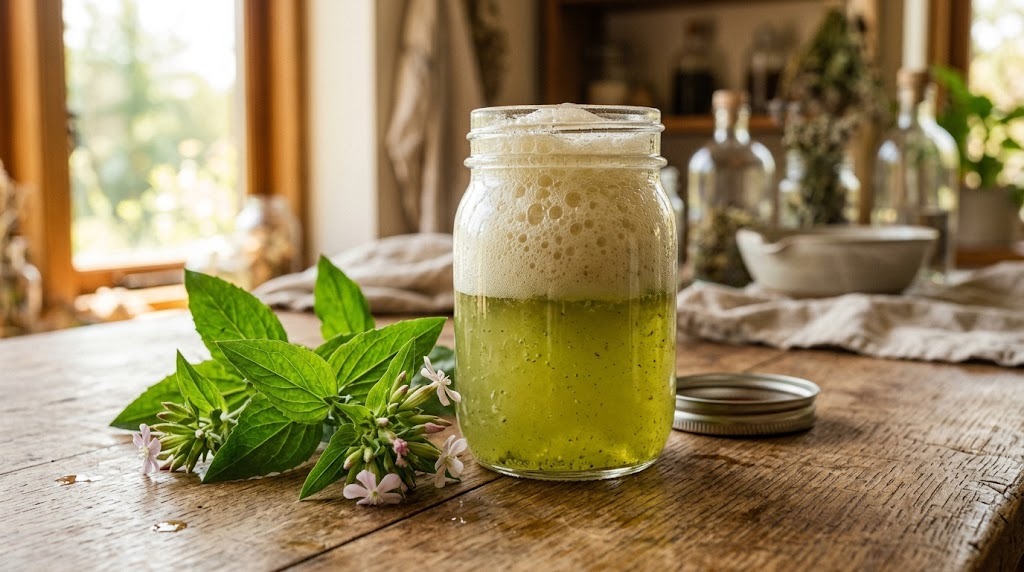
A family of plants makes its own detergent - saponins, molecules that grab oil at one end and water at the other, exactly the trick soap does. Shake a jar of soapwort-root water and it foams like shampoo. People washed cloth, hair and themselves with these plants for centuries before bar soap was affordable, and museum textile conservators still clean fragile old fabrics with soapwort because it is milder than anything modern. That mildness is the theme of this page: real washing power, tea-kettle chemistry, nothing caustic anywhere near it.
2Grow soapwort
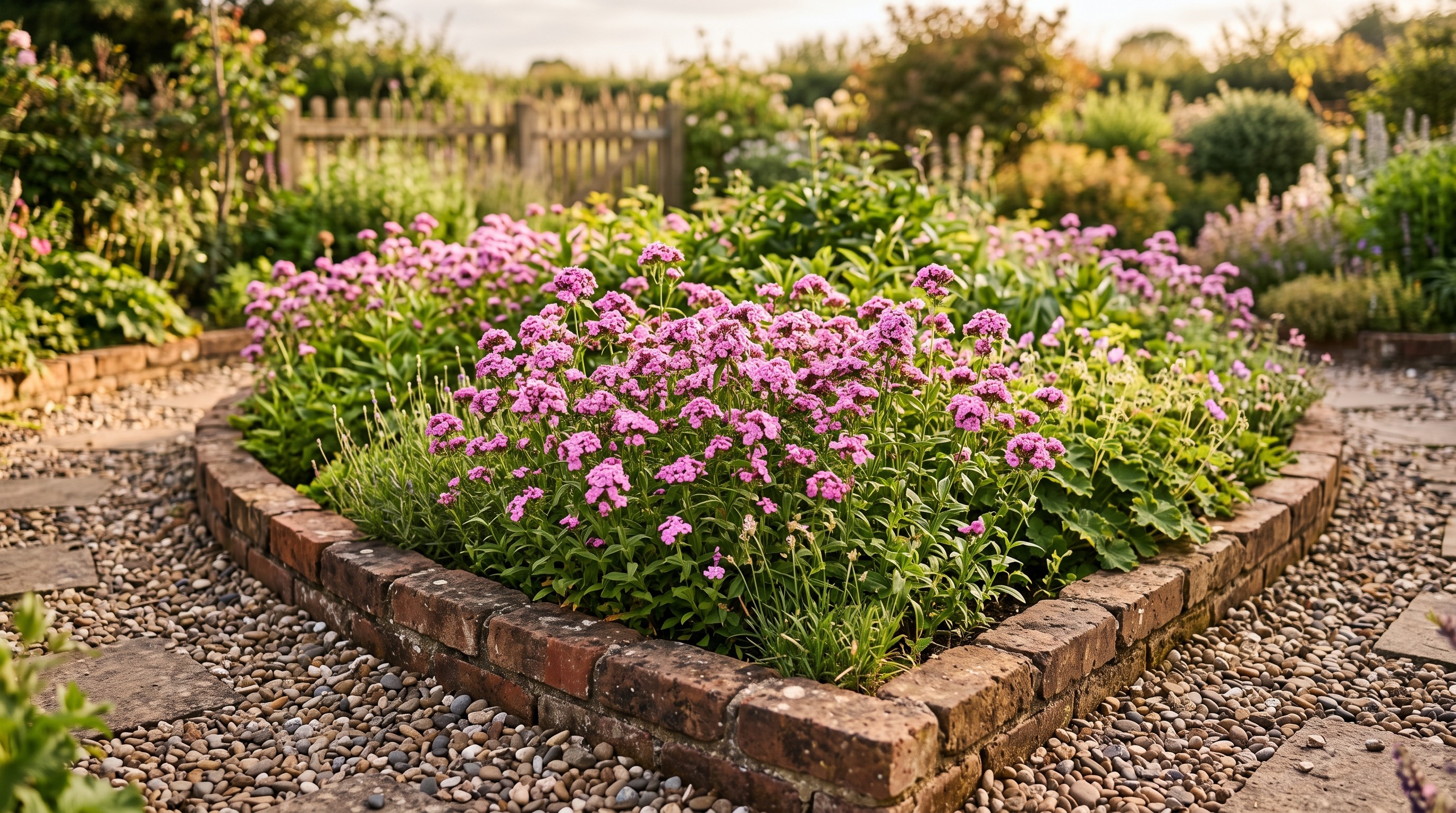
Soapwort earns a garden spot on looks alone - pale pink phlox-like flowers loved by evening moths on a knee-high perennial. It is famously unfussy (roadside-verges unfussy) and famously enthusiastic: the running roots that are the harvest are also an invasion plan, so plant it where it may roam or contain it like mint in a sunken pot. One caution belongs to the border planning, not the bathroom: saponins are toxic to fish, so site it and pour rinse water away from ponds. Harvest roots in autumn from a two-year clump, scrub, chop and dry them; the leaves work too, more weakly, all summer.
3Brew a soapwort wash
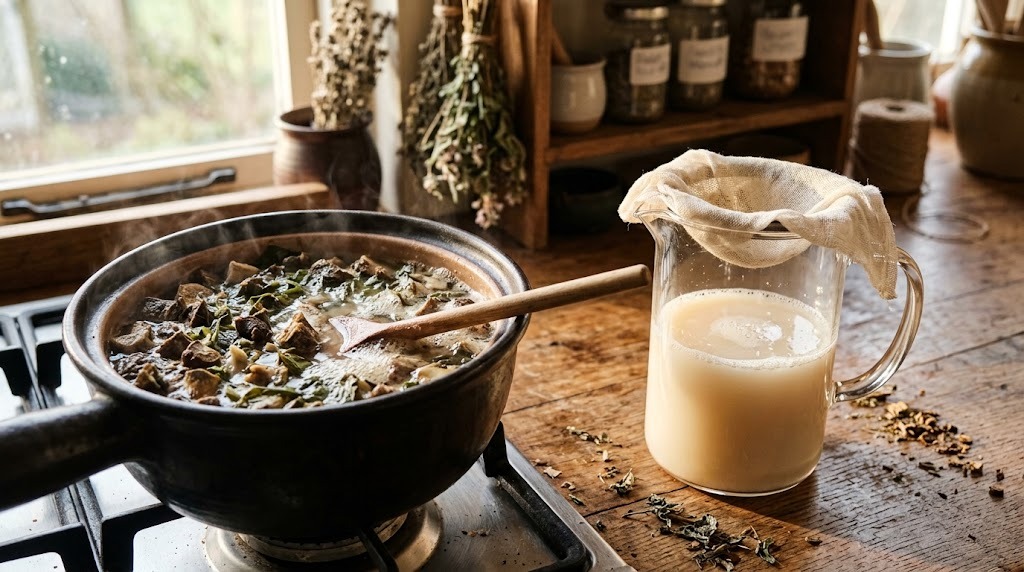
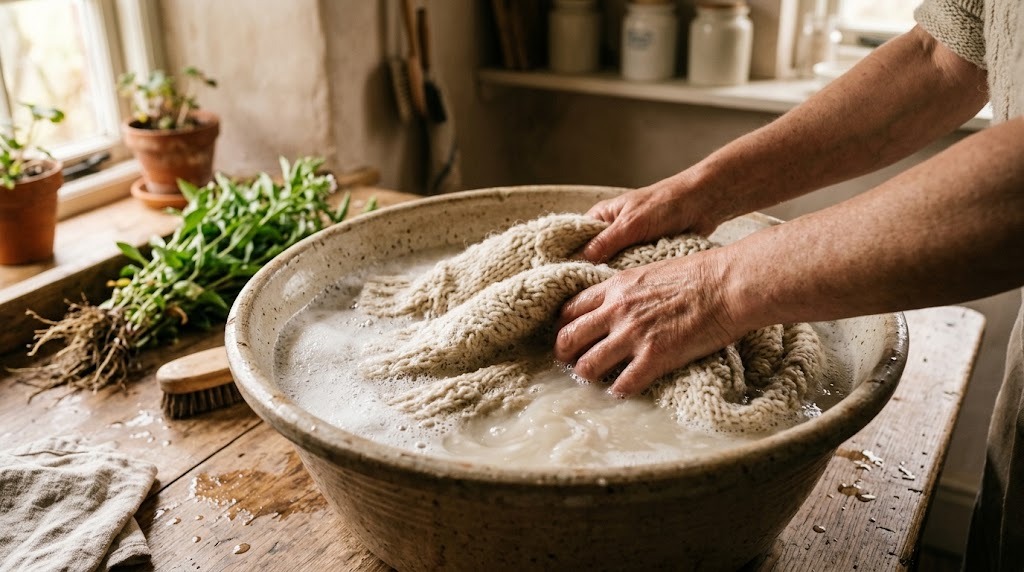
The whole recipe is a decoction: a handful of chopped root simmered gently in about a litre of water for twenty minutes, cooled, strained into a jar. Shake and it crowns with fine foam. It is a gentle liquid wash: use it as shampoo (an old folk favourite - it leaves fine hair soft), a hand wash, or a delicate-laundry soak for wool and old lace. It smells green and faintly earthy, lathers modestly by modern standards, and keeps less than a week - refrigerate and brew small. Patch-test skin first as with any new wash, and keep it out of eyes; mild is not the same as nothing.
4Soap nuts and conker laundry
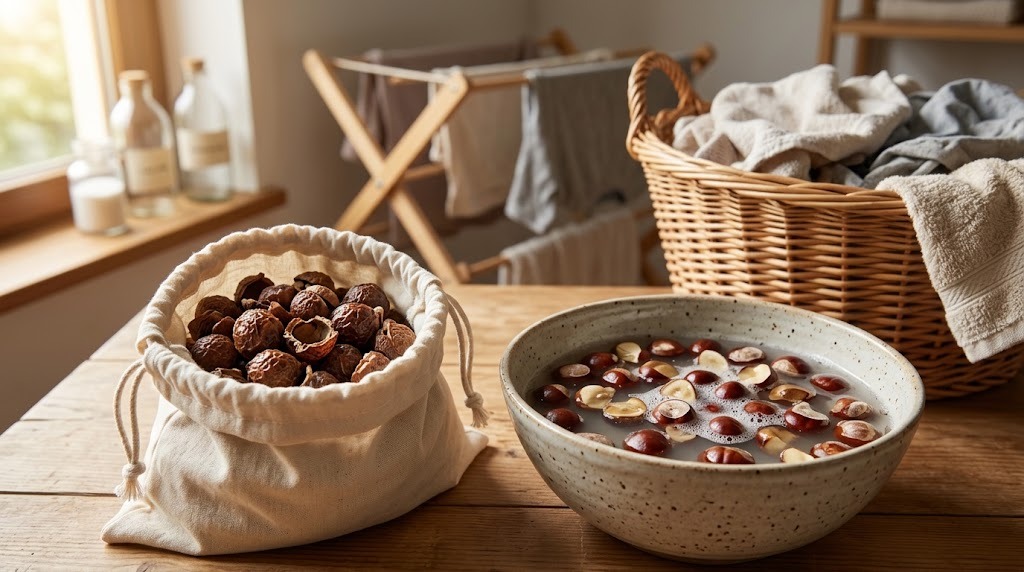
Two ready-made saponin stores need no garden at all. Soap nuts: five or six half-shells in a knotted cloth bag straight into the washing machine drum, warm cycle, reused three or four washes until they stop foaming, then composted. And the free hedgerow version: conkers. Chop a dozen horse chestnuts small (a bag and a hammer), soak in a jar of hot water overnight, strain the milky liquid - that is a load's worth of laundry liquid, best used within a few days. Both wash mildly, rinse clean and suit anyone whose skin argues with commercial detergent. Neither will shift engine grease; both handle ordinary clothes fine.
5The wider soap garden
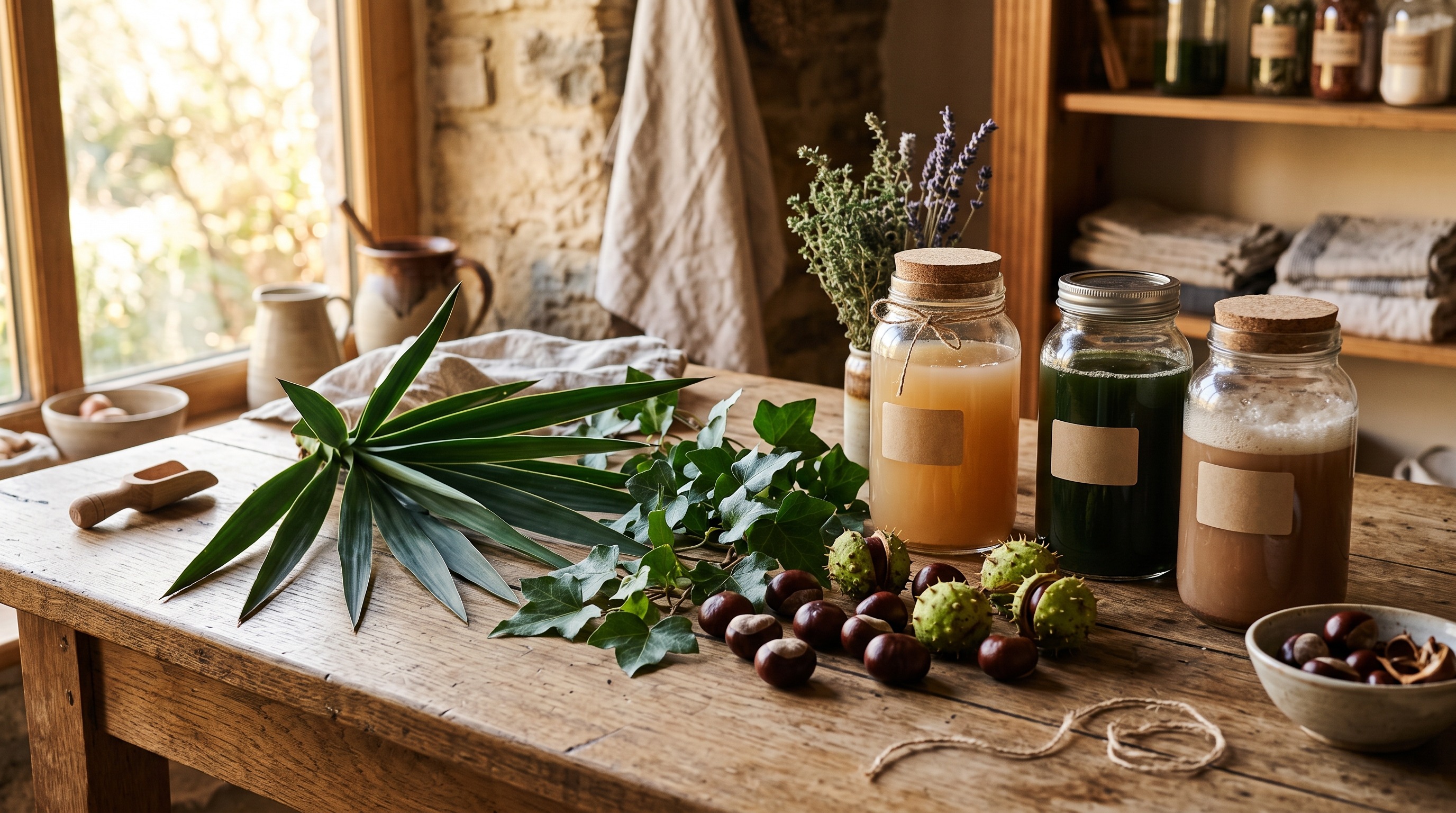
Once you know the foam-test, the family keeps turning up. Ivy leaves simmer into a usable wool-wash (an old shepherd's trick). Yucca root was the shampoo of the American Southwest, clematis and campion carry saponins, and the original 'washing bran' of many countries was simply plants like these dried and powdered. None of them out-clean soapwort by much; collecting them is more botany-with-benefits than progress. The rule everywhere: foam is saponin, saponin is mildly toxic to swallow and hard on fish - a washing chemistry, not a food one, and several soap plants are outright poisonous to eat, which is precisely why the deer leave them alone.
6About bar soap - honestly
The bars in the bathroom are a different chemistry altogether: fat plus a strong alkali (lye), transformed by a reaction called saponification. Plants historically supplied the alkali too - soap began as wood-ash and olive oil - but modern soapmaking uses pure sodium hydroxide, which burns skin and eyes seriously on contact, and that is why this page ends here rather than with a recipe. Cold-process soapmaking is a wonderful craft with a big friendly community; learn it from an in-person class or a dedicated soapmaking source with full safety protocol (goggles, gloves, no children, exact measurements), not from a garden website's summary. What the garden properly contributes to bar soap is everything else: the infused oils, the lavender, the calendula petals, the oatmeal - handed to a soapmaker who has the safety part down cold.