String of Turtles Peperomia
String of Turtles is a petite trailing Peperomia prized for its rounded leaves marked with a pale, turtle-shell tracery (Peperomia prostrata).
🗓️ Last reviewed: July 2026
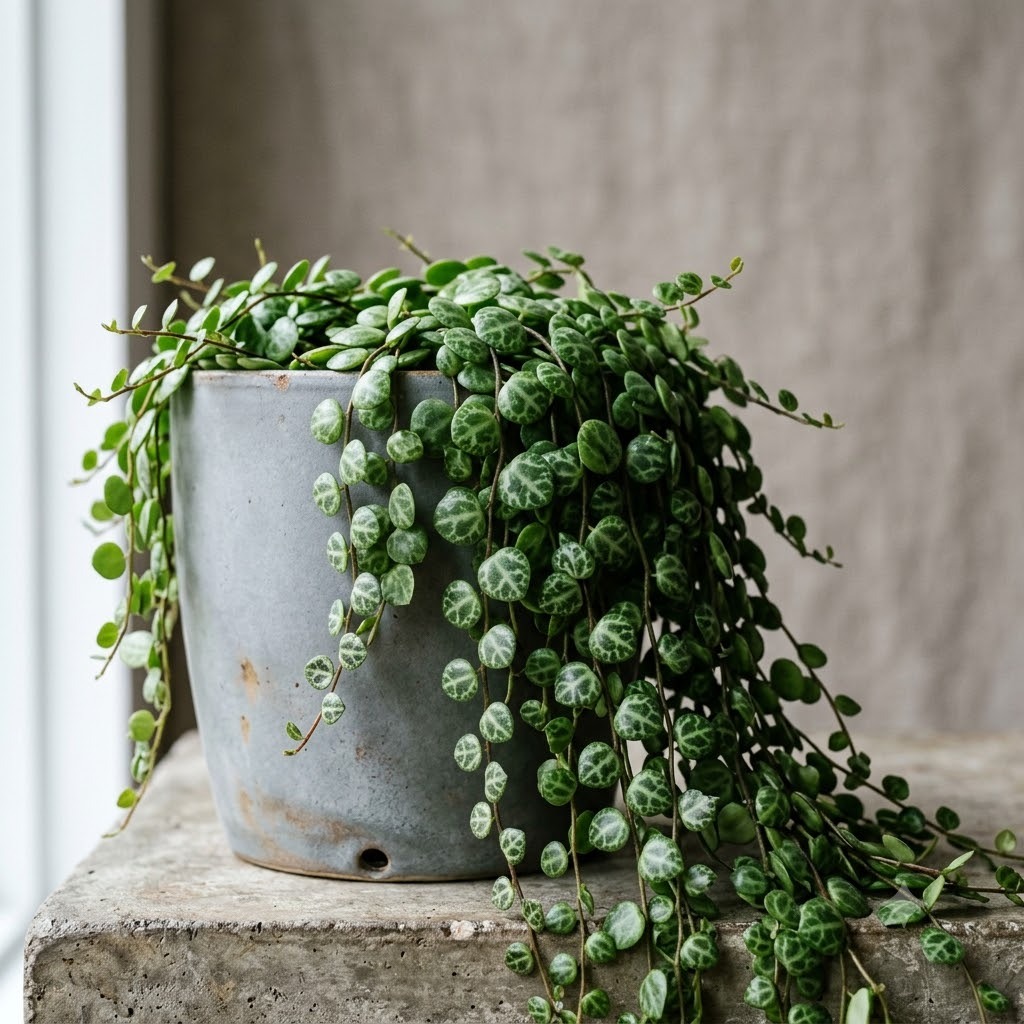
Overview
String of Turtles is a petite trailing Peperomia prized for its rounded leaves marked with a pale, turtle-shell tracery (Peperomia prostrata). It grows as a slow, delicate creeper rather than a fast draper, making it a favourite for small hanging pots and shelf edges. The plant stays compact, so it suits collectors short on space who still want a lot of detail up close.
Origin & Natural Habitat
Peperomia prostrata is native to the tropical rainforests of Brazil, particularly the Amazon basin. In the wild it grows as an epiphyte or creeper, threading over mossy tree bark, rocks and the forest floor in warm, humid, shaded conditions. Its roots sit in thin layers of leaf litter and debris rather than deep soil, which explains why it dislikes heavy, waterlogged mixes in cultivation.
Appearance
The leaves are tiny, round to slightly oval, and typically 1 cm or less across, held on thin trailing stems. Each fleshy, semi-succulent leaf carries a network of light silvery-green to cream veins over a darker green base, giving the "turtle shell" pattern that names the plant. Stems trail and root along their length, and a mature specimen usually reaches around 30 cm of trailing growth, occasionally a little more in good conditions. Growth is slow, and the stems are noticeably brittle and prone to snapping if handled roughly.
Why People Grow It - Qualities & Benefits
- Highly decorative, patterned foliage that rewards close viewing on desks and shelves
- Stays small and compact, so it fits tight spaces and small hanging planters
- Non-toxic and pet-safe, a reassuring pick for homes with cats or dogs
- Semi-succulent leaves store water, so it tolerates the occasional missed watering
Care
Light: Bright, indirect light. It thrives a step back from an east or north window; harsh direct sun scorches the thin leaves, while deep shade fades the pattern and stretches the stems. Water: Let the top of the mix dry out before watering, then water thoroughly and drain fully. The fleshy leaves hold moisture, so it is far more forgiving of underwatering than overwatering; soggy soil quickly causes rot. Soil: A light, airy, fast-draining mix. Combine a peat-free or coco-based potting soil with perlite and a little orchid bark or fine gravel to keep it open and quick to drain. Temperature & Humidity: Comfortable at 18 to 26 C; keep it above about 13 C and away from cold draughts. It appreciates moderate to high humidity (ideally 50 percent or more) but copes with average room humidity. Feeding: Feed lightly with a balanced liquid fertiliser diluted to half strength, roughly once a month during spring and summer. Skip feeding in autumn and winter when growth slows. Extra: The single biggest quirk is its intolerance of overwatering combined with brittle stems, so use a small pot with drainage and handle it gently. Reassuringly for pet owners, String of Turtles is non-toxic to cats and dogs, as Peperomia is on the ASPCA pet-safe list.
Propagation
Propagate from stem cuttings. Snip a short length of stem bearing several leaves and lay or pin it onto damp, airy mix so the nodes make contact with the surface, or root it in water and pot up once fine roots appear. Keep it warm, bright and lightly humid; rooting is slow, so patience matters. Because the stems are fragile, take cuttings deliberately rather than tugging at the plant.
Common Problems & Pests
- Root rot and mushy, dropping leaves from overwatering or a heavy, water-retaining mix
- Snapped or crushed stems from handling, since the trailing growth is brittle
- Sap-sucking pests such as mealybugs, spider mites and fungus gnats (the last favoured by constantly wet soil)
Toxicity & Safety
String of Turtles is non-toxic to cats and dogs. Peperomia is listed on the ASPCA pet-safe list, so it is a sensible choice for households with pets, and it poses no known poisoning risk to curious nibblers. The plant itself is safe, but as a general rule pets and children should not eat the potting soil or fertiliser, which can cause mild stomach upset regardless of the plant.
Pros & Cons
Pros
- Beautiful, intricate patterned leaves in a compact, space-saving package
- Pet-safe and non-toxic, easy to place around cats and dogs
Cons
- Slow-growing and easily killed by overwatering
- Fragile stems that snap if handled or moved carelessly
Best Suited For
- Collectors who enjoy small, detailed plants for shelves, desks and small hanging pots
- Pet owners wanting a non-toxic trailing plant that stays compact
FAQ
Why are my String of Turtles leaves shrivelling?
Shrivelled, flat leaves usually mean the plant is thirsty and the mix has stayed dry too long. Water thoroughly and let it recover; if leaves instead feel mushy and translucent, the cause is overwatering, so ease off and check drainage.
Does it need high humidity to survive?
No. It grows best with moderate to higher humidity, but it tolerates average room conditions. Steady bright indirect light and careful watering matter far more than chasing high humidity.