Polka Dot Begonia
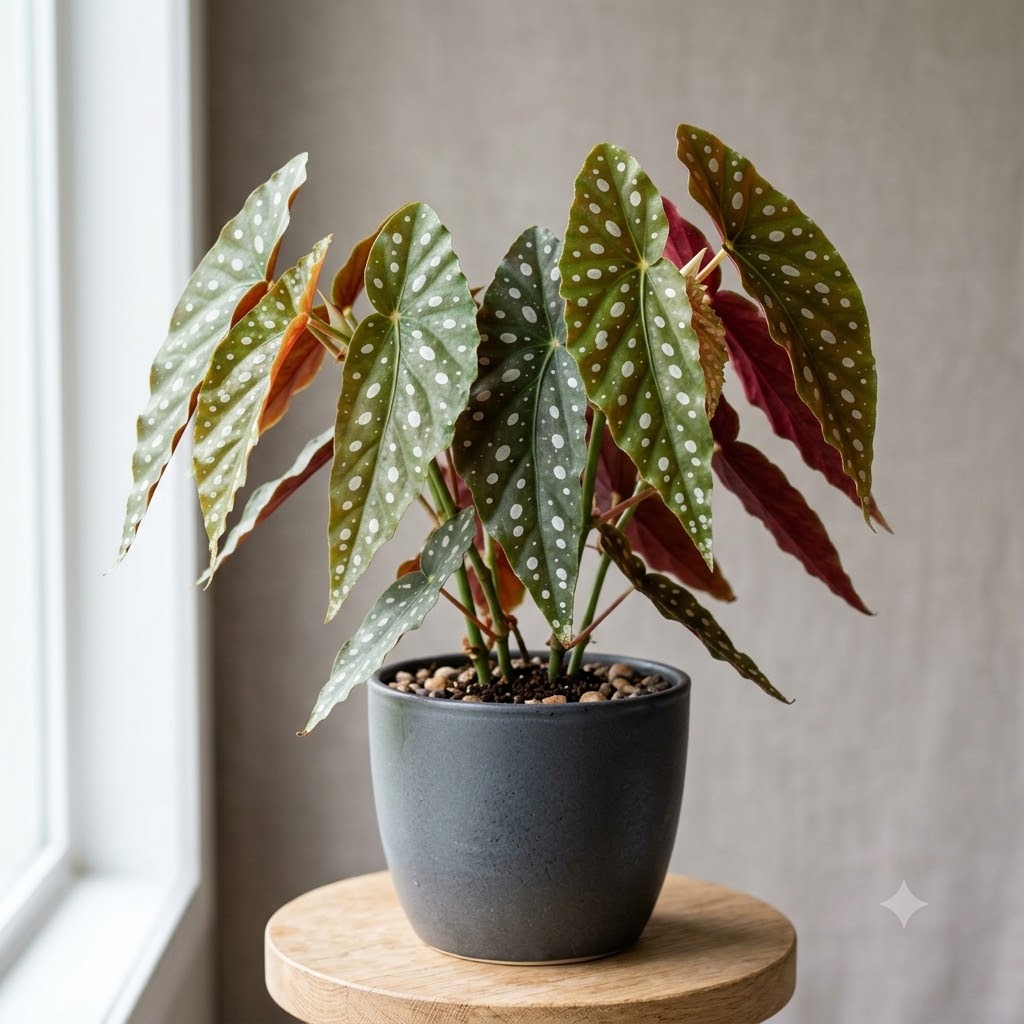
The Polka Dot Begonia is a cane-type begonia prized for its dramatic, spotted foliage that looks almost hand-painted.
🗓️ Last reviewed: July 2026
Overview
The Polka Dot Begonia is a cane-type begonia prized for its dramatic, spotted foliage that looks almost hand-painted. Collectors chase it for the silvery-white dots scattered across olive-green wing-shaped leaves and the deep red undersides that glow when backlit. It is a striking statement plant that rewards attentive growers (Begonia maculata).
Origin & Natural Habitat
Begonia maculata is native to the tropical rainforests of southeastern Brazil, where it grows in warm, humid, shaded understory conditions along riverbanks and forest floors. In the wild it enjoys dappled light, steady warmth, and consistently moist air.
Appearance
This is a cane-type (angel-wing) begonia with tall, upright, bamboo-like stems and asymmetric, wing-shaped leaves that can reach 6 to 8 inches long. The upper leaf surface is olive to deep green with regular silver-white spots, while the underside is a rich burgundy-red. Given support and time it can climb to 3 to 5 feet indoors, and mature plants produce drooping clusters of small white flowers in the warmer months.
Why People Grow It - Qualities & Benefits
- Bold, decorative spotted foliage that is instantly recognizable
- Striking red leaf undersides that add contrast and depth
- Fast, satisfying growth when conditions are right
- Very easy to propagate, so one plant quickly becomes many
Care
Light: Bright, indirect light. Direct midday sun scorches and fades the leaves, while too little light stretches the canes and dulls the spots.
Water: Let the top inch or two of soil dry before watering, then water thoroughly. It dislikes soggy roots but also sulks if left bone dry, so aim for evenly moist, never wet.
Soil: A light, airy, fast-draining mix. Peat or coco coir with perlite and a little orchid bark works well to keep roots oxygenated.
Temperature & Humidity: Warmth-loving, happiest at 65 to 80 F. It genuinely wants higher humidity, ideally 45 percent or more; in dry indoor air the leaf edges brown and crisp. Be honest with yourself here, as this is the plant's fussiest demand.
Feeding: Feed with a balanced, diluted liquid fertilizer every 2 to 4 weeks during spring and summer, and pause in winter when growth slows.
Extra: This is a cane begonia, so it does not die back to a tuber, but growth stalls in cold, dark winter months and canes can get leggy without pruning and support. ⚠️ Toxic to cats and dogs (soluble oxalates) - keep out of reach of pets and children.
Propagation
Very easy from stem-tip or cane cuttings. Take a cutting with a node or two, root it in water or straight into moist, airy mix, keep it warm and humid, and roots usually appear within a few weeks.
Common Problems & Pests
- Powdery mildew, a classic begonia weakness, encouraged by poor airflow and water sitting on the leaves
- Root and stem rot from overwatering or heavy, water-retentive soil
- Spider mites and mealybugs, plus leaf drop and crispy edges when humidity is too low
Toxicity & Safety
Begonias are toxic to cats and dogs. The plant contains soluble oxalates, with the highest concentration in the underground parts. Chewing can cause oral irritation, intense burning of the mouth, drooling, and vomiting, and in pets that dig up and ingest the roots the effects are more serious. The sap can also irritate sensitive skin, so wash your hands after pruning and keep the plant away from curious pets and children.
Pros & Cons
Pros
- Show-stopping, uniquely spotted foliage
- Fast growing and effortless to propagate
Cons
- Genuinely fussy about humidity and airflow
- Prone to powdery mildew and rot if care slips
Best Suited For
- Collectors who enjoy an expressive plant with real personality
- Growers who can provide warmth, humidity, and good air circulation
FAQ
Why are the edges of my Polka Dot Begonia turning brown and crispy?
This is almost always low humidity or inconsistent watering. Raise the ambient moisture with a humidifier or a pebble tray and keep the soil evenly moist but never waterlogged.
Why is my plant tall and floppy with fewer spots?
Leggy, sparse growth usually means not enough light. Move it to a brighter spot with indirect light and pinch back the canes to encourage bushier, better-colored growth.