Begonia Maculata Wightii
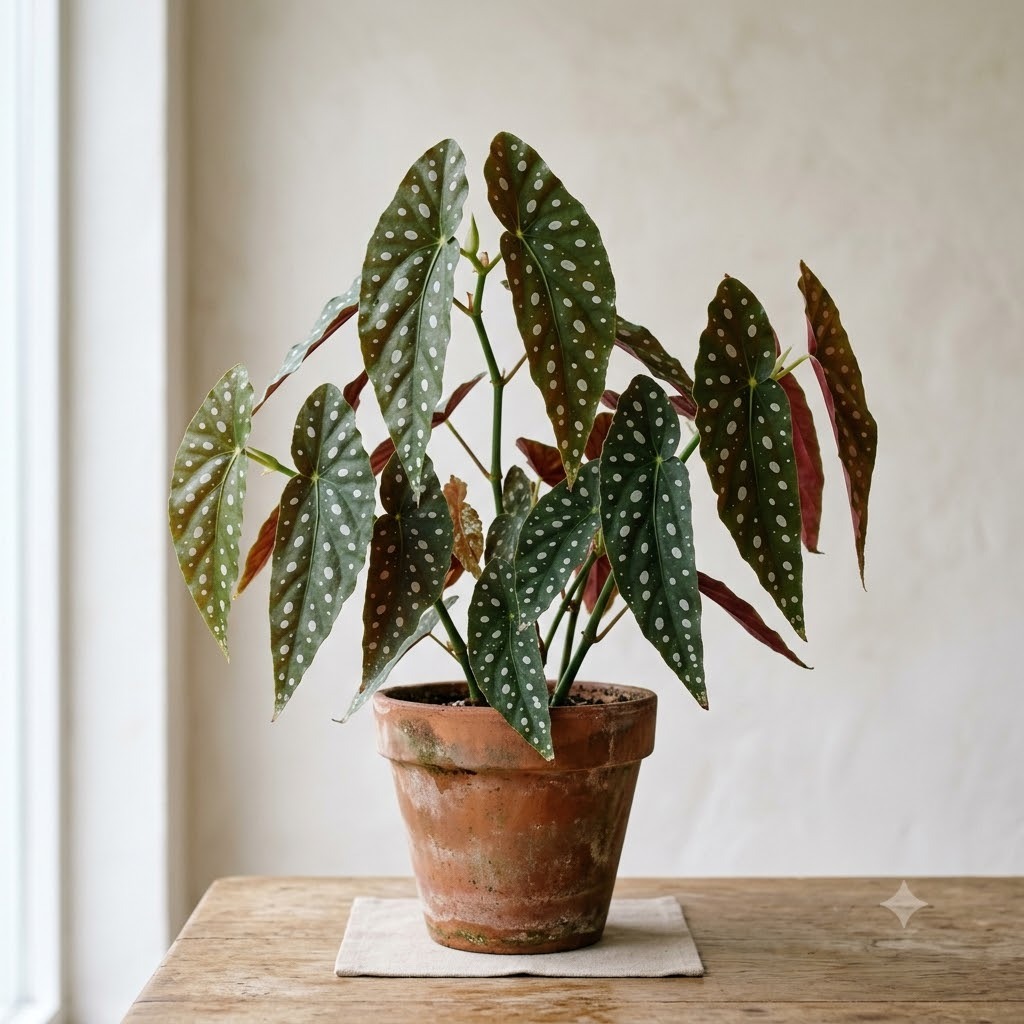
Begonia Maculata Wightii, better known as the polka dot begonia, is a cane-type begonia prized for its dramatic silver-spotted leaves and ruby-red undersides.
🗓️ Last reviewed: July 2026
Overview
Begonia Maculata Wightii, better known as the polka dot begonia, is a cane-type begonia prized for its dramatic silver-spotted leaves and ruby-red undersides. Collectors chase it because it delivers a bold, almost painted look while staying compact enough for a shelf or plant stand. It is a named form of the species (Begonia maculata).
Origin & Natural Habitat
The species is native to the humid Atlantic coastal forests of southeastern Brazil, where it grows in warm, shaded, moisture-rich understory conditions. In the wild it clings to riverbanks and forest floors, sheltered from direct sun beneath the canopy.
Appearance
It has an upright, cane-like (bamboo-style) growth habit with jointed stems that hold large, asymmetrical angel-wing leaves. Each olive to deep-green leaf is scattered with rounded silver-white spots on top and flushed a rich maroon-red underneath. Indoors it typically reaches around 18 to 36 inches (45 to 90 cm) tall and can produce clusters of small white to pale-pink flowers in warmer months.
Why People Grow It - Qualities & Benefits
- Striking silver polka-dot foliage that reads as a living piece of decor
- Compact, upright habit that suits shelves and narrow corners
- Produces clusters of dainty white-pink blooms when happy
- Fast-growing and satisfying to propagate from cuttings
Care
Light: Bright, indirect light. It needs plenty of light to keep the spots vivid and the stems from stretching, but direct midday sun scorches and fades the leaves.
Water: Keep the soil lightly moist but never soggy. Water when the top inch or so feels dry, and let excess drain fully - this plant is very prone to root rot if it sits wet.
Soil: A light, airy, well-draining mix. A blend of standard potting soil with perlite and a little orchid bark or coco coir works well.
Temperature & Humidity: Warmth-loving, happiest between about 65 and 80 F (18 to 27 C). It wants higher humidity, ideally 45 to 60 percent or more. Honestly, dry indoor air is its biggest weakness - low humidity triggers crispy leaf edges and invites spider mites.
Feeding: Feed with a diluted balanced liquid fertilizer every two to four weeks during spring and summer, and stop in the darker winter months.
Extra: This is a fussy plant that hates cold drafts, wet feet, and dry air, and it can slow down or drop leaves in winter as growth naturally stalls. ⚠️ Toxic to cats and dogs (soluble oxalates, with the underground parts most concentrated) - keep out of reach of pets and children.
Propagation
Easiest from stem cuttings. Take a cutting with at least one node, root it in water or directly in moist, airy mix, and keep it warm and humid until new roots and growth appear. Leaf cuttings can also work but are slower and less reliable.
Common Problems & Pests
- Powdery mildew, shown as a white dusty coating, thrives in stagnant, damp air, so good airflow is essential
- Root and stem rot from overwatering or heavy, soggy soil
- Spider mites and occasionally mealybugs, especially when humidity is low
Toxicity & Safety
Begonia is toxic to cats and dogs. The plant contains soluble oxalates, with the tubers and underground parts being the most toxic. If chewed, it can cause oral irritation, intense drooling, and vomiting, and in animals more sensitive to soluble oxalates it can affect the kidneys. The sap may also irritate skin, so it is wise to wash your hands after taking cuttings or handling broken stems.
Pros & Cons
Pros
- Show-stopping spotted foliage with rich red undersides
- Grows quickly and propagates easily from cuttings
Cons
- Fussy about humidity and prone to spider mites and mildew
- Toxic to pets, so it needs a truly out-of-reach spot
Best Suited For
- Intermediate growers who can meet its humidity and watering needs
- Collectors wanting statement foliage in a compact, upright plant
FAQ
Why are the leaf edges turning brown and crispy?
This is almost always dry air. Raise humidity with a pebble tray, grouping plants, or a humidifier, and keep it away from heating vents and cold drafts.
Does it go dormant or die back in winter?
It does not go fully dormant, but growth naturally slows in the shorter, darker months and it may drop a few leaves. Ease off on watering and stop feeding until spring, when it usually rebounds.