Make paper from the garden.
Paper is a plant product - the word itself is papyrus - and the whole craft scales down to a kitchen: a pot, a blender, a screen in a frame, and the strappy leaves your borders throw away every autumn. Iris leaves, nettles, corn husks and onion skins all carry enough fibre to become sheets you can write on.
This is the honest hobbyist road. The great bark-fibre papers of the world - Japanese washi from kozo, Egyptian papyrus - get a respectful nod and a recommendation to learn them where they are taught; the garden road below needs nothing stronger than washing soda.
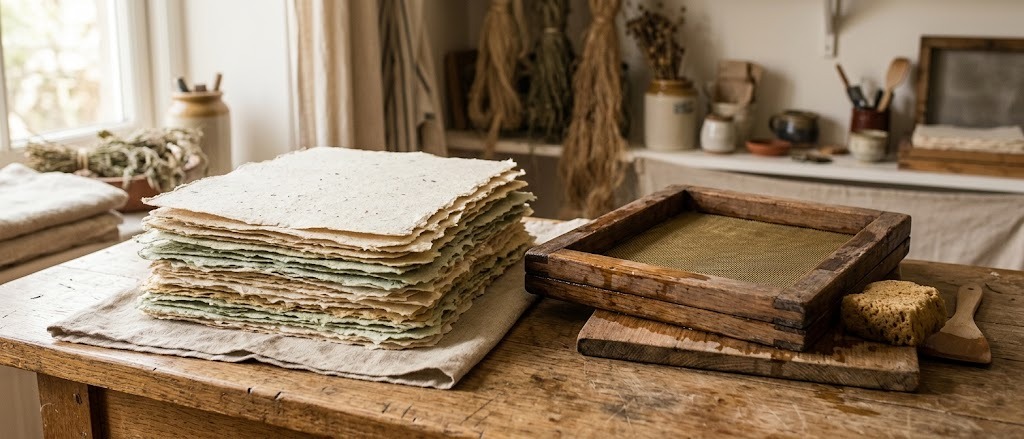
What you need
🌾 Materials
- Fibrous plant material. Iris and daylily leaves, nettle stems, corn husks, onion skins, or long grasses - a carrier-bag full, cut small. The best beginner fibres are the tough strappy leaves the compost heap gets anyway.
- A little recycled paper. A few sheets of plain scrap, torn small, blended in - it binds a first batch together while you learn how much plant a sheet can carry.
- Washing soda (optional). Sodium carbonate, for simmering tough fibres soft. Gentler than the traditional strong alkalis, and enough for leaf fibre.
🧰 Tools
- Mould and deckle. The papermaker's frame-and-screen pair. Two old picture frames and a piece of fine mesh curtain staple-gunned to one of them is the standard homemade version.
- A dedicated pot and blender. Dedicated is the word - once used for fibre they retire from the kitchen. Charity shops exist for this.
- A tub wider than the frame. The vat. Plus old towels, cloths for couching, and a sponge.
- Rubber gloves. For the simmering stage.
The craft, step by step
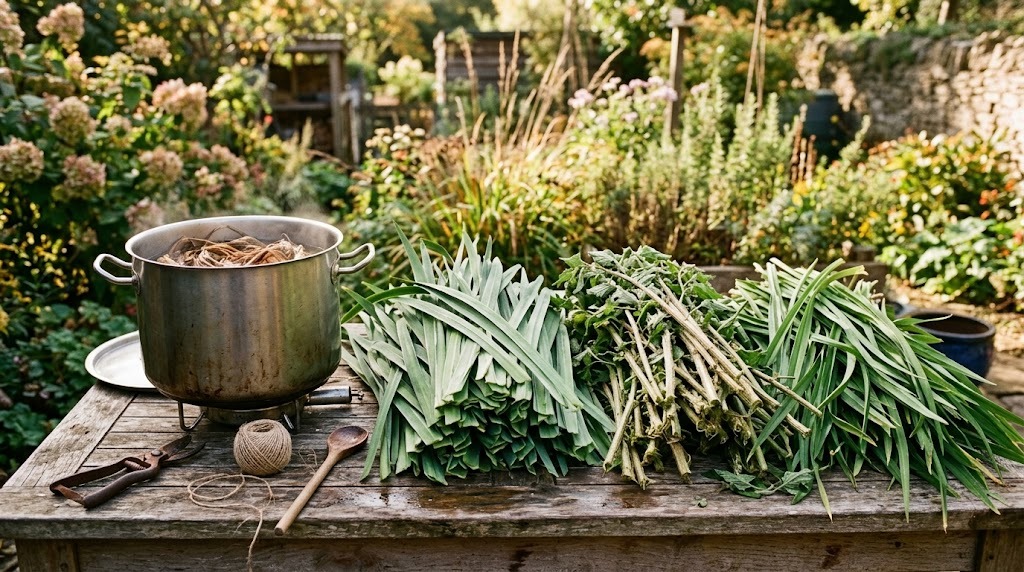
1Know the two roads (and the one we skip)
All papermaking is the same three moves - break plants into fibre, float the fibre in water, catch a thin even layer on a screen. The differences are only in how hard the plant fights step one. Soft leaves and husks give in to simmering with washing soda. Bark fibres like the kozo behind Japanese washi are traditionally cooked with much stronger alkali (lye); that route is real, historic - and caustic enough that we point you to an in-person workshop for it rather than a web page. Everything below stays on the gentle road, which still makes genuinely beautiful paper.
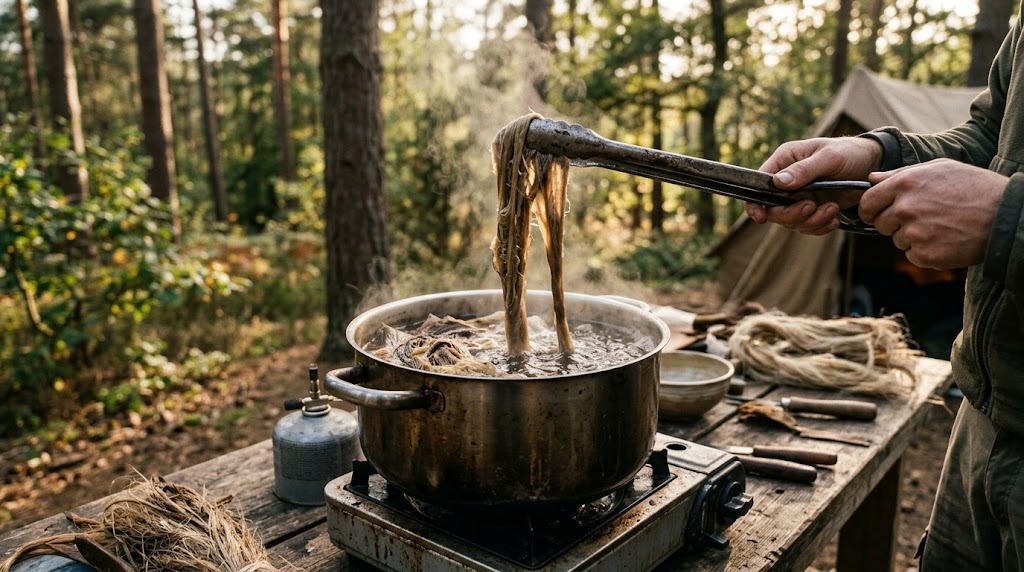
2Cook the fibre
Chop your leaves or stems into short lengths - a couple of centimetres - and simmer them in the dedicated pot: plain water for soft material like onion skins and corn husks, a tablespoon or two of washing soda per litre for tougher strappy leaves. Gloves on, window open, a gentle simmer (not a rolling boil) for one to three hours until a piece pulls apart into threads between your fingers. Rinse the cooked fibre thoroughly in a sieve until the water runs clear - unrinsed alkali makes brittle paper. What is left in your hands is the plant reduced to what paper actually is: cellulose.
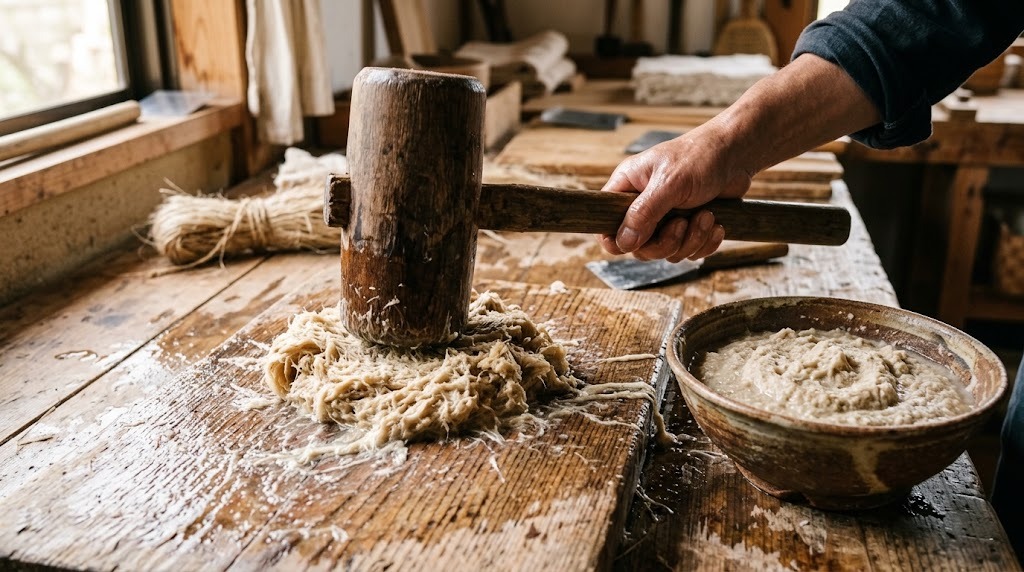
3Beat it to pulp
Small handfuls of cooked fibre go into the blender with plenty of water - always more water than seems right, a tablespoon of fibre in a full jug - and pulse in short bursts until you have a cloudy slurry with short soft threads, not a smoothie. Blend a few sheets' worth of torn scrap paper the same way. In the vat, mix roughly half plant pulp, half scrap pulp, into water the colour of thin porridge. As your hands learn the craft you push the plant share up; the first batch is for learning what the screen can catch.
4Pull a sheet
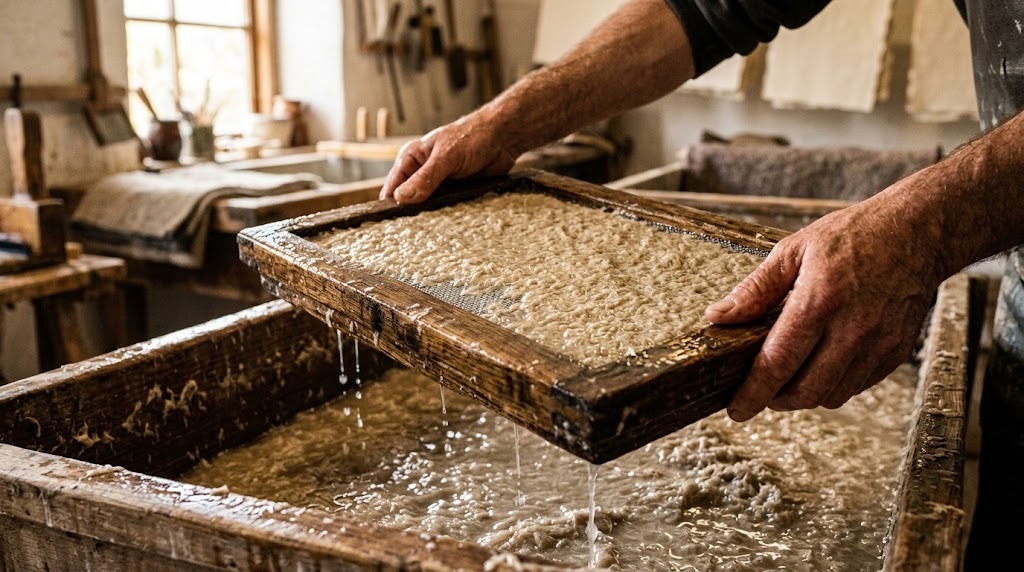
The one genuinely skilled moment. Stir the vat so the fibre is suspended, hold the mould (mesh up) with the empty deckle frame on top, slide the pair vertically into the far side of the vat, tip them flat under the surface, and lift straight up with a small confident shake side-to-side and front-to-back as the water drains. That shake is what interlocks the fibres. What sits on the mesh is a wet sheet of paper. Too thick? The vat is too rich - add water. Holes? Too thin - add pulp. Every papermaker's vat conversation is those two sentences forever.
5Couch, press and dry
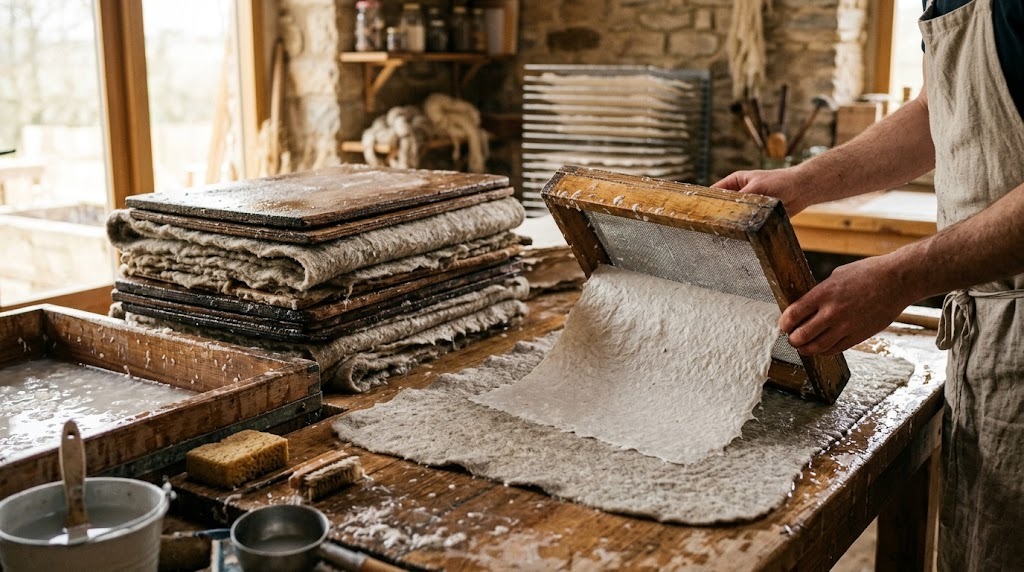
Couching (say cooching) is rolling the wet sheet off the mesh onto a damp cloth: deckle off, one edge of the mould down on the cloth, roll the mesh away smoothly and the sheet stays behind. Stack sheets between cloths, put a board on top and press hard - stand on it, pile books on it - to squeeze out water and weld the fibres. Then peel the cloths apart and dry the sheets flat: pinned to a line by the cloth, or brushed onto a window or mirror, which leaves one glassy-smooth face. Slow drying flat keeps the sheet flat; hurried drying makes potato crisps.
6What plant paper is for
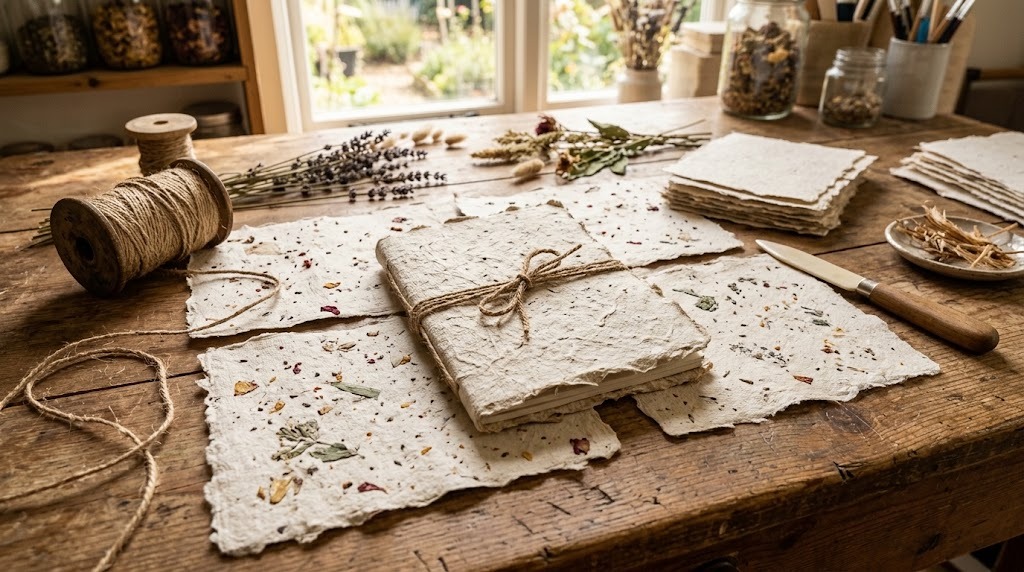
Homemade plant paper is textured, deckle-edged and full of visible fibre - petals, seeds and leaf-flecks can be added to the vat for exactly that reason. It is card and keepsake paper: gift tags, wedding invitations, covers for hand-bound notebooks, window stars, seed-paper tags that can be planted (blend seeds in at the very end, cold). It will never go through a printer, and after one afternoon of pulling sheets you will not want it to - the point of the craft is that no two sheets ever match.