Weave lavender wands.
A lavender wand - lavender bottle, if your grandmother was English - is a bundle of fresh stems folded back over their own flowers and woven shut with ribbon. It is a drawer-scenter that lasts years, it costs a ribbon, and it is the best half-hour a lavender hedge will ever give you.
The craft has one genuinely fiddly moment (the fold) and one hard rule (fresh stems, cut the same day). Everything else is repetition of the gentlest kind, which is why people weave them on porches in July and give them away all winter.
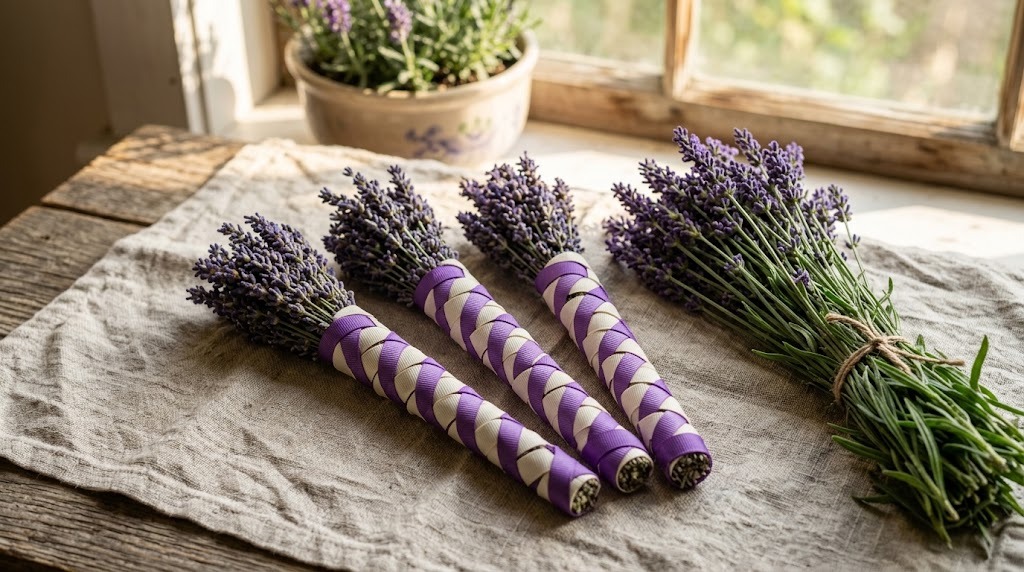
What you need
💜 Materials
- Fresh lavender, an odd number of stems. 13, 15 or 17 long-stemmed spikes, cut the morning you weave. English lavender and the lavandins with long straight stems weave best.
- Ribbon. 3-4 metres of narrow ribbon, 3-7 mm wide. Satin slides sweetly; grosgrain grips and forgives beginners.
🧰 Tools
- Snips. For a clean cut just above a leaf pair.
- Patience. The first wand takes an hour. The fifth takes fifteen minutes. This ratio is universal.
The weave, step by step
1Cut at the right moment
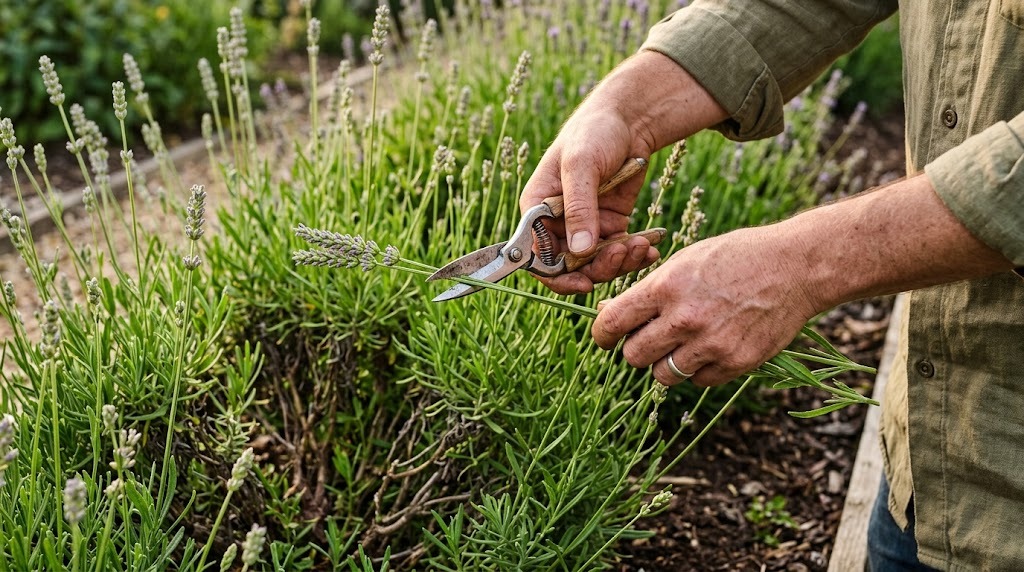
Everything about a wand depends on the stems being fresh: a stem cut this morning bends double without breaking, a stem cut yesterday snaps. Harvest mid-morning on a dry day, when the dew has gone but the heat has not yet driven the oils off, and choose spikes where the bottom flowers are open and the top ones still in bud - that is the scent maximum. Cut the longest stems the plant will give you, 25-30 cm below the flower head, and strip every leaf. Work the same day, and keep the cut stems standing in water until the ribbon comes out.
2Bundle and tie
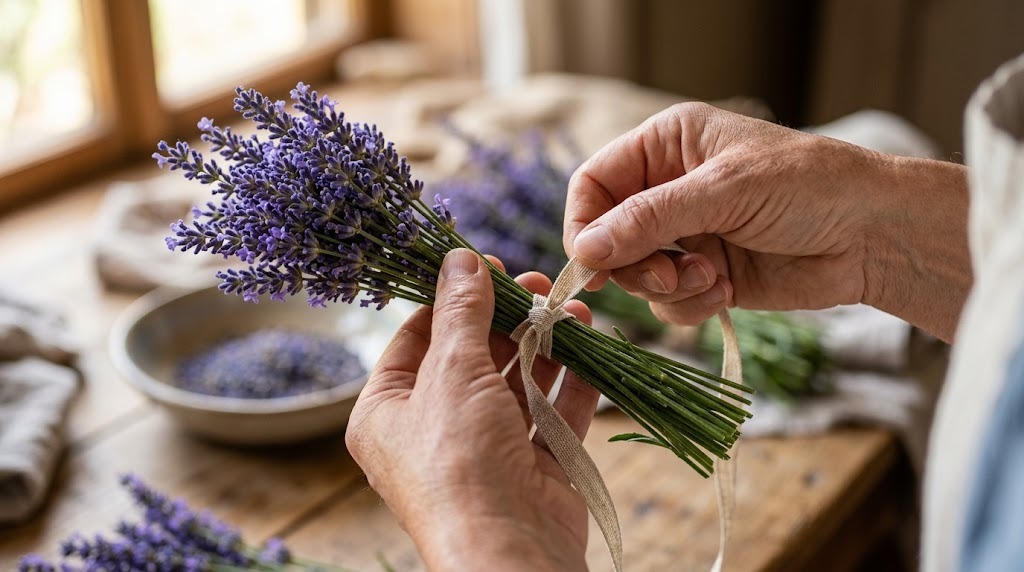
Gather your odd-numbered bundle and even up the flower heads so they sit together like one fat spike. Tie one end of the ribbon tightly around the stems just below the lowest flowers - leave a short tail of ribbon hanging, it gets swallowed and hidden later. Odd numbers are not superstition: the weave alternates over-under around the circle, and only an odd count makes each round land opposite the last, which is what produces the basket pattern.
3The fold - the only hard moment
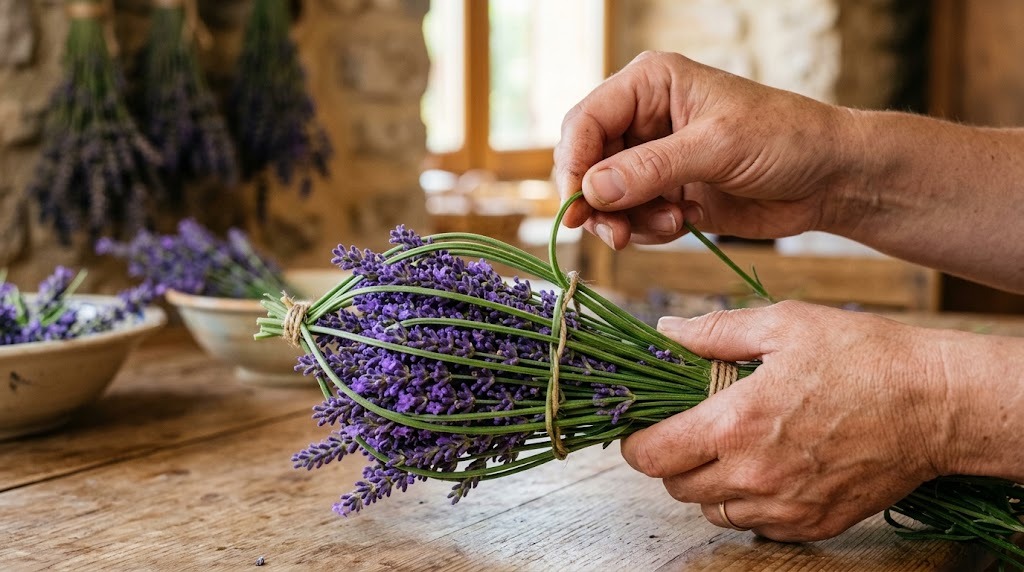
Hold the bundle flowers-down. One stem at a time, bend each stalk gently back over the ribbon tie and down over the flower heads, spacing the stems evenly around the circle as you go, until the flowers are entirely enclosed in a cage of their own stalks - a little upside-down basket with the ribbon's long end poking out between two stems. Fresh stems crease rather than snap if you bend them over a thumbnail. If one breaks, slide it out and carry on; you built in a spare by cutting fifteen.
4Weave the ribbon
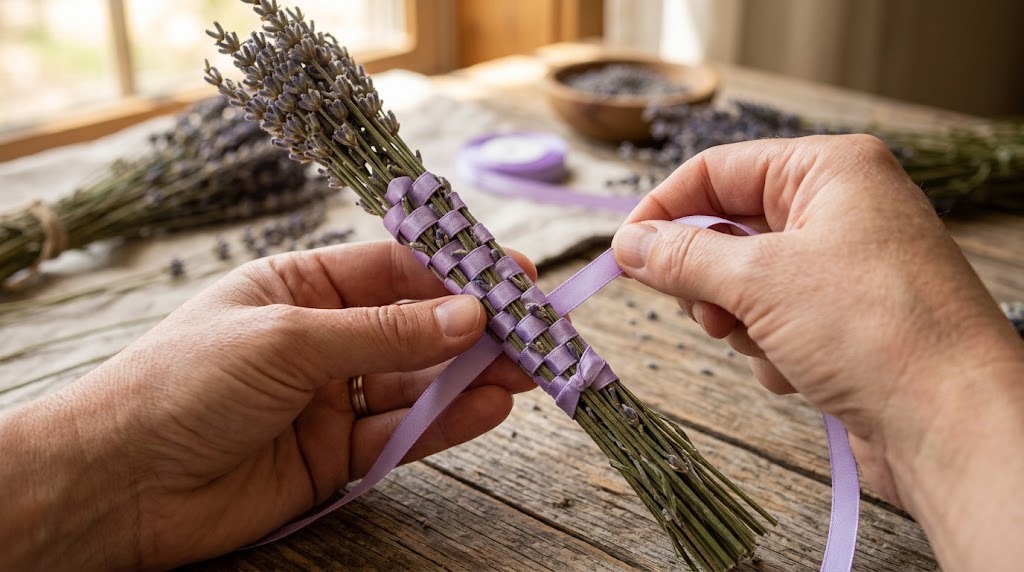
Now the soothing part. Take the long end of the ribbon and weave: over one stem, under the next, over, under, around and around the cage. Because the count is odd, each round offsets from the one before and the woven basket pattern appears by itself after three or four circuits. Keep the ribbon flat (a twist shows forever), snug (loose rounds gape as the stems shrink) and pushed up against the previous round. Widen your spacing slightly over the fat belly of the flowers, tighten it as the cage narrows. When the ribbon passes the last flowers, the weave is done.
5Finish the handle
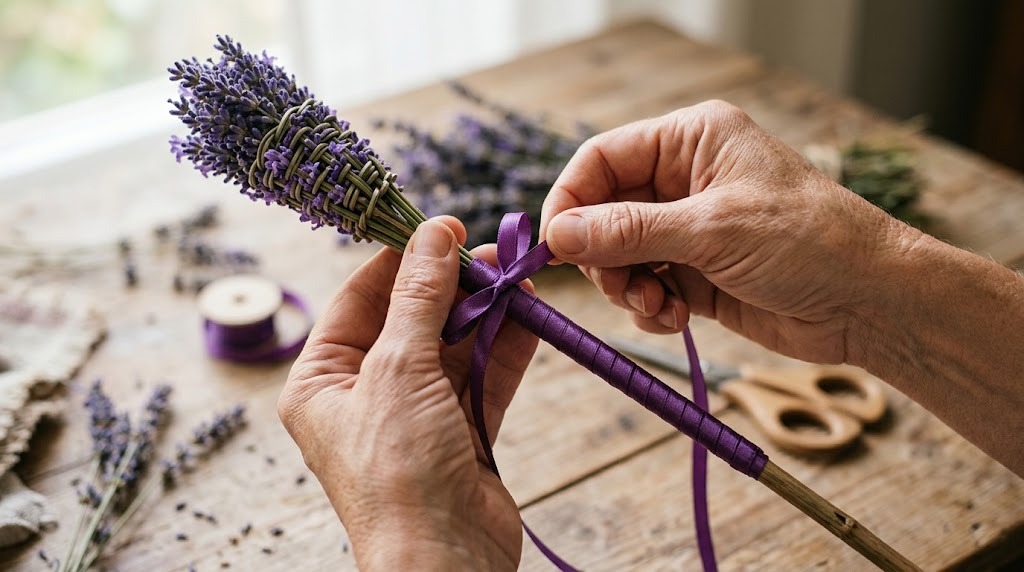
Wind the remaining ribbon in a tight spiral down the bare stems to make the handle, then back up a few turns, and tie off with the tail you left in step two - a small bow if it will hang in a wardrobe, a flat knot if it will lie in a drawer. Trim the stem ends level. Some weavers thread the ribbon end back under the spiral with a darning needle for an invisible finish, which is fussier and prettier.
6Dry inside its cage
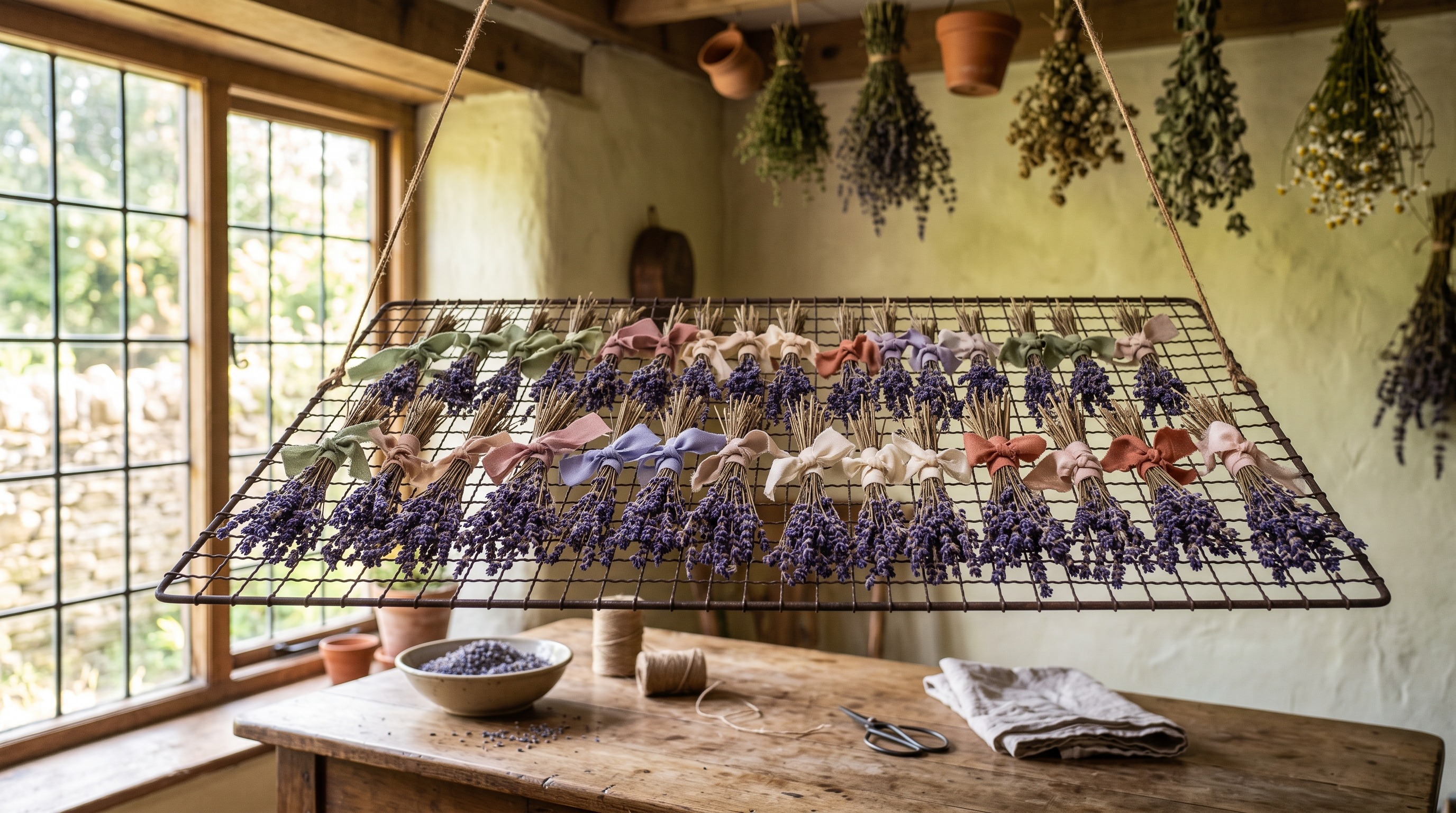
The wand dries with the flowers sealed inside their woven bottle - which was the point all along: as the buds dry and loosen, the cage keeps every crumb in, and the scent breathes out through the weave for a very long time. Leave new wands somewhere airy for two weeks before they go into drawers or wardrobes. A wand lasts years; when the scent finally fades, squeeze it gently and the crushed buds inside wake it up again. Victorian linen presses ran on exactly this trick.