Turk's Cap Cactus
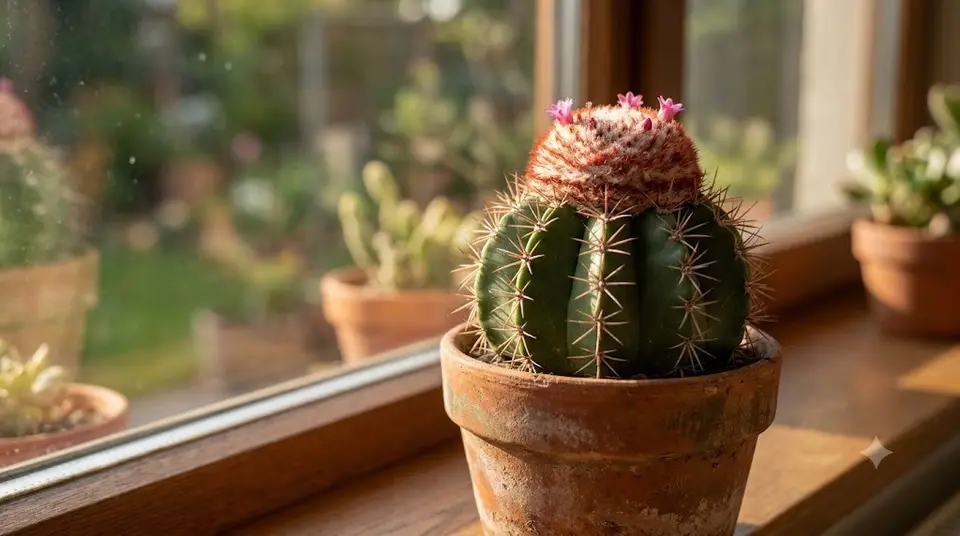
The Turk's cap is a charming small cactus that grows into a spiny green globe, then (once mature) crowns itself with a fuzzy red-and-white 'fez' called a cephalium, from which tiny pink flowers and bright pink fruit emerge.
Last reviewed: October 2026
 AI illustration
 Overview
The Turk's cap is a charming small cactus that grows into a spiny green globe, then (once mature) crowns itself with a fuzzy red-and-white 'fez' called a cephalium, from which tiny pink flowers and bright pink fruit emerge. That woolly cap only appears with age and marks the end of the plant's body growth, making a capped specimen a real prize.
Origin & Natural Habitat
Melocactus species come from the hot, humid coastal deserts and rocky outcrops of the Caribbean, Central and South America. Unlike most cacti they enjoy warmth and a little more moisture, reflecting their tropical, near-coastal home.
Appearance
A ribbed, globular green body armed with stout spines, topped in maturity by a dense woolly-and-bristly red cephalium (the 'Turk's cap') that grows taller with age. Small pink flowers and slender pink fruit push out of the cap. Once the cephalium forms, the green body stops enlarging.
Why People Love It - Qualities & Benefits
People love the surreal red cap sitting on a green globe, the pink fruit, and the novelty of a cactus that changes so dramatically with age. It is compact, distinctive and a genuine collector's talking point.
Care
Light
Bright light with several hours of direct sun keeps the body firm and helps the cephalium develop - a sunny windowsill is ideal. It does want strong light, but appreciates a touch of shade from the very fiercest midday glare.
Watering
Water a little more generously than a desert globe during warm growth (it comes from a humid, coastal home), but always let the surface dry between drinks, and keep it much drier and warm in winter. Cold, wet soil rots it fast.
Soil & Potting
A gritty, free-draining cactus mix in a pot with drainage. It likes reasonable warmth at the roots, so a spot off a cold windowsill in winter helps.
Humidity & Temperature
Warmer and slightly more humid than most cacti - it dislikes cold above all. Keep it reliably above about 12-15°C year-round; it is one of the more cold-sensitive cacti.
Feeding
A dilute cactus feed once or twice in the warm growing season is plenty.
Repotting
Repot occasionally in spring when pot-bound, handling with folded card. Take great care never to damage the cephalium once it forms - it cannot be replaced.
Propagation
Grown from seed (the pink fruit are full of it), which germinates readily in warmth but grows slowly. It does not offset, so seed is the only route.
Common Problems & Pests
Cold and overwatering are the main killers - this is a warmth-lover, not a hardy desert cactus. Rot shows as soft, discoloured patches. Mealybugs can hide in the cephalium wool. A body that never caps is usually still too young, or grown too cool and dim.
Toxicity & Safety
The Turk's cap cactus is not toxic to people or pets (the small pink fruit are even edible), but the body spines can prick, so keep it out of reach of children and animals.
Pros & Cons
Pros: surreal red cephalium, pink flowers and edible fruit, compact and distinctive. Cons: cold-sensitive (needs real warmth), cephalium is fragile and irreplaceable, grown only from seed, slow.
Best Suited For
For warm homes and collectors who want an unusual, tropical cactus - just keep it warm and never knock that precious cap.
FAQ
What is the red cap on top? A cephalium - a special flowering structure that forms only at maturity; once it appears the green body stops growing.
Why won't mine grow a cap? It is probably still too young, or grown too cold and dim - give it warmth and strong light and be patient.
Gear for growing turk's cap cactus
Links go to Amazon or a partner store (such as Adagio Teas) and may earn us a commission at no extra cost to you. As an Amazon Associate we earn from qualifying purchases. We link gear types, not sponsors' picks: you choose the exact product.