Organ Pipe Cactus
The organ pipe is a majestic columnar cactus that, true to its name, sends up a cluster of tall, ribbed green pipes from a short base.
Last reviewed: October 2026
 AI illustration
 Overview
The organ pipe is a majestic columnar cactus that, true to its name, sends up a cluster of tall, ribbed green pipes from a short base. A slow-growing icon of the Sonoran Desert, it makes a bold, architectural specimen for a very bright spot and, on old plants, opens fragrant white-and-pink night flowers followed by prized sweet fruit.
Origin & Natural Habitat
Stenocereus thurberi is native to the Sonoran Desert of southern Arizona and northwestern Mexico, where it forms grand multi-stemmed columns and is celebrated for its sweet fruit (pitaya dulce). A US national monument is named after it.
Appearance
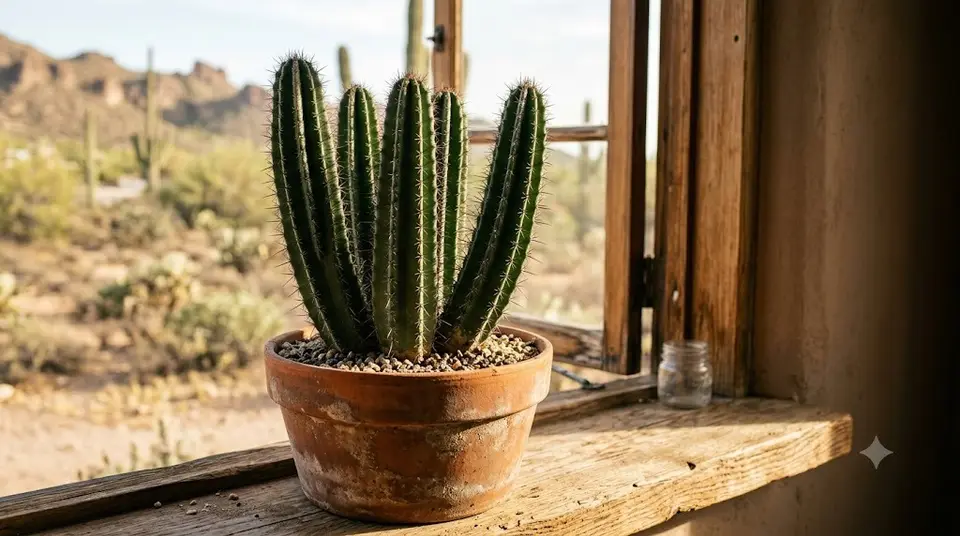
Several tall, slender, deeply ribbed green columns rising in a candelabra cluster from a short trunk, lined with dark spines along the ridges. Large, fragrant white flowers flushed pink open at night on mature plants, followed by round, spiny, sweet red fruit. Potted plants stay slow, upright pipes for many years.
Why People Love It - Qualities & Benefits
People love the clean architectural lines of the clustered pipes, the desert-monument prestige, and (for the patient) the promise of night flowers and famously sweet fruit. It is a striking, low-fuss statement column.
Care
Light
The brightest, sunniest position you have - a south window with hours of direct sun, or outdoors in warm weather. Strong light keeps the pipes firm, green and upright; poor light gives thin, pale, leaning growth.
Watering
Soak, then let the soil dry out completely before watering again - roughly fortnightly in summer, rarely in winter. It stores water in its columns and rots if kept wet.
Soil & Potting
A gritty, free-draining cactus mix in a stable, heavier pot with drainage - clustered columns get top-heavy.
Humidity & Temperature
Warm, dry air suits it; it dislikes humidity. Keep frost-tender potted plants above about 5-10°C and give a cool, dry winter rest.
Feeding
A dilute cactus feed a couple of times through the warm growing season supports the columns.
Repotting
Repot every few years in spring when pot-bound, handling with thick gloves and folded card. A tall cluster may need a weighty pot to stay upright.
Propagation
From stem cuttings (cut a pipe, callus for one to two weeks, root upright in dry gritty mix) or from seed. Cuttings establish into new columns.
Common Problems & Pests
Overwatering rot at the base is the main danger; scale and mealybugs can appear on the ribs. Etiolation (thin, pale growth) means too little light. Corky brown patches low down on old columns are usually just age.
Toxicity & Safety
The organ pipe cactus is not toxic to people or pets (its ripe fruit is in fact edible and prized), but its spines can injure, so keep it out of reach of children and animals and handle with protection.
Pros & Cons
Pros: majestic architectural pipes, night flowers and sweet fruit with age, tough and low-care, long-lived. Cons: gets large and top-heavy, spiny, fruit needs real maturity, needs strong light.
Best Suited For
For anyone with a very sunny window or warm patio who wants a grand, sculptural column - and the patience to enjoy its night flowers and fruit as it matures.
FAQ
Is the fruit really edible? Yes - the organ pipe's pitaya dulce is famously sweet, though only mature plants fruit.
Why is my column thin and pale at the tip? Too little light - move it to your sunniest spot and new growth thickens up.
Gear for growing organ pipe cactus
Links go to Amazon or a partner store (such as Adagio Teas) and may earn us a commission at no extra cost to you. As an Amazon Associate we earn from qualifying purchases. We link gear types, not sponsors' picks: you choose the exact product.