Gollum Jade
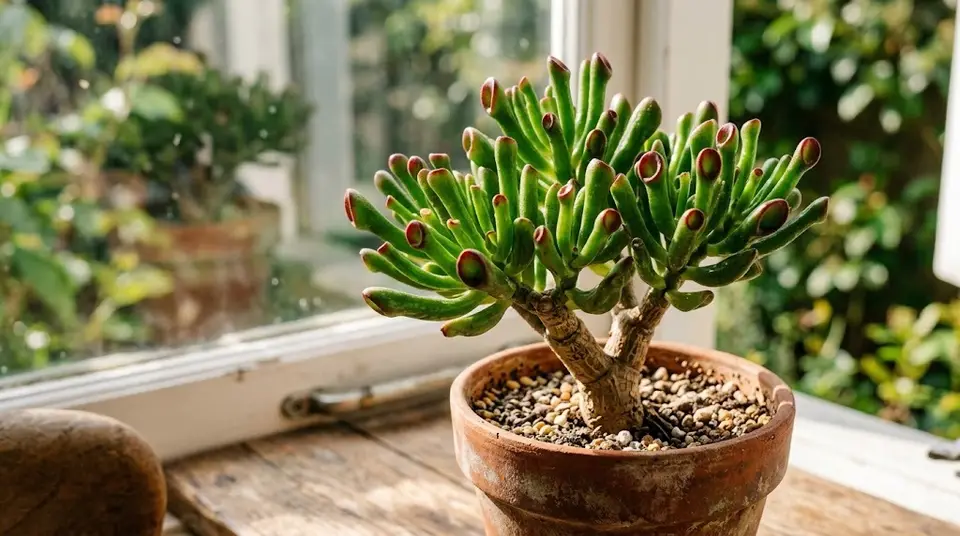
Gollum jade is a quirky cultivar of the classic jade plant whose leaves have rolled into slender green tubes, each flared and often red-tipped at the end like a tiny trumpet or a row of little suckers - hence the nicknames 'ogre ears' and 'finger jade'.
Last reviewed: July 2026
 AI illustration
 Overview
Gollum jade is a quirky cultivar of the classic jade plant whose leaves have rolled into slender green tubes, each flared and often red-tipped at the end like a tiny trumpet or a row of little suckers - hence the nicknames 'ogre ears' and 'finger jade'. Just as tough and forgiving as ordinary jade, it brings the same easy care with a much stranger silhouette.
Origin & Natural Habitat
Crassula ovata 'Gollum' is a cultivated form of the South African jade plant, selected for its tubular leaves. It shares the jade's origins on dry, rocky South African hillsides and all of its famous toughness.
Appearance
A slow, shrubby, thick-stemmed succulent whose leaves are rolled into narrow green tubes, each opening into a shallow, often red-rimmed cup at the tip - like little trumpets or fingers. With age it thickens into a characterful miniature tree. Clusters of small white-pink star flowers may appear in winter on happy, mature plants.
Why People Love It - Qualities & Benefits
People love the bizarre tubular 'ogre ear' leaves, the way the tips flush red in sun, and the fact that it is every bit as bomb-proof and long-lived as ordinary jade. It makes an easy, sculptural, conversation-piece bonsai-like plant.
Care
Light
Bright light with some direct sun keeps it compact, thick-trunked and red-tipped - a sunny windowsill is ideal. In low light it grows leggy and stays plain green.
Watering
Water like a jade: soak thoroughly, then let the soil dry out completely before the next drink - often 1-3 weeks. It stores water in leaves and trunk and far prefers drought to soggy soil, which rots it. Water even less in winter.
Soil & Potting
A gritty, free-draining succulent or cactus mix in a pot with drainage.
Humidity & Temperature
Warm, dry air suits it; ordinary room air is fine. Keep it above about 10°C - it is frost-tender.
Feeding
A dilute succulent feed a few times through the growing season is plenty; it thrives on lean conditions.
Repotting
Repot every couple of years in spring into fresh gritty mix. Let it settle a few days before watering, as with any jade, to avoid rotting cut roots.
Propagation
Very easy from stem or leaf cuttings: let a piece callus for several days, then set it in dry-ish gritty mix. It roots reliably, like ordinary jade.
Common Problems & Pests
Overwatering rot is the number-one killer - soft, shrivelled or dropping leaves and a mushy base signal it. Mealybugs can appear. Leggy, all-green growth means too little light. Wrinkled tubes usually mean it is finally thirsty.
Toxicity & Safety
Gollum jade is a crassula, like the common jade plant, and is considered mildly toxic to cats and dogs if eaten - it can cause vomiting or lethargy. Keep it out of reach of pets, and if a pet chews it and seems unwell, contact a vet.
Pros & Cons
Pros: bizarre tubular 'ogre ear' leaves, red tips in sun, as tough and long-lived as jade, easy to propagate. Cons: mildly toxic to pets, slow-growing, rots if overwatered, needs good light for colour and compactness.
Best Suited For
For anyone who loves the jade plant but wants something stranger - an easy, sculptural, near-indestructible succulent for a bright windowsill, kept away from nibbling pets.
FAQ
Why are the leaves tubes instead of flat? 'Gollum' is a cultivar bred for rolled, tubular leaves - it's normal, not a deformity.
Do I care for it like a normal jade? Exactly the same - bright light, soak-and-dry watering, gritty soil; it is just as forgiving.
Gear for growing gollum jade
Links go to Amazon or a partner store (such as Adagio Teas) and may earn us a commission at no extra cost to you. As an Amazon Associate we earn from qualifying purchases. We link gear types, not sponsors' picks: you choose the exact product.