Epidendrum (Reed-Stem Orchid)
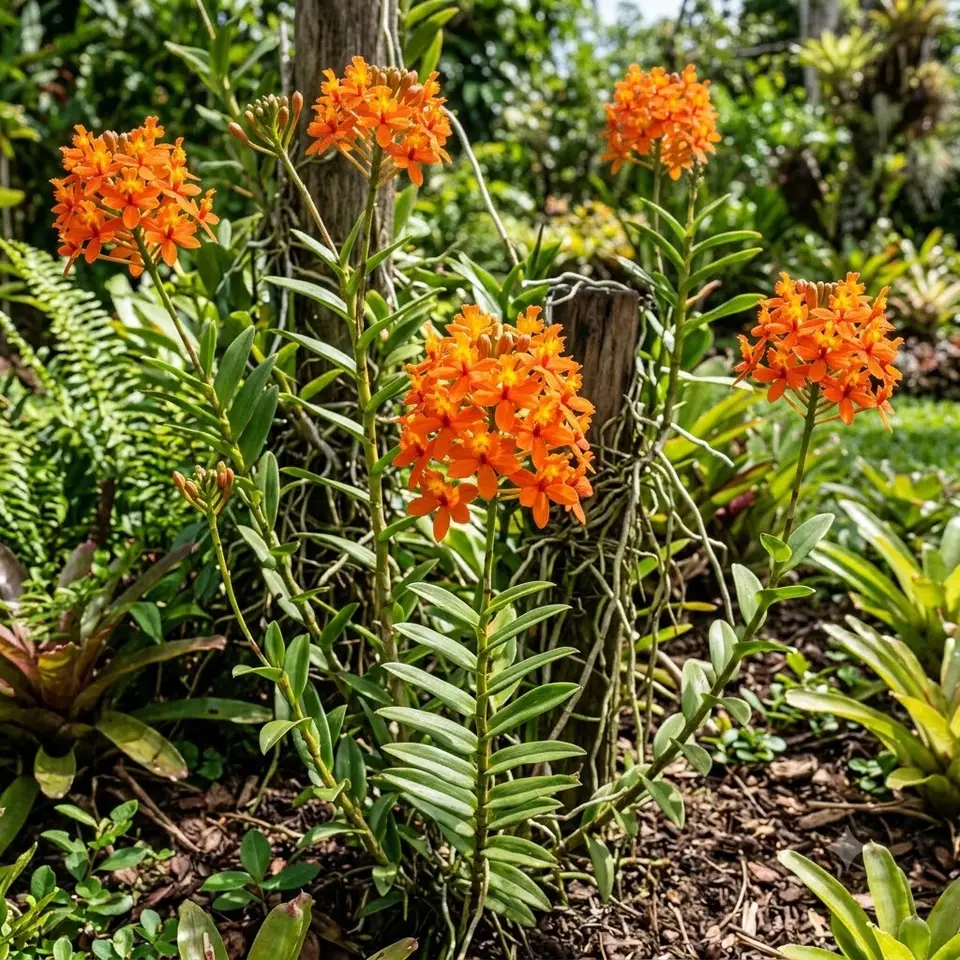
Reed-stem epidendrums are cane-stemmed, sun-loving garden orchids topped with nonstop clusters of small vivid crucifix blooms in firecracker oranges, reds and pinks.
Last reviewed: October 2026
 AI illustration
 Overview
Reed-stem epidendrums are cane-stemmed, sun-loving garden orchids topped with nonstop clusters of small vivid crucifix blooms in firecracker oranges, reds and pinks. In frost-free gardens they flower ALL YEAR in dirt-adjacent beds; in pots they bring orchids to sunny balconies with geranium-level fuss. (Epidendrum.)
Origin & Natural Habitat
Sunny slopes and roadsides through tropical America - tough, light-loving, near-terrestrial; the 'poor man's orchid' compliment.
Appearance
Thin leafy canes 30-150 cm; continuous top clusters of 2-4 cm crucifix-lipped blooms (orange, red, pink, lavender, yellow) each head blooming for months as new buds open.
Why People Grow It - Qualities & Benefits
- Genuinely everblooming: no season off
- Takes near-full sun and outdoor life
- Easiest orchid to grow LOTS of
- Keikis (plantlets) multiply it for free
Care
Light: High - the sunniest common orchid: half-day+ direct outdoors, brightest window inside; more light = redder leaves and constant bloom.
Water: Regular garden-plant watering, drying somewhat between; forgiving both directions.
Potting medium: Coarse gritty mix, or garden beds amended chunky in frost-free zones; even rockeries.
Temperature & Humidity: 10-32°C tolerant; frost is the only real enemy - zones 9b+ outdoors, pots elsewhere.
Feeding: Light regular feeding fuels the nonstop show.
Rest & rebloom: None - it just keeps going; snip spent heads and the canes' keikis carry on.
Propagation
The gift genus: canes sprout aerial keikis with roots - twist off and plant. One plant becomes a hedge in a few years.
Common Problems & Pests
- Leggy canes lean: stake or let them colonize
- Aphids on perpetual buds
- Sunburn only on abrupt moves
- Cold snaps below ~0°C end the party
Toxicity & Safety
Orchids are non-toxic to cats and dogs - one of the safest flowering houseplant families.
Pros & Cons
Pros
- Orchid color 365 days
- Beginner-and-balcony proof
- Self-propagating generosity
Cons
- Small individual blooms
- Rangy habit
- Frost-tender
Best Suited For
- Mild-climate garden beds (9b-11)
- Sunny balconies and patios
- Beginners wanting unkillable orchids
- Pass-along plant culture
FAQ
Can an orchid really live in a garden BED?
Reed-stems can - in frost-free climates they grow in gritty garden soil like perennials, blooming continuously. The genus never read the orchid rulebook.
What are the little plants on the stems?
Keikis - complete babies with roots. Leave for a fuller clump or detach and pot; every friend leaves with one.
Gear for growing epidendrum (reed-stem orchid)
Links go to Amazon or a partner store (such as Adagio Teas) and may earn us a commission at no extra cost to you. As an Amazon Associate we earn from qualifying purchases. We link gear types, not sponsors' picks: you choose the exact product.