Cholla Cactus
The cholla is a shrubby, branching cactus of cylindrical segments cloaked in barbed spines so ready to detach that some kinds are nicknamed 'jumping cholla'.
Last reviewed: October 2026
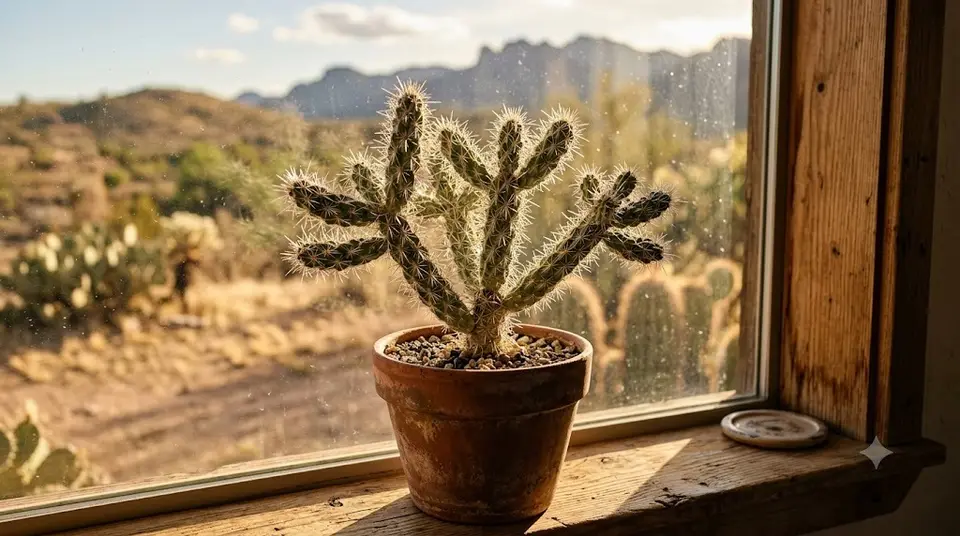 AI illustration
 Overview
The cholla is a shrubby, branching cactus of cylindrical segments cloaked in barbed spines so ready to detach that some kinds are nicknamed 'jumping cholla'. Architectural and tough, it is a striking specimen for a very sunny spot, kept well out of reach of anything that might brush against it.
Origin & Natural Habitat
Cholla (Cylindropuntia species) are native across the deserts of the American Southwest and Mexico, forming shrubby or tree-like stands in blazing, arid country. They are close relatives of the prickly pears, sharing the barbed glochids.
Appearance
An upright, branching plant built from cylindrical, segmented green-to-grey stems, densely armed with sheathed, barbed spines that catch the light in a silvery halo. Segments detach readily and cling to anything that touches them. Bright flowers in yellow, pink or magenta open on mature plants, followed by fruit.
Why People Love It - Qualities & Benefits
People love the sculptural branching form, the way backlight sets the spines glowing, and its rugged desert character. It is a genuine conversation piece and, given sun, an easy and dramatic plant.
Care
Light
The most direct sun you can give - a hot, south-facing window or outdoors in warm weather. Strong light keeps the segments firm and the plant compact; too little and it grows pale and weak.
Watering
Soak, then let the soil dry out completely before watering again - roughly fortnightly in summer, very sparingly in winter. Like all opuntia relatives it tolerates drought far better than wet feet.
Soil & Potting
A gritty, sharply draining cactus mix in a sturdy pot with drainage. Its top-heavy branching appreciates a heavier pot for stability.
Humidity & Temperature
Warm, dry air suits it; it dislikes humidity. Keep it above about 5-10°C and give a cool, dry winter rest.
Feeding
A dilute cactus feed once or twice in the growing season supports its branching growth.
Repotting
Repot every few years in spring, handling with extreme care - use thick gloves, tongs and folded card, never bare hands. Detached segments cling instantly and the barbed spines are miserable to remove.
Propagation
Very easy - almost too easy: a detached segment laid on gritty soil roots readily after callusing. Handle throughout with tongs and gloves.
Common Problems & Pests
The barbed, detaching spines are the main hazard to you; the plant's own enemy is rot from overwatering or cold, wet soil. Scale and mealybugs can appear. Segments dropping is normal, not a fault.
Toxicity & Safety
The cholla is not toxic, but its barbed, easily-detached spines are a serious physical hazard - they lodge deep, cling to skin, fur and clothing, and are painful to remove. Keep it far from children, pets and any walkway, and never handle it without gloves and tongs.
Pros & Cons
Pros: striking branching sculpture, spines glow in backlight, tough and drought-proof, easy from segments. Cons: the barbed detaching spines are genuinely dangerous, needs siting well away from traffic, wants strong light.
Best Suited For
For experienced growers with a very bright spot who want dramatic desert architecture - and the discipline to keep those clinging spines away from everyone.
FAQ
Why is it called jumping cholla? The segments detach so readily at the lightest touch that they seem to 'jump' onto passers-by - handle only with tongs.
Can I grow one from a fallen segment? Yes - callus it, lay it on gritty soil and it roots easily; just move it with gloves.
Gear for growing cholla cactus
Links go to Amazon or a partner store (such as Adagio Teas) and may earn us a commission at no extra cost to you. As an Amazon Associate we earn from qualifying purchases. We link gear types, not sponsors' picks: you choose the exact product.