Cattleya Orchid
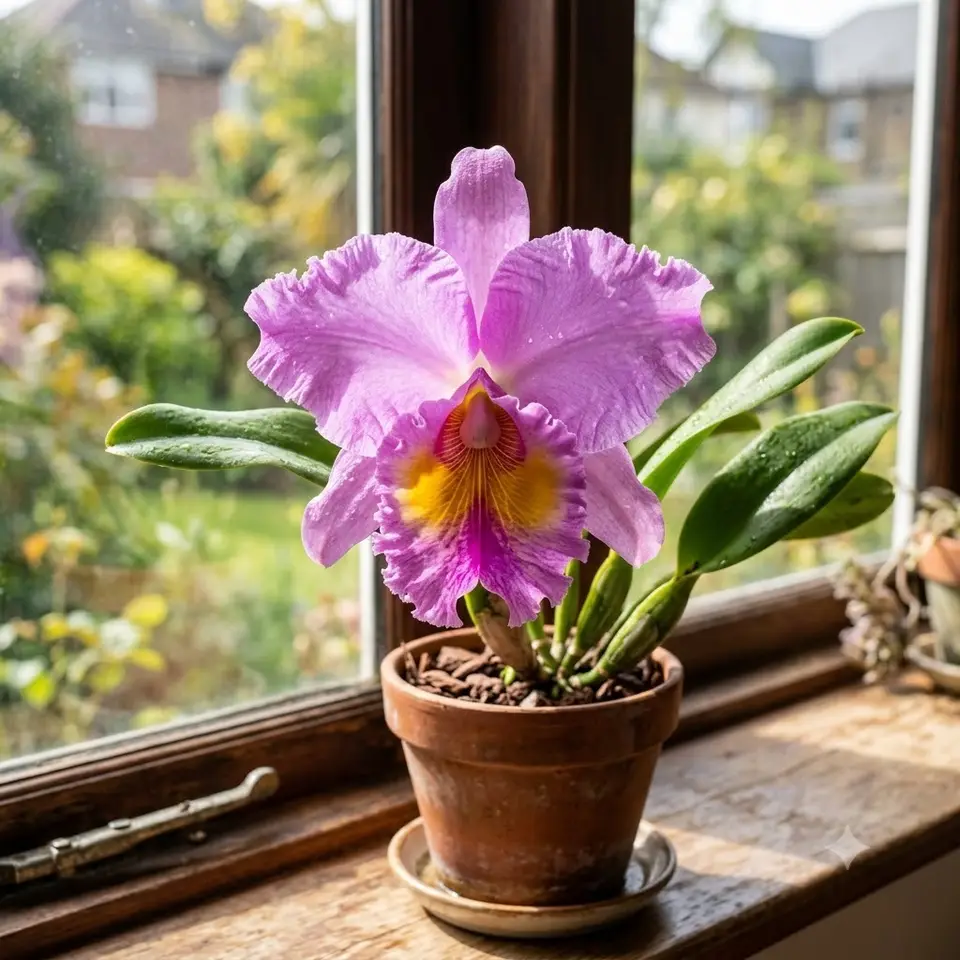
Cattleya, the classic corsage orchid, has ruffled, perfumed blooms and was the best-known orchid for a century before Phalaenopsis took over the supermarkets.
Last reviewed: October 2026
 AI illustration
 Overview
Cattleya, the classic corsage orchid, has ruffled, perfumed blooms and was the best-known orchid for a century before Phalaenopsis took over the supermarkets. Big fragrant blooms in impossible colors, a tougher constitution than its glamour suggests, and one non-negotiable demand: real light. (Cattleya.)
Origin & Natural Habitat
Tree branches of Central and South America (Brazil, Colombia especially) in bright, breezy, seasonally dry forest.
Appearance
Pseudobulbs with leathery leaves, 15-60 cm by type; blooms 8-20 cm (ruffled lips, jewel colors, many richly fragrant) lasting 2-6 weeks, once or twice a year.
Why People Grow It - Qualities & Benefits
- The most spectacular, fragrant blooms in common orchid keeping
- Tough, forgiving pseudobulb constitution
- Compact modern hybrids fit windowsills
- The classic connoisseur step after Phalaenopsis
Care
Light: The crux: bright light with some gentle sun (east or lightly shaded south window) - leaves should be light apple-green, not dark. Dark-green happy-LOOKING plants never bloom.
Water: Soak thoroughly, then dry fully - pseudobulbs store water; soggy roots kill. Roughly weekly, less in winter.
Potting medium: Coarse bark chunks or basket culture - maximum air at the roots; never soil, never moss-packed.
Temperature & Humidity: 18-29°C days, cooler nights (5-8°C drop helps trigger bloom); 50%+ humidity appreciated.
Feeding: Weakly weekly balanced orchid feed in growth; flush pots monthly.
Rest & rebloom: Many rest after new pseudobulbs mature - water less until new roots/spikes show. Learn your plant's annual rhythm; the reward is the flush.
Propagation
Division at repotting: 3-4 pseudobulbs per division, each with a live 'eye'. Repot ONLY when new roots start - cattleyas resent ill-timed disturbance.
Common Problems & Pests
- No blooms = not enough light, always, basically
- Rot in dense wet media
- Scale insects hiding under pseudobulb sheaths
- Wrinkled bulbs = under-watering OR dead roots: check which
Toxicity & Safety
Orchids are non-toxic to cats and dogs - one of the safest flowering houseplant families.
Pros & Cons
Pros
- Breathtaking fragrant flowers
- Robust when understood
- Long-lived heirloom plants
Cons
- Needs real brightness
- Blooms once-twice yearly, not always-on
- Bulky older varieties
Best Suited For
- Bright windowsills and sunrooms
- Fragrance lovers
- Phalaenopsis graduates
- Corsage nostalgia
FAQ
Why won't my cattleya rebloom?
Light, 95% of the time - move it to where leaves turn light yellow-green with gentle sun. The plant should look slightly 'stressed' by houseplant standards to flower.
When do I repot?
Only when new roots emerge (usually after bloom) - potting at the wrong phase sets them back a year. Coarse bark, snug pot.
Gear for growing cattleya orchid
Links go to Amazon or a partner store (such as Adagio Teas) and may earn us a commission at no extra cost to you. As an Amazon Associate we earn from qualifying purchases. We link gear types, not sponsors' picks: you choose the exact product.