Catasetum Orchid
Catasetum orchids have waxy male blooms that catapult pollen onto visiting bees at a touch, on plants that live a double life: lush leafy summers, then total leafless winter dormancy when watering STOPS.
Last reviewed: October 2026
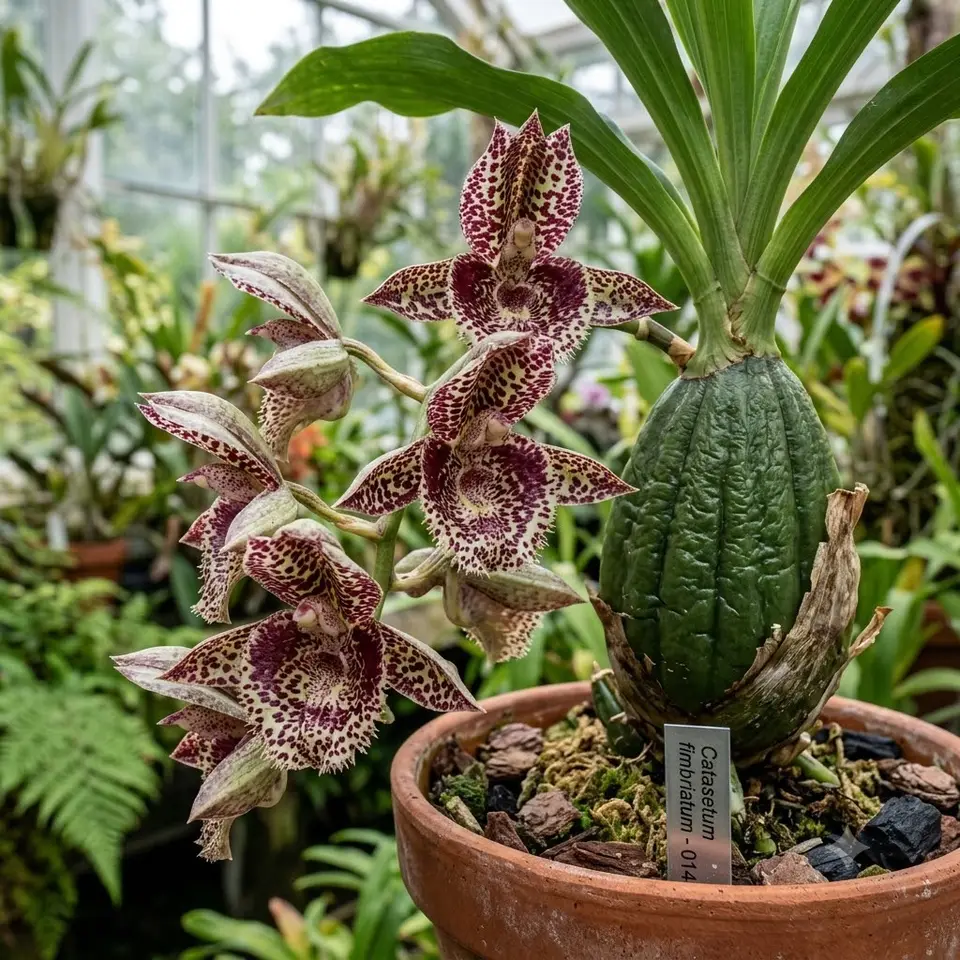 AI illustration
 Overview
Catasetum orchids have waxy male blooms that catapult pollen onto visiting bees at a touch, on plants that live a double life: lush leafy summers, then total leafless winter dormancy when watering STOPS. Master the on/off calendar and they're easy; ignore it and they rot. (Catasetum.)
Origin & Natural Habitat
Seasonally dry tropical America - deciduous forests with wet summers and hard dry winters; the calendar is genetic.
Appearance
Fat cigar pseudobulbs with pleated deciduous leaves to 60 cm; helmet-like waxy blooms (sexes differ - males showy, females green hoods) in greens, maroons, spotted. Some scented of rye bread and spice.
Why People Grow It - Qualities & Benefits
- Spring-loaded pollen mechanics: touch and SNAP
- Bizarre, sculptural, collectible blooms
- Clear seasonal rhythm many find easier than 'steady'
- Fat bulbs forgive summer enthusiasm
Care
Light: Bright with sun in the leafy season - cattleya-plus while growing.
Water: The rule that IS the genus: water-and-feed HEAVILY in leaf (they're gluttons), then when leaves yellow and drop - STOP. No water at all in winter beyond a rare bulb-saving sip.
Potting medium: Moss or fine bark, repotted ANNUALLY at spring restart (they root explosively into fresh medium).
Temperature & Humidity: Warm summers (20-32°C); dormant bulbs tolerate cool (12°C+) - they're leafless, they barely care.
Feeding: Aggressive in growth (weekly, full-ish strength - unique among orchids), zero in dormancy.
Rest & rebloom: Total leafless dormancy Nov-Mar-ish; new growth in spring restarts water. Blooms come off the mature bulbs - often just before or after rest.
Propagation
Division of bulb clusters at spring repot; dormant backbulbs sprout in damp moss.
Common Problems & Pests
- Watering the dormant bulb: the one fatal sin
- Spider mites on soft summer leaves: the genus magnet, watch closely
- Spent leaves yellowing in fall alarm beginners (it's the plan)
- Bud sex depends on light (high = female hoods: curious, not a defect)
Toxicity & Safety
Orchids are non-toxic to cats and dogs - one of the safest flowering houseplant families.
Pros & Cons
Pros
- The most interesting biology on the sill
- Dramatic growth speed in season
- Easy IF the calendar is obeyed
Cons
- Half the year it's a bare bulb
- Mite vigilance in summer
- Not a 'water everything Sunday' plant
Best Suited For
- Growers who like seasons and rituals
- Curiosity collectors
- Summer greenhouse/porch owners
- People who over-water: here it's legal (in season)
FAQ
My catasetum dropped every leaf - dead?
Dormant - exactly on schedule. Stop watering, park it, and when a new spike of growth shows in spring, resume: the annual heartbeat of the genus.
Does the pollen really shoot out?
Touch the male bloom's antenna and the pollinia fire with real force (several cm) - gently, once; each flower carries one shot and fired blooms fade sooner.
Gear for growing catasetum orchid
Links go to Amazon or a partner store (such as Adagio Teas) and may earn us a commission at no extra cost to you. As an Amazon Associate we earn from qualifying purchases. We link gear types, not sponsors' picks: you choose the exact product.