Brassia (Spider Orchid)
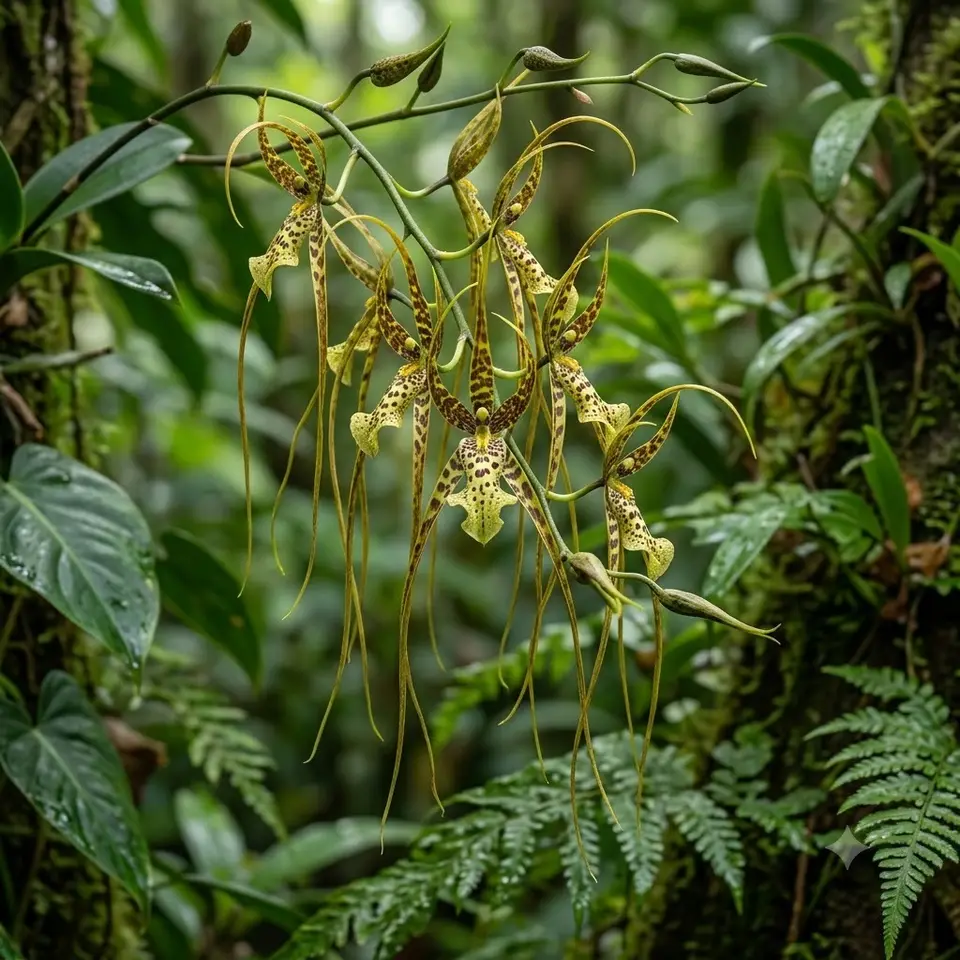
Brassia, often called the spider orchid, carries sprays of blooms with petals drawn out into 15-20 cm trailing threads, like elegant green-and-bronze spiders climbing the spike.
Last reviewed: October 2026
 AI illustration
 Overview
Brassia, often called the spider orchid, carries sprays of blooms with petals drawn out into 15-20 cm trailing threads, like elegant green-and-bronze spiders climbing the spike. Add easy oncidium-style care and a spicy fragrance, and you get maximum exotica per unit of effort. (Brassia.)
Origin & Natural Habitat
Central/South American wet forests; pollinated (wonderfully) by spider-hunting wasps that attack the flowers.
Appearance
Oncidium-like pseudobulb plants 30-60 cm; long arching spikes of 8-15 spidery blooms (sepals stretched into streamers) green, gold, bronze, spotted; fragrant, 3-5 weeks, often twice yearly.
Why People Grow It - Qualities & Benefits
- The most theatrical bloom silhouette in easy orchids
- Spicy daytime fragrance
- Straightforward intermediate care
- Fast-growing into specimen sprays
Care
Light: Bright indirect + gentle sun (east window ideal) - standard 'oncidium light'.
Water: Thorough soak, approach dryness, repeat; slightly drier after bulbs finish.
Potting medium: Medium bark mix; roomy-ish pots for the vigorous roots.
Temperature & Humidity: 16-28°C ordinary home range; 50%+ humidity keeps streamer-tips from crisping.
Feeding: Half-strength every two weeks in growth.
Rest & rebloom: Mild post-growth rest triggers spikes; wrinkling bulbs during rest = one modest drink.
Propagation
Division (3+ bulbs); backbulbs sprout readily in moss - an easy multiplier.
Common Problems & Pests
- Streamer tips brown in dry air (cosmetic; humidity fixes)
- Standard scale/mealybug patrol
- Bloom skips = light or missed rest
- Little else: it's an easy genus wearing a wild costume
Toxicity & Safety
Orchids are non-toxic to cats and dogs - one of the safest flowering houseplant families.
Pros & Cons
Pros
- Jaw-dropping spider sprays
- Easy-intermediate care
- Frequent blooming, quick growth
Cons
- Blooms weeks not months
- Big specimen plants sprawl
- Subtle colors (drama is in FORM)
Best Suited For
- Growers bored of round flowers
- East-window sills
- Fragrance-and-form collectors
- Halloween-adjacent decor, honestly
FAQ
Why 'spider' orchid?
The drawn-out threadlike sepals mimic spiders convincingly enough that female spider-wasps sting the lip trying to hunt them - performing pollination in the struggle. Evolution wrote the horror script.
How do I get rebloom?
Standard oncidium recipe: good light, finish the pseudobulb, slight dry-cooler pause - spikes rise from the new bulb's base sheaths.
Gear for growing brassia (spider orchid)
Links go to Amazon or a partner store (such as Adagio Teas) and may earn us a commission at no extra cost to you. As an Amazon Associate we earn from qualifying purchases. We link gear types, not sponsors' picks: you choose the exact product.