Blue Chalksticks (Curio repens)
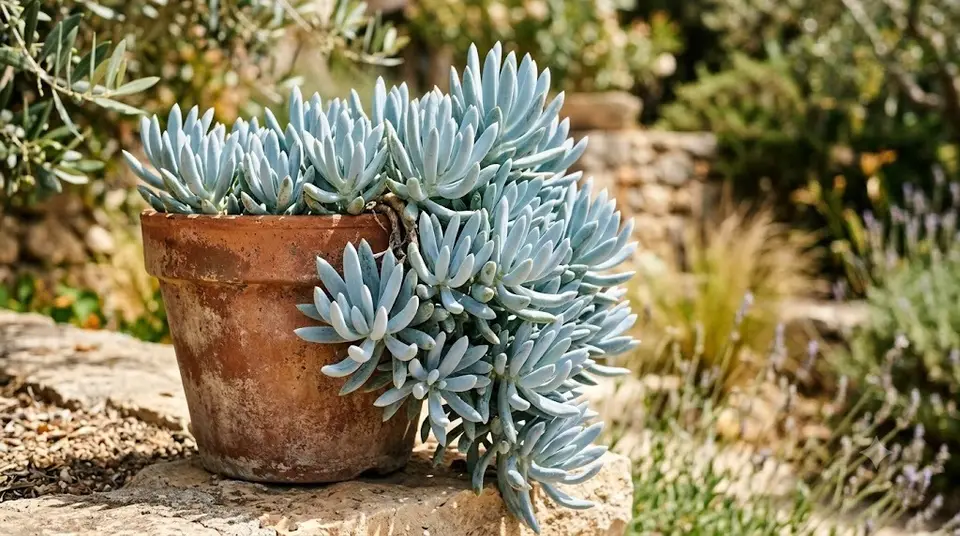
Blue chalksticks is a low, spreading succulent whose plump, finger-shaped leaves are coated a striking powdery silver-blue - like sticks of blue chalk.
Last reviewed: October 2026
 AI illustration
 Overview
Blue chalksticks is a low, spreading succulent whose plump, finger-shaped leaves are coated a striking powdery silver-blue - like sticks of blue chalk. Tough, drought-proof and happy to spill from a pot or carpet a sunny bed, it is one of the easiest ways to add cool blue to a succulent collection.
Origin & Natural Habitat
Curio repens (long known as Senecio serpens) comes from the winter-rainfall Cape region of South Africa, creeping over rocky slopes. Its waxy blue coating is sunscreen against intense light.
Appearance
Upright, finger-like, blue-grey leaves with a chalky bloom, packed along creeping stems that root as they spread. Small brush-like white flowers appear on stalks in summer. The blue intensifies in strong sun.
Why People Love It - Qualities & Benefits
People love the true silver-blue colour (a perfect contrast to green and red succulents), and its easy, spreading habit. It fills pots, spills nicely and shrugs off drought and neglect.
Care
Light
Full sun for the best blue and a compact carpet - a very sunny windowsill or outdoors in warm weather. In shade it greens and sprawls loosely.
Watering
Soak when the soil is fully dry, then wait; the fleshy fingers store plenty. Keep drier in winter. It far prefers drought to damp and rots in soggy soil.
Soil & Potting
A gritty, free-draining succulent mix in a pot with drainage - or a lean, sandy spot outdoors in mild climates.
Humidity & Temperature
Dry, airy conditions suit it; ordinary room air is fine. It tolerates brief light frost in the ground but is safest kept above about 5°C in a pot.
Feeding
A dilute succulent feed once or twice in the growing season is ample.
Repotting
Repot or trim every year or two as it spreads; the creeping stems make it easy to reshape. Handle by the stems to preserve the chalky bloom on the leaves.
Propagation
Very easy from stem cuttings: snip a length, callus a few days, and lay or plant it in gritty mix - it roots along the stem. Clumps also divide simply.
Common Problems & Pests
Overwatering rot is the main risk. Handling rubs the blue bloom off (cosmetic). Mealybugs and aphids occasionally visit. Leggy green growth means too little sun.
Toxicity & Safety
Blue chalksticks is considered mildly toxic if eaten and its sap can irritate skin - as with other senecio relatives, keep it away from nibbling pets and children and wash hands after pruning.
Pros & Cons
Pros: striking silver-blue colour, tough and drought-proof, spreads and propagates easily. Cons: mildly toxic if eaten, bloom rubs off with handling, needs full sun for colour.
Best Suited For
For anyone building a colour-contrast succulent display - the reliable blue that ties a collection together, best kept away from curious pets.
FAQ
Why has my plant gone green? Not enough sun - full light brings back the chalk-blue coating on new growth.
Is it safe for pets? Treat it as mildly toxic - keep it out of reach and wash hands after handling the sap.
Gear for growing blue chalksticks (curio repens)
Links go to Amazon or a partner store (such as Adagio Teas) and may earn us a commission at no extra cost to you. As an Amazon Associate we earn from qualifying purchases. We link gear types, not sponsors' picks: you choose the exact product.