Reticulata Iris
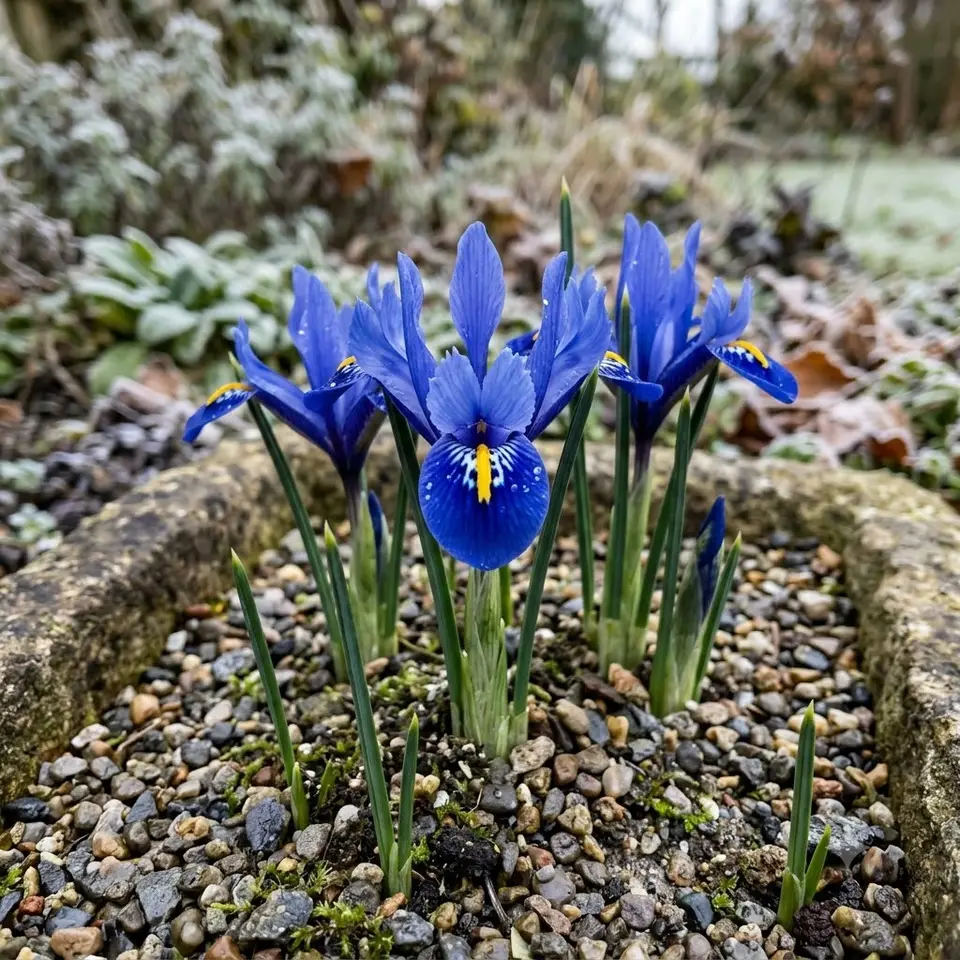
Reticulata iris flower in February: 10 cm sapphire-and-gold iris blooms opening with the snowdrops, perfect in gravel, troughs and bowls where their intricate faces meet your eye.
Last reviewed: October 2026
 AI illustration
 Overview
Reticulata iris flower in February: 10 cm sapphire-and-gold iris blooms opening with the snowdrops, perfect in gravel, troughs and bowls where their intricate faces meet your eye. Cheap, early, exquisite - with a known habit of splitting into non-blooming bulblets after year one in rich soils. (Iris reticulata.)
Origin & Natural Habitat
Turkey, Caucasus, Iran - snowmelt slopes with baking dry summers; the netted ('reticulate') bulb tunic names them.
Appearance
8-15 cm blooms - 'Harmony' royal blue, 'Katharine Hodgkin' ice-blue watercolor, purples, sky-blues - all gold-crested and intricately marked; grassy leaves stretch after.
Why People Grow It - Qualities & Benefits
- Iris beauty at snowdrop time
- Ideal for pots, troughs, gravel close-ups
- Jewel-box color range
- Pennies per gem
Care
Light: Full sun (winter sun on gravel, troughs, sills).
Water: Winter-spring moist, summer BAKED dry - the continental recipe; wet summers split/rot them.
Soil: Sharp drainage above all; gritty, lean.
Planting: Fall, 8-10 cm deep (deeper planting discourages the splitting habit) in drifts or bowls.
Hardiness: Zones 5-9.
After flowering: Let the post-bloom leaves run their gangly course; in wet-summer gardens many treat them as gorgeous cheap annuals - or grow in pots summered dry under a bench.
Propagation
Bulblet offsets (the split issue in reverse: grow them on two years to bloom size in a nursery row).
Common Problems & Pests
- Year-two no-shows from bulb splitting in rich moist soils (deep planting + summer dry = the fixes)
- Ink spot disease in old dense plantings
- Slugs at bloom
Toxicity & Safety
Standard mild iris toxicity; wildlife disinterested.
Pros & Cons
Pros
- February iris faces
- Container perfection
- Trivial cost
Cons
- Perennial reliability varies with summer wet
- Post-bloom leaf gangle
- Small = plant close and low
Best Suited For
- Troughs, bowls, gravel gardens
- Windowsill forcing
- Path-edge close-ups
- Cold-climate early color
FAQ
Why did fifty blooms become five in year two?
The split: rich moist summers dissolve the bulb into rice-grain bulblets that need years to rebloom. Deep planting, summer drought (or pot culture), and lean grit keep them blooming - or replant annually and stay happy.
Best for a beginner's winter pot?
'Harmony' - fat sapphire blooms, gold blaze, forces beautifully in a bowl by a cold window; plant in October, jewels by February.
Sources
Pet toxicity: checked against the ASPCA Animal Poison Control Center lists of toxic and non-toxic plants for cats and dogs, genus-wide entry "Iris" (Iris species): toxic to cats and dogs. Lists read on 10 October 2026.
Gear for growing reticulata iris
Links go to Amazon or a partner store (such as Adagio Teas) and may earn us a commission at no extra cost to you. As an Amazon Associate we earn from qualifying purchases. We link gear types, not sponsors' picks: you choose the exact product.