Persian Buttercup
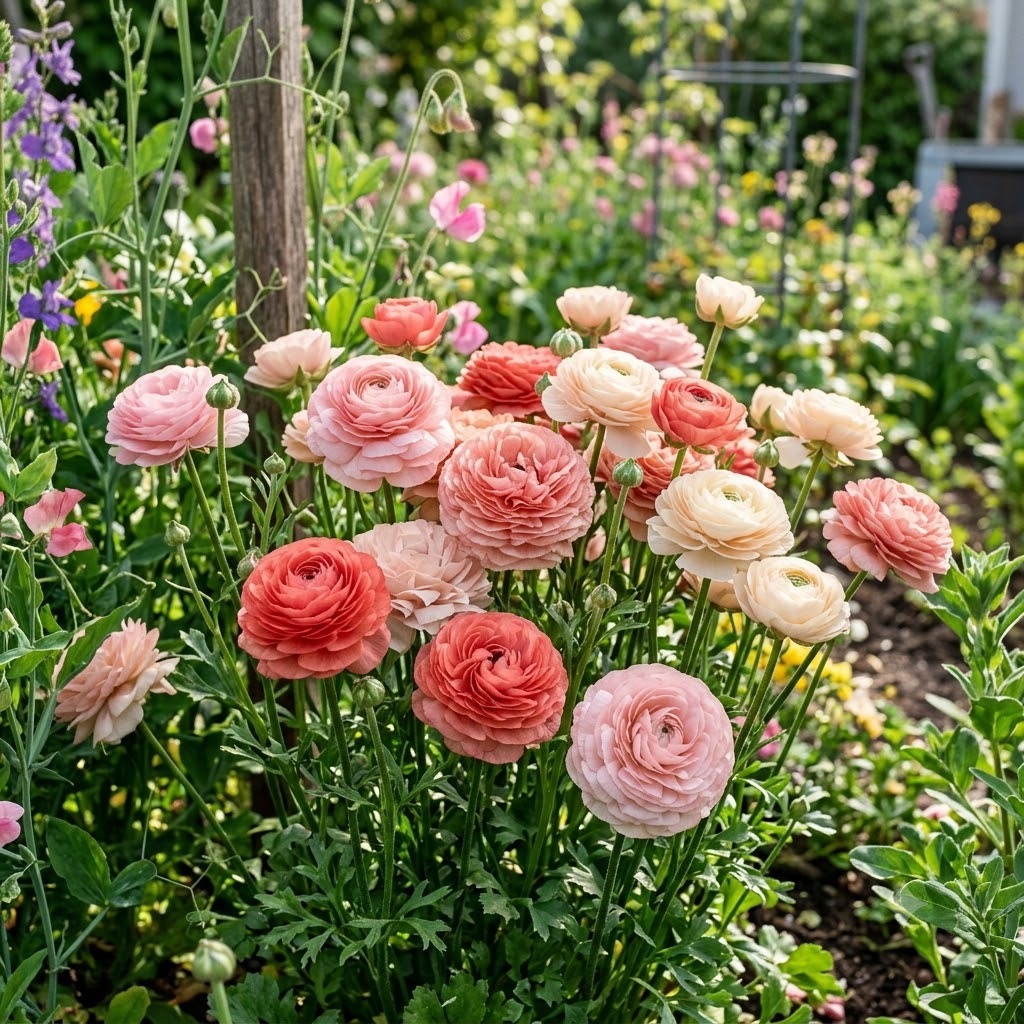
Ranunculus are the roses that grow from claws - impossibly layered crepe-paper blooms (a hundred petals deep) that rule wedding florals, sprouting from odd little octopus corms.
🗓️ Last reviewed: July 2026
Overview
Ranunculus are the roses that grow from claws - impossibly layered crepe-paper blooms (a hundred petals deep) that rule wedding florals, sprouting from odd little octopus corms. Cool-season logic runs them: fall planting in mild winters, late-winter starts elsewhere, cut flowers by the bucket either way. (Ranunculus asiaticus.)
Origin & Natural Habitat
Eastern Mediterranean - cool wet winters, hot dry summers; bred (notably Italian/Japanese lines) into florist perfection.
Appearance
30-45 cm stems with 5-10 cm globes of tissue-layered petals - every color but blue; 'Cloni' lines reach peony size; ferny foliage below.
Why People Grow It - Qualities & Benefits
- Florist-favorite blooms at home-grow prices
- 10-day vase life per stem
- A cutting patch yields buckets
- Cool-season slot before summer flowers
Care
Light: Full sun, cool season - spring sun, not summer heat.
Water: Even moisture in growth; rot-prone if cold AND soggy; dry off after die-back.
Soil: Rich, sharply drained beds or crates.
Planting: The ritual: soak claws 3-4 hours (they double, plumping), pre-sprout in trays 10-14 days cool, then plant claws-DOWN 5 cm deep. Zones 8-10: fall planting overwinters; colder: late-winter cold-frame starts for May cuts.
Hardiness: Corms hardy-ish to light frost in growth (protect below ~-4°C); heat ends the season - a spring annual in most of the world.
After flowering: Cut relentlessly (it fuels more); let heat-faded plants dry down, lift corms or (cheap) compost and rebuy.
Propagation
Corms multiply modestly - lift, dry, divide clusters; most growers refresh premium lines annually.
Common Problems & Pests
- Corm rot in cold-wet (the soak-sprout-drain protocol prevents)
- Aphids on buds
- Powdery mildew late
- Birds tugging sprouts
Toxicity & Safety
Ranunculus-family - sap mildly irritant, toxic-ish if eaten fresh (bitterness self-limits); dried hay-level concern only; standard pet sense.
Pros & Cons
Pros
- Unmatched petal architecture
- Cut-and-come-again buckets
- Every wedding palette color
Cons
- Cool-window scheduling to learn
- Not perennial most places
- Premium corms cost (and repay)
Best Suited For
- Cutting gardens and flower farms-lite
- Cool-spring climates
- Crate-and-cold-frame tinkerers
- Wedding DIY ambitions
FAQ
Claws up or down?
Down - the octopus legs point into the earth, crown up, after their soak-and-sprout. Planted dry and upside-down is the classic first-year failure.
Can I perennialize them?
Zones 8-10 with dry summers: yes, they'll return like the Mediterranean natives they are. Elsewhere treat as a glorious cool-season annual - the economics still beat one florist bouquet.