English Roses (David Austin)
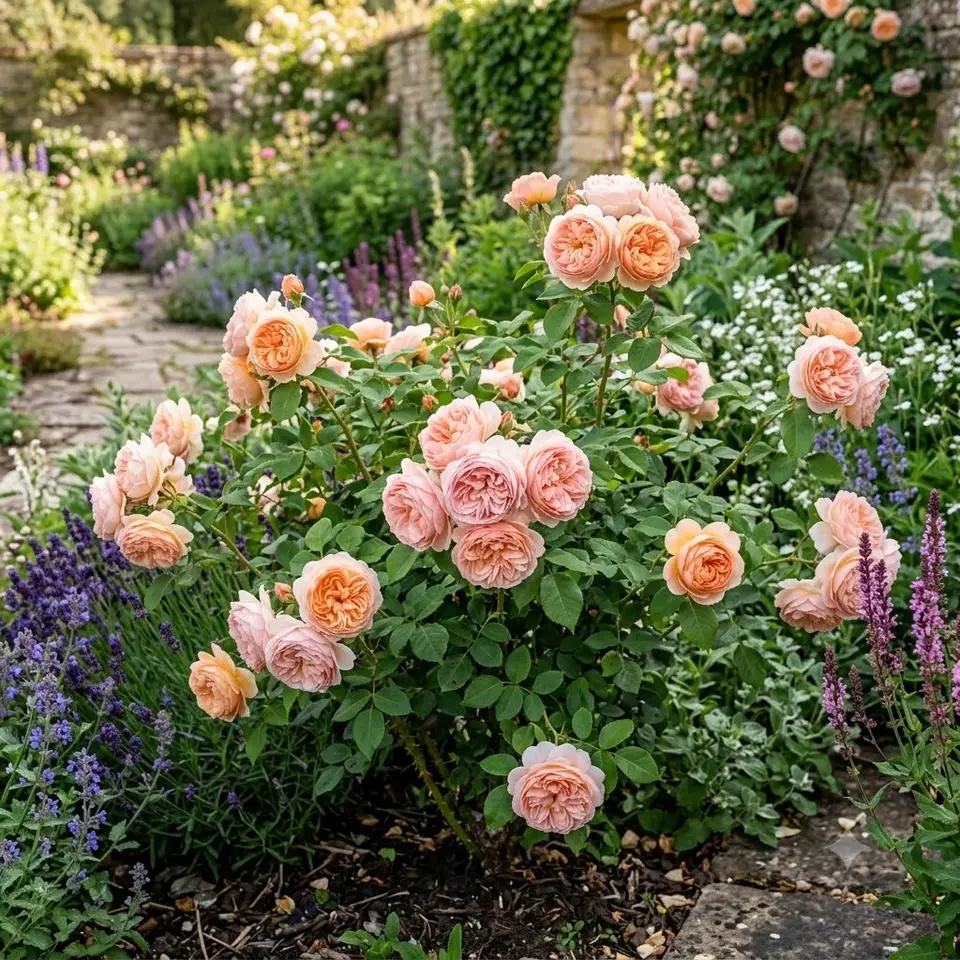
David Austin's English roses carry cupped and quartered old-rose-style blooms, often strongly scented, on healthy repeat-flowering shrubs.
Last reviewed: October 2026
 AI illustration
 Overview
David Austin's English roses carry cupped and quartered old-rose-style blooms, often strongly scented, on healthy repeat-flowering shrubs. Since 1961 they've owned the space between antique charm and modern performance, and half the world's dream gardens are planted with them. (Rosa: English/Austin shrub class.)
Origin & Natural Habitat
Bred by David Austin in Shropshire, England from 1950s-60s onward, crossing old gallicas/damasks with modern repeaters - 'Constance Spry' (1961) started it; 200+ varieties followed.
Appearance
Graceful shrubs 1-1.5 m (some climbing forms) with full, many-petaled rosette blooms in soft and rich shades, held on arching growth - the 'rose that looks like a painting' class.
Why People Grow It - Qualities & Benefits
- Old-rose beauty + modern repeat bloom
- The best fragrance program in roses: myrrh, tea, fruit
- Shrubby garden-friendly habits
- Strong modern disease resistance (recent varieties)
Care
Light: Full sun, 6+ hours a day.
Water: Deep soak at the base about once a week, more in heat.
Soil & Feeding: As for every garden rose - the full routine is in the rose care guide.
Temperature & Hardiness: Zones 5-9 (variety-dependent); most are sturdily hardy.
Pruning & Maintenance: Relaxed shrub pruning: cut back by a third to half in spring, shape to an arching vase, deadhead. Far more forgiving than hybrid teas.
Planting & Propagation
Bought as bare-root/potted (patented varieties - propagation restricted while in patent).
Common Problems & Pests
- Older varieties vary in blackspot resistance (newest generations much improved)
- Heavy blooms nod after rain (charming or annoying, you decide)
- Some 'ball' in wet climates: choose regional recommendations
Toxicity & Safety
Roses are non-toxic to dogs and cats - the thorns are the only hazard.
Pros & Cons
Pros
- Beauty + scent + repeat, one plant
- Wide range incl. climbers
- Great mixed-border citizens
Cons
- Premium prices
- Rain-balling in wet summers
- Big sellers vary by climate: research your region
Best Suited For
- Romantic and cottage borders
- Fragrance-first gardens
- Mixed beds (they blend, unlike HTs)
- Cutting for loose, blousy bouquets
FAQ
Which Austin should a beginner start with?
Regional lists matter, but 'Gertrude Jekyll', 'Graham Thomas', 'Lady of Shalott' and 'Olivia Rose Austin' are famously reliable doers across climates - the first three have their own profiles here.
Are they hard to grow?
No harder than a floribunda - the old-rose LOOK carries none of the old-rose once-blooming fussiness; that's the entire breeding achievement.
Gear for growing english roses (david austin)
Links go to Amazon or a partner store (such as Adagio Teas) and may earn us a commission at no extra cost to you. As an Amazon Associate we earn from qualifying purchases. We link gear types, not sponsors' picks: you choose the exact product.