Crown Imperial
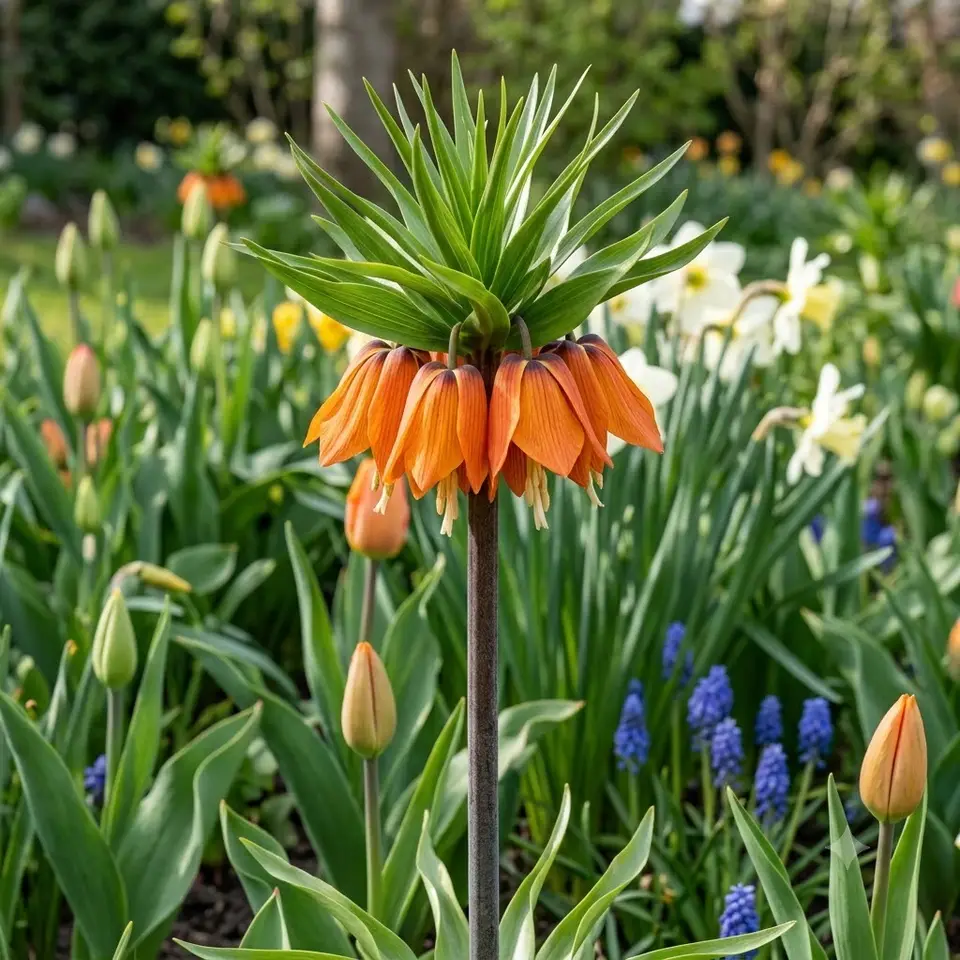
The crown imperial is a spring bulb with a meter-tall stem crowned with a ring of hanging orange or yellow bells under a pineapple tuft, straight out of Dutch Golden Age paintings.
Last reviewed: October 2026
 AI illustration
 Overview
The crown imperial is a spring bulb with a meter-tall stem crowned with a ring of hanging orange or yellow bells under a pineapple tuft, straight out of Dutch Golden Age paintings. Its foxy musk scent famously repels rodents: gardeners plant it as living vole deterrent. (Fritillaria imperialis.)
Origin & Natural Habitat
Rocky slopes from Turkey through Iran to the Himalayan foothills; a 400-year garden aristocrat.
Appearance
Stout 80-120 cm stems, glossy whorled leaves, topped by 6-12 pendant bells (orange, red-orange, yellow) beneath a leafy topknot - unmistakable and architectural.
Why People Grow It - Qualities & Benefits
- Regal scale no other spring bulb touches
- Rodent-repelling musk protects nearby tulips too
- Old-master garden heritage
- Reliable perennial where suited
Care
Light: Full sun to light shade.
Water: Spring moisture then DRY summer rest - the Middle-Eastern rule; wet summers rot the huge bulb.
Soil: Rich, sharply drained; the fat hollow-crowned bulb rots in damp - many plant it tilted on a sand bed so the crown sheds water.
Planting: Early fall, 20-25 cm deep (deep!), on sharp drainage, bulb on its side or on grit in heavy soils.
Hardiness: Zones 5-8.
After flowering: Stems die back by midsummer - mark the spot; established bulbs resent moving.
Propagation
Offsets from established bulbs (slow); mostly you buy the big bulbs and leave them be.
Common Problems & Pests
- Bulb rot in summer-wet soils: drainage is everything
- Lily beetle (same red menace as lilies)
- Skipped bloom after transplant (they sulk a year)
- The scent: skunky-fox up close (feature AND bug)
Toxicity & Safety
Toxic if ingested (cardiac-active alkaloids) - to pets and people; the smell deters everything anyway. Site away from pet-chewing zones.
Pros & Cons
Pros
- Show-stopping crown display
- Vole/mouse deterrence radius
- Long-lived once settled
Cons
- Musky odor divides households
- Demands summer-dry drainage
- Premium bulb prices
Best Suited For
- Back-of-border spring monuments
- Rodent-plagued bulb beds (bodyguard duty)
- Dry-summer gardens
- Historic/Dutch-style schemes
FAQ
Why plant the bulb on its side?
The stem leaves a hollow crown that collects water upright - tilting sheds it, preventing the rot that kills most failures in damp climates.
Does the rodent-repelling really work?
Gardeners have interplanted crown imperials with tulip beds for centuries because voles avoid the musk zone - imperfect but real, and cheaper than wire baskets.
Gear for growing crown imperial
Links go to Amazon or a partner store (such as Adagio Teas) and may earn us a commission at no extra cost to you. As an Amazon Associate we earn from qualifying purchases. We link gear types, not sponsors' picks: you choose the exact product.