Stella Cherry
Cherry variety
Stella was the world's first self-fertile sweet cherry - one compact tree, no partner, reliable dark sweet fruit; the variety that finally made sweet cherries practical for small gardens.
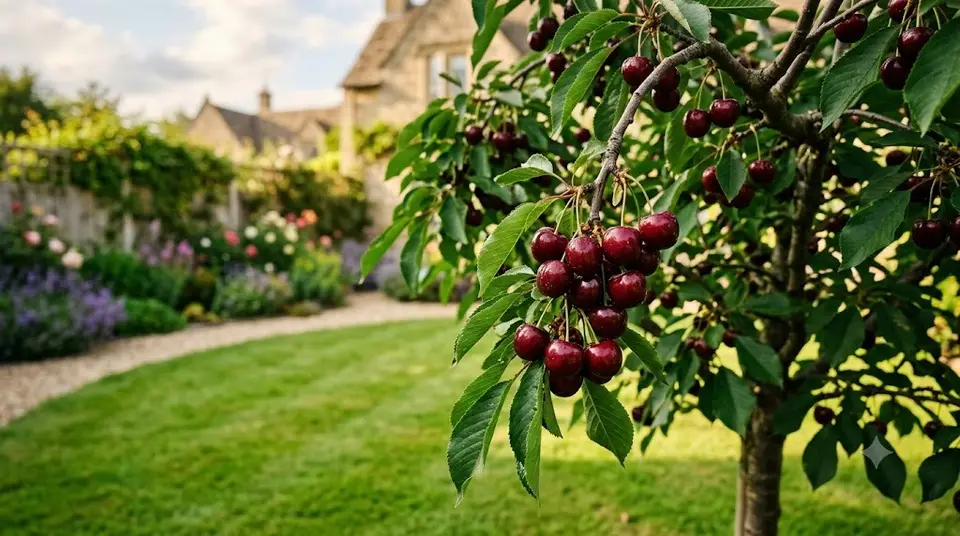
Until Stella arrived from Canada's Summerland program in 1968, every sweet cherry demanded a compatible partner tree - a dealbreaker for small gardens. Stella's self-fertility changed the game: one tree sets a full crop of large, dark, Lambert-style sweet cherries, and its pollen (the famous S4' gene) unlocks nearly every other sweet cherry too. It remains the default answer to 'I have room for exactly one cherry tree.'
Fruit & flavor
Large, heart-shaped, dark red to near-black; firm, juicy, classically rich-sweet - a genuine Bing-class dessert cherry, a notch less winey, a great deal less trouble.
Tree size & rootstocks
Moderate vigor; on Gisela 5 about 2.5-3 m (perfect for netting), on Colt 4-5 m. Precocious - fruit by year 3 is normal.
Pollination
Fully self-fertile - the historic first - and a universal pollen donor for other sweets: planting Stella upgrades every cherry within bee range, including a neighbor's barren Bing.
Climate & hardiness
Zones 5-9 with better warm-climate tolerance than most sweets; moderately crack-prone in June rain (its improved child Lapins is tighter-skinned if that's your climate).
Site & soil
Full sun, deep drained soil, no waterlogging - standard cherry rules, no extra demands.
Pruning & care
Late-summer pruning only, light and open; net the dwarf form and the whole crop is actually yours. As low-maintenance as sweet cherries get.
Harvest & storage
July, taste-tested dark and sweet; like all sweets it neither ripens off the tree nor stores beyond a week - feast season.
Problems
The usual sweet-cherry threats (birds, brown rot, cracking, canker) at slightly gentler intensity; nothing unique to the variety.
FAQ
Stella or Lapins for one tree?
Both are self-fertile children of the same program - Lapins crack-resists better in rainy-June climates; Stella has the classic name and slightly earlier fruit. Either is right.
Will Stella pollinate my old unfruitful sweet cherry?
Almost certainly yes - its universal-donor pollen is compatible with nearly all sweets, which often 'fixes' a lonely legacy tree.
Varieties behave differently by region, rootstock and season - ripening months here assume a mid-temperate northern-hemisphere garden. Check local nursery guidance for your exact climate, and never rely on a single source for spray decisions.
Kit for fruit trees
Links go to Amazon or a partner store (such as Adagio Teas) and may earn us a commission at no extra cost to you. As an Amazon Associate we earn from qualifying purchases. We link gear types, not sponsors' picks: you choose the exact product.