Stanley Prune Plum
Plum variety
Stanley is the blue prune-plum workhorse - dense, ultra-sweet freestone fruit born for drying, baking and brandy, on a hardy self-fertile tree that crops in nearly every climate.
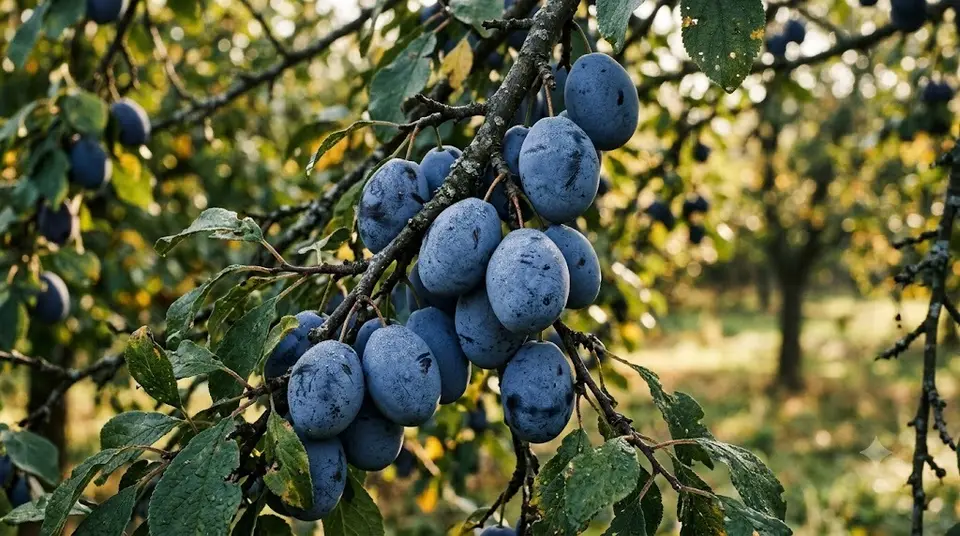
Stanley is the plum of Central European soul food - the dusky-blue oval whose dense, high-sugar, freestone flesh makes real prunes, real powidl, real Zwetschgenkuchen and real slivovitz. Cornell released it in 1926 and it promptly became the default 'blue plum' of the temperate world: self-fertile, cold-hardy, reliable, and delivering fruit that gets better the more you do to it.
Fruit & flavor
Medium oval, deep purple-blue with heavy bloom; the green-gold flesh is dense, very sweet and truly freestone. Good fresh when dead-ripe - but drying, roasting and baking concentrate it into something great.
Tree size & rootstocks
Moderate, 3-4 m on St. Julien; naturally tidy for a plum. Bears young and annually with basic thinning.
Pollination
Self-fertile; pollinates other Europeans (Victoria, damsons) in return.
Climate & hardiness
Zones 4-8 - properly cold-hardy, late-blooming past most frosts, and needing only an ordinary summer to hit high sugar. One of the safest stone-fruit picks for continental climates.
Site & soil
Full sun for sugar; any decent drained soil. No special requests.
Pruning & care
Summer-only pruning, light open shape, moderate thinning in heavy years. Genuinely low-maintenance.
Harvest & storage
September; leave it hanging until the bloom-dusted skin wrinkles faintly at the stem - the sugar spike is dramatic. Then: dry into prunes, halve-and-freeze for winter cakes, roast, or ferment; fridge life fresh is a week.
Problems
Brown rot in wet autumns and black knot where endemic (prune out galls); wasps love it. Shorter list than most stone fruit.
FAQ
What makes a 'prune plum' different?
Sugar and density high enough to dry around the pit without fermenting - Stanley dries into true prunes in a dehydrator or slow oven, halved and stoned.
When is it really ripe?
Later than you think: wait past first blue for slight softness and a honeyed smell - early-picked Stanleys are the bland ones.
Varieties behave differently by region, rootstock and season - ripening months here assume a mid-temperate northern-hemisphere garden. Check local nursery guidance for your exact climate, and never rely on a single source for spray decisions.
Kit for fruit trees
Links go to Amazon or a partner store (such as Adagio Teas) and may earn us a commission at no extra cost to you. As an Amazon Associate we earn from qualifying purchases. We link gear types, not sponsors' picks: you choose the exact product.