Moorpark Apricot
Apricot variety
Moorpark has been the connoisseur's apricot since 1760 - Jane Austen name-checked it - with big, honeyed, plum-tinged fruit whose flavor no supermarket apricot approaches.
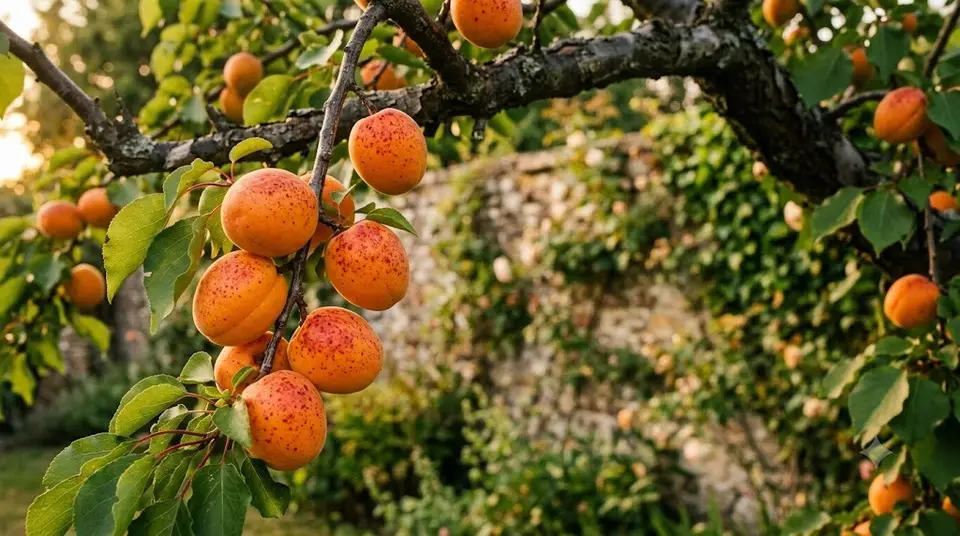
Moorpark is the apricot people mean when they say store apricots taste of nothing: a 1760s English variety (famous enough for Jane Austen to plant in Mansfield Park) whose large, orange, red-freckled fruit delivers honey, plum and muscat depth that commercial shipping varieties abandoned long ago. Apricots bloom murderously early (that's the deal you accept), but where the blossom dodges frost, nothing in the orchard is more luxurious.
Fruit & flavor
Large for an apricot, deep orange freckled red; juicy, honeyed flesh with a plum-wine richness - the historical benchmark of apricot flavor. Fresh eating first; jam and drying with the surplus.
Tree size & rootstocks
Moderate, 3-4 m on St. Julien or apricot seedling; long-lived on a good site. Handsome heart-shaped leaves make it a genuinely ornamental tree.
Pollination
Self-fertile - one tree suffices.
Climate & hardiness
Zones 5-8: the WOOD is very hardy, but the flowers open first of all orchard fruit (with the crocuses) - late frost is the entire apricot question. Continental climates with steady springs beat mild ones with false starts.
Site & soil
The classic answer is a wall: south- or west-facing, sheltered, with drained soil - the wall's warmth both protects blossom and ripens fruit. Avoid early-warming southern slopes that force bloom even earlier in frost country.
Pruning & care
Prune in summer only (apricots share plum-family silver-leaf risk), lightly - they fruit on spurs AND one-year wood. Thin to 8 cm. On frost-risk nights during bloom, a fleece thrown over a wall-trained tree saves the year.
Harvest & storage
July-August, when fruit turns full orange and yields slightly - tree-ripe Moorpark is a different species from firm-picked commerce. Days of shelf life; jam, halves in syrup, and drying absorb the glut.
Problems
Frost-killed blossom (the big one), brown rot in wet summers, occasional dieback of branches (typical of apricots - prune out and carry on). Pest pressure otherwise modest.
FAQ
Why does my healthy tree flower beautifully but never fruit?
Almost always frost during or just after bloom - even a light -2° kills set. Wall training + fleece on bloom nights is the traditional fix.
Why did a whole limb suddenly die back?
Apricots do this (dieback/gummosis) even on healthy trees - cut back to clean wood in summer and the tree usually shrugs it off for years.
Varieties behave differently by region, rootstock and season - ripening months here assume a mid-temperate northern-hemisphere garden. Check local nursery guidance for your exact climate, and never rely on a single source for spray decisions.
Kit for fruit trees
Links go to Amazon or a partner store (such as Adagio Teas) and may earn us a commission at no extra cost to you. As an Amazon Associate we earn from qualifying purchases. We link gear types, not sponsors' picks: you choose the exact product.