Montmorency Cherry
Cherry variety
Montmorency is the pie cherry - the bright scarlet sour classic behind nearly every cherry pie, on a compact, self-fertile, cold-proof tree that is by far the easiest cherry to grow.
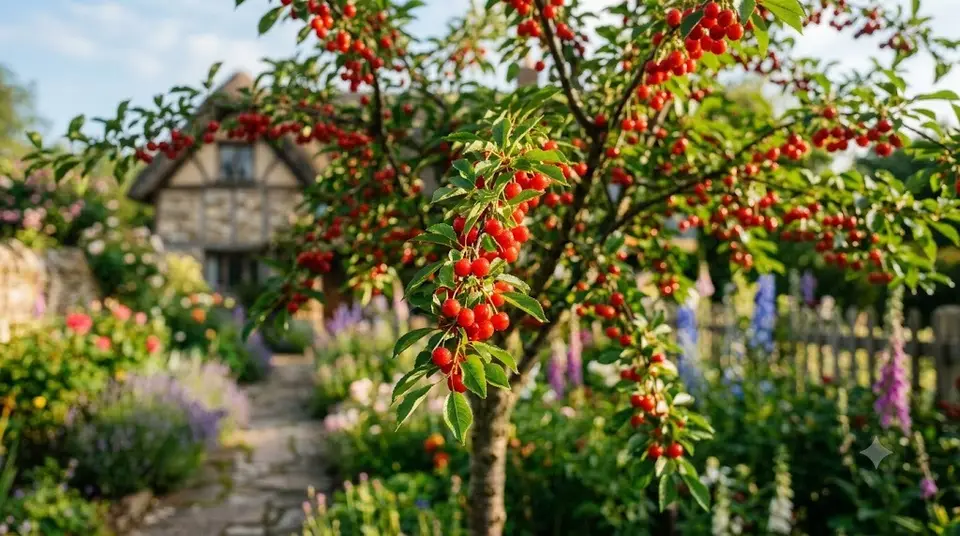
For all the glamour of sweet cherries, the easiest and arguably most useful cherry in a garden is the sour Montmorency - the old French variety that IS American cherry pie. Self-fertile, zone-4 hardy, naturally small, crack-resistant and less bird-plagued than sweets, it fruits reliably where Bing breaks hearts - and one tree keeps a family in pies, preserves and dried cherries.
Fruit & flavor
Medium, brilliant scarlet with translucent yellow flesh and clear juice; too tart for most palates fresh, transcendent cooked - pies, preserves, sauces, dried 'cherry raisins' and the famous tart-cherry juice.
Tree size & rootstocks
Naturally compact: 4-5 m on standard stock, ~2.5-3 m on dwarf - no heroic rootstocks needed. Bears young (year 3) and annually.
Pollination
Fully self-fertile - one tree, full crop, end of story.
Climate & hardiness
Zones 4-8, flowering later than sweets (dodging spring frosts) and shrugging at -30° winters; also less prone to rain-cracking. The cherry for continental climates.
Site & soil
Full sun, drained soil, the standard no-wet-feet cherry rule - and that's the whole list.
Pruning & care
Minimal: open the center lightly in late summer, remove dead wood. Birds prefer sweets but still visit - net dwarfs in heavy-pressure areas.
Harvest & storage
Late June-July when fully scarlet and slightly soft; sour cherries pit easily and freeze brilliantly - most harvests go straight to the freezer in pie-sized bags.
Problems
Brown rot in wet Junes and cherry leaf spot are the two to watch (rake fallen leaves); otherwise the healthiest cherry you can plant.
FAQ
Can you eat them fresh at all?
Dead-ripe, warm off the tree, they're pleasantly tangy - but the magic is 100% in the kitchen, where sugar unlocks flavor sweets can't match.
Why did my sweet cherry die but this thrives?
Sour cherries are simply tougher stock - hardier, later-blooming, disease-resistant. That's the trade.
Varieties behave differently by region, rootstock and season - ripening months here assume a mid-temperate northern-hemisphere garden. Check local nursery guidance for your exact climate, and never rely on a single source for spray decisions.
Kit for fruit trees
Links go to Amazon or a partner store (such as Adagio Teas) and may earn us a commission at no extra cost to you. As an Amazon Associate we earn from qualifying purchases. We link gear types, not sponsors' picks: you choose the exact product.