Methley Plum
Plum variety
Methley is the season-opener - a self-fertile Japanese plum with sweet blood-red flesh that ripens weeks before anything else and solves the 'lonely Japanese plum' pollination problem.
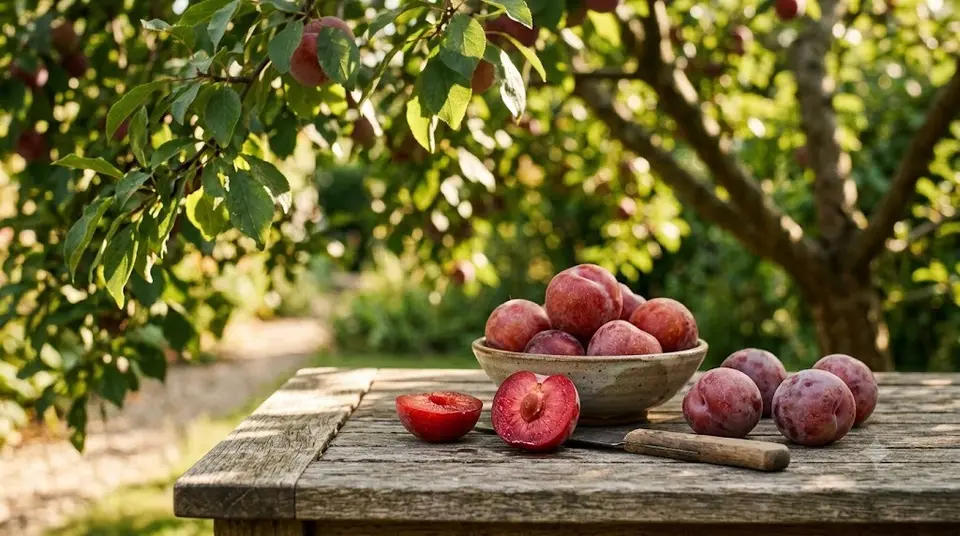
Methley answers two plum problems at once: it is the rare JAPANESE plum that's fully self-fertile (no partner needed), and it ripens absurdly early - late May in warm zones - opening the tree-fruit season while apples are still marbles. The fruit is modest-sized but charming: purple-red skin over sweet, mild, blood-crimson flesh that makes rosy jam and disappears by the handful.
Fruit & flavor
Small-medium, round, red-purple; juicy crimson flesh, mild and honey-sweet with none of Santa Rosa's tang. An eat-in-the-garden plum, and the red flesh makes strikingly pretty preserves.
Tree size & rootstocks
Vigorous, upright; 3-4 m managed on Citation/St. Julien. Precocious and annual-bearing.
Pollination
Fully self-fertile - the headline - AND an excellent early-bloom pollen donor for other Japanese plums (it's the standard partner recommended for Santa Rosa).
Climate & hardiness
Zones 5-9 with very low chill needs - reliable in mild-winter regions where high-chill plums fail; hardy enough for mid-continental gardens too.
Site & soil
Full sun, ordinary drained soil; early bloom means avoid frost hollows.
Pruning & care
Summer-prune the vigorous upright growth to an open vase; thin clusters (it oversets like all Japanese types). Routine otherwise.
Harvest & storage
Late May-June - weeks ahead of the field; ripens over a stretch, so pick every few days as fruit purples and softens. Eat or jam within days.
Problems
Standard Japanese-plum list at low intensity: brown rot, aphids, bacterial spot. Early ripening lets it dodge much of the late-summer pest wave.
FAQ
Is Methley enough on its own, or should I add Santa Rosa?
Alone it crops fully; add Santa Rosa for bigger, tangier late fruit - and Methley's pollen will boost the Santa Rosa in return.
Why is my fruit small?
Partly the variety, mostly overset - thin to 8 cm spacing and size improves a full grade.
Varieties behave differently by region, rootstock and season - ripening months here assume a mid-temperate northern-hemisphere garden. Check local nursery guidance for your exact climate, and never rely on a single source for spray decisions.
Kit for fruit trees
Links go to Amazon or a partner store (such as Adagio Teas) and may earn us a commission at no extra cost to you. As an Amazon Associate we earn from qualifying purchases. We link gear types, not sponsors' picks: you choose the exact product.