McIntosh Apple
Apple variety
The beloved northern heritage apple - deep red over green, snow-white tender flesh and a wine-like tang, thriving in cold short-season gardens where modern sweets fail.
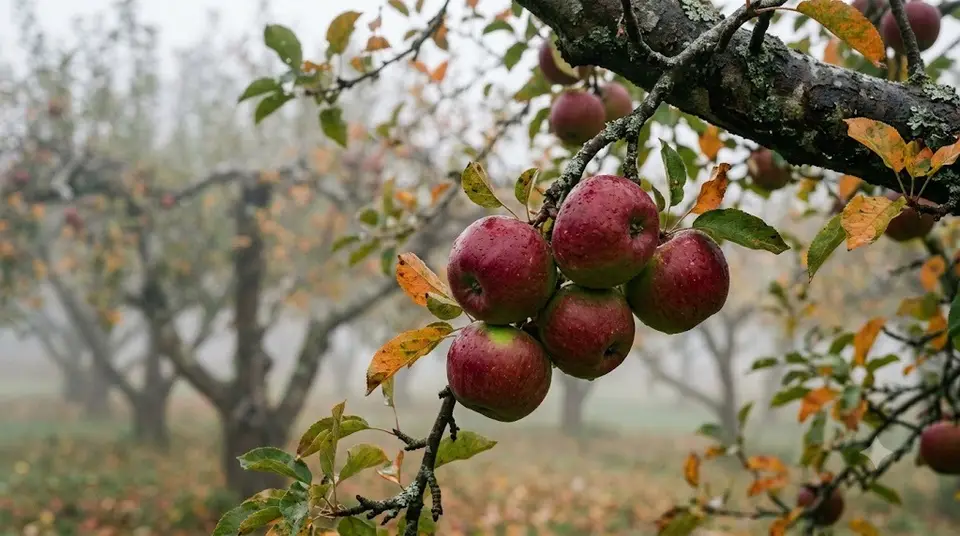
McIntosh has been the apple of the North since John McIntosh found the original seedling in Ontario in 1811. It shrugs at zone 4 winters, ripens early enough for short seasons, and delivers what its devotees insist no modern apple matches: snow-white, melting flesh under a wine-red skin, with a perfumed, vinous tang that defines 'apple' for entire regions.
Fruit & flavor
Medium fruit, crimson wash over green, with famously tender, juicy white flesh and an aromatic sweet-tart 'vinous' bite. Falls apart into perfect sauce; eats beautifully for the first month; devotees accept the soft texture as the price of the perfume.
Tree size & rootstocks
Moderate vigor and very hardy wood; 2.5 m on B9/M9, 4 m on MM106. Spur-fruiting, tidy and long-lived - century-old Macs still bear across the Northeast.
Pollination
Self-sterile - partner it with another early-mid bloomer (Honeycrisp, Golden Delicious, a crab). It returns the favor generously.
Climate & hardiness
Zones 4-7 and genuinely cold-country: it wants frosty autumn nights to color and flavor properly, and sulks in warm climates - the anti-Fuji.
Site & soil
Full sun, well-drained loam, pH 6.0-7.0. Good air circulation matters - its scab susceptibility is the variety's known weakness.
Pruning & care
Standard open pruning plus vigilance on scab in humid regions (resistant modern kin: Liberty, Empire). Thin modestly; Macs self-regulate better than most.
Harvest & storage
Early-mid September; the fruit drops readily when ripe, so pick promptly or use drop-catchers. Eats best inside 4-6 weeks; refrigerated it holds to midwinter, softening as it goes.
Problems
Apple scab is THE issue - in wet climates plan resistant offspring or a spray rhythm. Pre-harvest drop and soft-flesh bruising round out the short list.
FAQ
Why do my Macs all fall off in September?
The variety's famous pre-harvest drop - pick at first release (lift-and-twist test) rather than waiting for deep color.
Best use for the bushels?
Sauce without peeling: Mac flesh cooks down silken in minutes, the reason northern sauce recipes assume it.
Varieties behave differently by region, rootstock and season - ripening months here assume a mid-temperate northern-hemisphere garden. Check local nursery guidance for your exact climate, and never rely on a single source for spray decisions.
Kit for fruit trees
Links go to Amazon or a partner store (such as Adagio Teas) and may earn us a commission at no extra cost to you. As an Amazon Associate we earn from qualifying purchases. We link gear types, not sponsors' picks: you choose the exact product.