Honeycrisp Apple
Apple variety
Honeycrisp built its legend on cell structure - oversized, juice-filled cells that fracture with an audible crack. A cold-country apple that is worth its finicky reputation in the right garden.
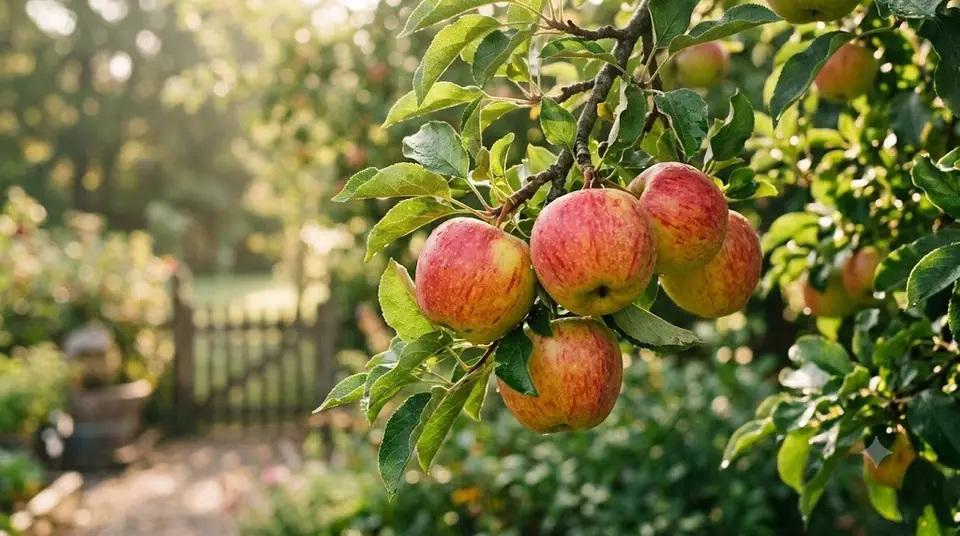
Honeycrisp is the apple that changed what supermarkets could charge for fruit - and in a backyard, a properly grown Honeycrisp beats the store version by a mile. Bred at the University of Minnesota for brutal winters, it pairs extreme cold-hardiness with the trademark explosive crunch. It is not the easiest apple to grow well, but few varieties reward the effort so obviously.
Fruit & flavor
Large, red-mottled over cream-yellow, with oversized juice-filled cells that shatter crisply - the honeyed, balanced sweet-tart flavor is best straight off the tree on a cool morning. Texture, not complexity, is the star.
Tree size & rootstocks
A moderate, somewhat weak-growing tree; on M9/B9 dwarf stock it stays 2.5-3 m and fruits in 2-3 years, on MM106 semi-dwarf 4-5 m. Dwarf stock suits it - the variety struggles to fill a big frame.
Pollination
Not reliably self-fertile - plant with another mid-season bloomer (Gala, Golden Delicious, a crabapple) within 15 m for a real crop.
Climate & hardiness
Its superpower: hardy to zone 3 (-40° winters) and happiest with cold autumns, which build the sugars and crunch. In hot zone 8+ summers it sunburns and softens - this is a northern apple.
Site & soil
Full sun, well-drained loam, pH 6.0-6.8. Honeycrisp is notoriously prone to bitter pit (calcium disorder) - avoid over-rich soil and drought stress that make it worse.
Pruning & care
Standard winter pruning to an open center or central leader; thin the fruit hard (one per cluster, a hand-width apart) - overcropping gives tiny fruit and biennial bearing, this variety's classic vice. Steady water and modest nitrogen fight bitter pit.
Harvest & storage
September in most regions; pick when the background turns cream and seeds brown. Stores 3-4 months refrigerated - among the best keepers of the modern sweets.
Problems
Bitter pit above all, plus scab-prone leaves in wet climates, biennial bearing when unthinned, and zinc/leaf-blotch quirks. Consistent thinning and calcium (foliar sprays if needed) solve most of it.
FAQ
Why are my Honeycrisps small and spotted inside?
Bitter pit plus overcropping - thin ruthlessly in June and keep watering even; consider calcium sprays on young trees.
Can I grow it in a warm climate?
Below roughly zone 7 winters and cool autumns, quality collapses - pick a low-chill variety instead and enjoy Honeycrisp from the store.
Varieties behave differently by region, rootstock and season - ripening months here assume a mid-temperate northern-hemisphere garden. Check local nursery guidance for your exact climate, and never rely on a single source for spray decisions.
Kit for fruit trees
Links go to Amazon or a partner store (such as Adagio Teas) and may earn us a commission at no extra cost to you. As an Amazon Associate we earn from qualifying purchases. We link gear types, not sponsors' picks: you choose the exact product.