Gala Apple
Apple variety
Gala is the friendly one - an early, heavy-cropping, orange-striped apple with mild candy sweetness, forgiving nature and modest tree size that makes it the classic first apple tree.
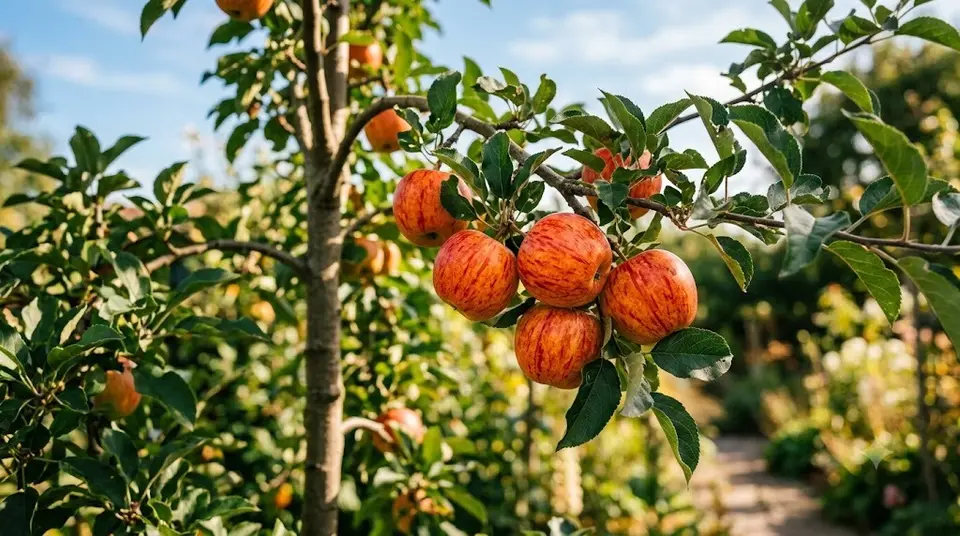
If you're planting your first apple tree, Gala is the standing recommendation for a reason: it crops young, crops heavily, ripens early, tolerates a wide range of climates and produces the mild, aromatic, kid-approved apples everyone recognizes. A New Zealand cross of Golden Delicious ancestry, it asks less of the grower than almost any quality dessert apple.
Fruit & flavor
Small-to-medium fruit, orange-red stripes over gold, with dense crisp flesh and a mild floral sweetness - low acid, easy eating, the definitive lunchbox apple. Flavor is best tree-ripe; it fades in long storage.
Tree size & rootstocks
Naturally compact and precocious: 2.5 m on M9 dwarf (fruiting year 2-3), 3.5-4.5 m on MM106. One of the best choices for espalier, cordons and containers.
Pollination
Partially self-fertile - a lone tree sets some fruit, but a partner (Fuji, Granny Smith, Honeycrisp) doubles the crop. Long bloom makes it an excellent pollinator for others too.
Climate & hardiness
Zones 4-8 and notably heat-tolerant for a quality apple - one of the few that performs from Minnesota to the warm ends of apple country. Moderate chill requirement.
Site & soil
Full sun, any decent well-drained soil, pH 6.0-7.0. No special vices - the definition of unfussy.
Pruning & care
Light annual winter pruning; thin clusters to singles for size (Gala oversets happily). Watch watersprouts after hard cuts; otherwise minimal intervention.
Harvest & storage
Late August-September, among the first quality apples of the season; pick in two or three passes as stripes deepen. Keeps 2-3 months chilled, though early eating is the point.
Problems
Scab and fireblight susceptibility are the notable weaknesses - avoid wet-leaf irrigation and prune out strikes promptly. Otherwise robust.
FAQ
Why are my Galas so small?
The variety oversets: thin to one fruit per cluster in early summer and size improves dramatically.
Is one Gala tree enough?
You'll get a modest crop alone; any mid-bloom apple nearby (even a neighbor's crab) turns it into a heavy bearer.
Varieties behave differently by region, rootstock and season - ripening months here assume a mid-temperate northern-hemisphere garden. Check local nursery guidance for your exact climate, and never rely on a single source for spray decisions.
Kit for fruit trees
Links go to Amazon or a partner store (such as Adagio Teas) and may earn us a commission at no extra cost to you. As an Amazon Associate we earn from qualifying purchases. We link gear types, not sponsors' picks: you choose the exact product.