Elberta Peach
Peach variety
Elberta has been the peach of canning jars and roadside stands since 1875 - big, gold-blushed-red, richly flavored freestone fruit on a tough, self-fertile, dependable tree.
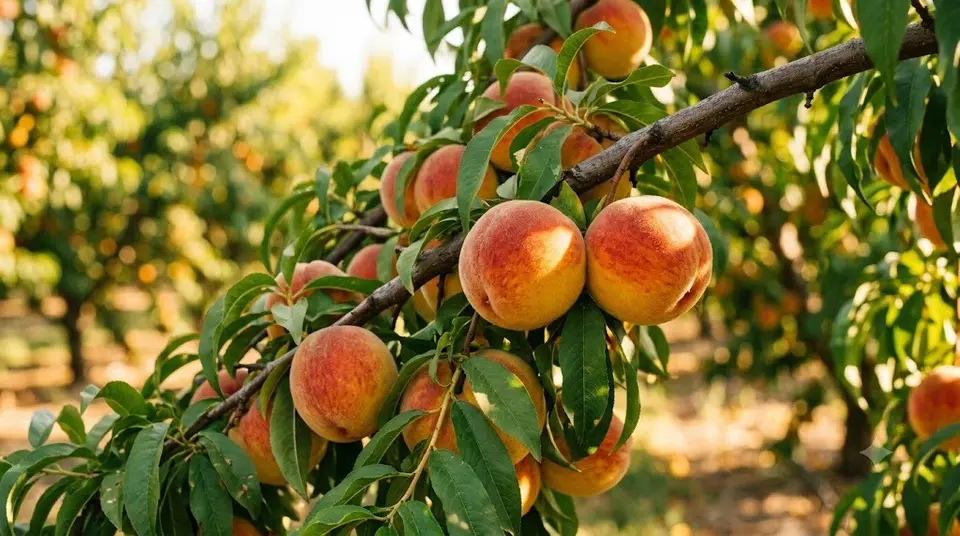
For a century 'peach' on a canning label meant Elberta - the 1875 Georgia heirloom whose large, golden, red-blushed freestone fruit set the standard for flavor, and whose tough constitution set the standard for reliability. Modern varieties beat it on individual traits, but as an all-purpose backyard peach (eating, canning, freezing, pie) the old champion still earns its place.
Fruit & flavor
Large, deep gold flushed red, with firm yellow freestone flesh - the classic rich, syrupy 'peach jar' flavor, slightly tangy at the skin. Ideal for halves in the canner because the pit falls free.
Tree size & rootstocks
Standard peach form: 3-4 m pruned to an open vase (peach rootstocks matter less than apples'; Lovell/Guardian standard). Fast to bear - fruit in year 2-3.
Pollination
Self-fertile like nearly all peaches - one tree, full crop.
Climate & hardiness
Zones 5-9 with a substantial chill requirement (~850 hrs) - a true temperate peach that wants real winter and hot summer. Flower buds die below about -26°C; borderline in zone 5.
Site & soil
Maximum sun, sharply drained soil (peaches hate wet feet more than any orchard tree), pH 6.0-7.0, out of frost pockets - the early pink bloom is the annual gamble.
Pruning & care
Peaches fruit ONLY on last year's wood, so prune hard every year: open vase, removing a third of shoots to force renewal. Thin fruit to 15 cm - the single biggest size/quality lever. Expect to spray or accept leaf curl in wet-spring climates (one dormant copper spray largely controls it).
Harvest & storage
July-August; ripe when background gold (not the red blush) fully colors and flesh gives at the shoulder. Days of shelf life - can, freeze or feast.
Problems
Peach leaf curl (dormant spray), brown rot (thin + airflow + remove mummies), borers at the trunk base, and short tree lifespan (15-20 productive years is normal for all peaches).
FAQ
Why did all the leaves blister red and fall in spring?
Peach leaf curl - apply a single copper/dormant spray at leaf-fall or bud-swell; once symptoms show, it's too late for that year (the tree usually recovers with feeding and water).
Freestone vs clingstone - which is Elberta?
Fully freestone when ripe - the pit lifts out clean, which is why it owned the canning era.
Varieties behave differently by region, rootstock and season - ripening months here assume a mid-temperate northern-hemisphere garden. Check local nursery guidance for your exact climate, and never rely on a single source for spray decisions.
Kit for fruit trees
Links go to Amazon or a partner store (such as Adagio Teas) and may earn us a commission at no extra cost to you. As an Amazon Associate we earn from qualifying purchases. We link gear types, not sponsors' picks: you choose the exact product.