Cox's Orange Pippin
Apple variety
The apple flavor is measured against - a small orange-russet English heirloom of astonishing aromatic complexity, demanding a mild maritime climate and repaying devotion like no other.
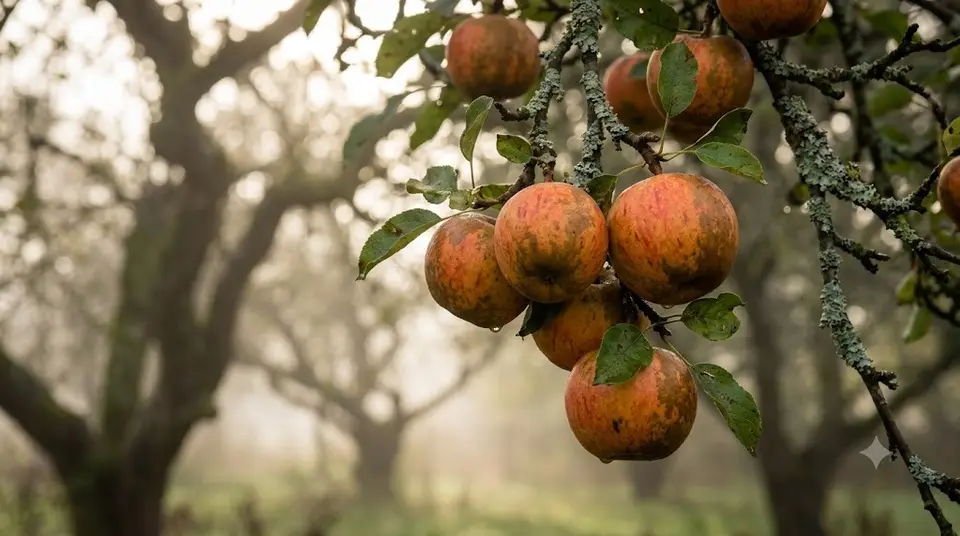
Ask apple connoisseurs for the finest-flavored apple ever raised and Cox's Orange Pippin is the name that comes up most - a nineteenth-century English variety whose small orange-flushed fruit layers honey, nuts, citrus, spice and pear into something no supermarket apple approaches. It is also demanding: disease-prone, climate-picky and unforgiving of neglect. This is the enthusiast's tree.
Fruit & flavor
Smallish, orange-red flush over gold with fine russet; the flesh is yellow, fine-grained and intensely aromatic - tasters find orange, nut, mango and spice notes that shift as it mellows in store. The benchmark of 'complex' in apples.
Tree size & rootstocks
Modest vigor; 2-2.5 m on M9, ~3.5 m on MM106. In marginal climates grow it as a fan or espalier on a warm wall - the extra care suits the variety's temperament anyway.
Pollination
Self-sterile; classic partners are Golden Delicious, Gala or the traditional English James Grieve. Loose seeds rattle in a ripe Cox - the old test.
Climate & hardiness
The crux: it wants a cool, even, maritime summer (England, the Pacific Northwest, coastal valleys). In hot-summer or harsh-winter continental climates it scalds, stresses and sickens - zones 5-8 with mild summers only.
Site & soil
Sheltered full sun, deep moisture-retentive but drained loam, pH ~6.5, steady water. Cox punishes drought stress and waterlogging alike.
Pruning & care
Careful annual pruning for open, airy growth (its disease list demands airflow), modest feeding, consistent moisture. Expect to earn the fruit - and modern Cox-style crosses (Kidd's Orange Red, Rubinette) if you want 80% of the flavor at half the trouble.
Harvest & storage
Late September-October; pick gently at first loose-seed rattle. Eats well off the tree and deepens in flavor over 4-8 weeks of cool storage - a December Cox is the connoisseur's Christmas.
Problems
The full English catalogue: scab, canker, mildew, and physiological spotting in poor years. Airflow, hygiene and patience (or a resistant Cox-descendant) are the answers.
FAQ
Is Cox worth it for an ordinary gardener?
In a mild maritime climate with a little attention - absolutely; elsewhere, plant Rubinette or Kidd's Orange Red for the flavor without the fight.
Why do the seeds rattle?
Ripe Cox seeds loosen in their cells - shake the fruit by your ear; a rattle means pick.
Varieties behave differently by region, rootstock and season - ripening months here assume a mid-temperate northern-hemisphere garden. Check local nursery guidance for your exact climate, and never rely on a single source for spray decisions.
Kit for fruit trees
Links go to Amazon or a partner store (such as Adagio Teas) and may earn us a commission at no extra cost to you. As an Amazon Associate we earn from qualifying purchases. We link gear types, not sponsors' picks: you choose the exact product.