Conference Pear
Pear variety
Europe's favorite garden pear - a long, slim, russet-flecked variety famous for reliably cropping alone, in cool summers, on small trees; the definition of a dependable first pear.
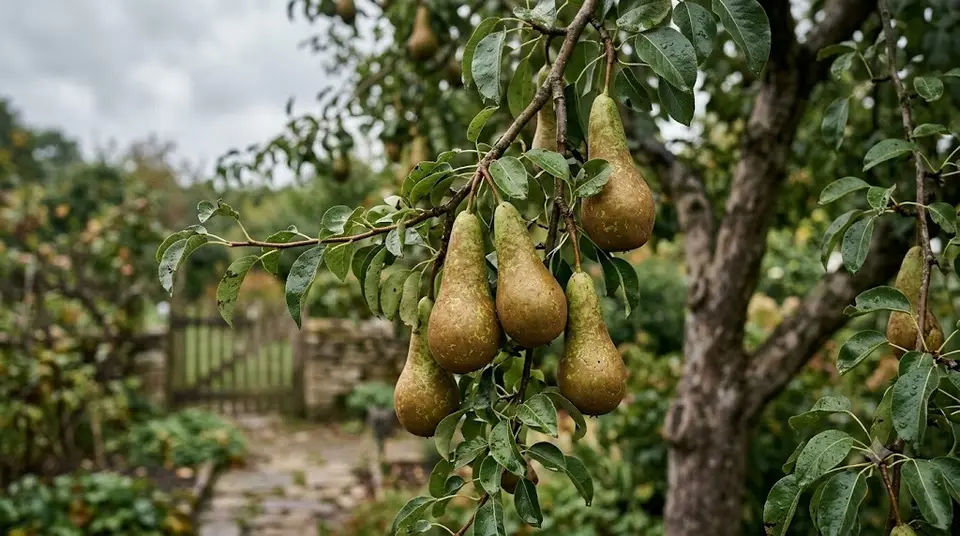
Conference took its name from the 1885 British National Pear Conference, where it swept the honors - and it has been Europe's default garden pear ever since. The reasons are practical: it sets fruit without a partner (rare among pears), crops even in cool, gray summers, stays compact, and delivers sweet, juicy, dependable fruit year after unglamorous year. The best 'only pear' a small garden can plant.
Fruit & flavor
Medium, distinctively long and slender, olive-green with cinnamon russet patches; juicy, sweet, mildly aromatic flesh - not Comice-fancy, but consistently good fresh, poached or bottled.
Tree size & rootstocks
Modest and manageable: 2.5-3 m on quince C, ~3.5 m on quince A - tailor-made for small gardens, cordons and espaliers. Precocious, fruiting by year 3.
Pollination
The headline: reliably self-fertile (parthenocarpic - it can set seedless fruit with no pollination at all), so a single tree crops. A partner still fattens the harvest.
Climate & hardiness
Zones 4-8 and famously tolerant of cool, cloudy summers that leave other pears sugarless - the variety built for maritime climates.
Site & soil
Full sun to light part shade, any decent drained soil. As unfussy as pears get.
Pruning & care
Light annual pruning; it makes a naturally narrow tree that suits cordon training perfectly. Thin only heavy clusters.
Harvest & storage
Late September-October, picked firm and ripened indoors like all Europeans; seedless parthenocarpic fruit is longer and more banana-shaped - normal. Stores ~2-3 months chilled.
Problems
The usual short pear list (fireblight less common in its cool homelands, psylla, scab) - overall one of the healthiest, most forgiving pears.
FAQ
Do I really not need a second tree?
Really - Conference sets commercial crops alone. Cross-pollination adds maybe a third more fruit with plumper shapes.
Why are some pears long and seedless, others rounder with seeds?
Seedless ones set parthenocarpically; rounder seeded ones were bee-pollinated. Both are normal Conference.
Varieties behave differently by region, rootstock and season - ripening months here assume a mid-temperate northern-hemisphere garden. Check local nursery guidance for your exact climate, and never rely on a single source for spray decisions.
Kit for fruit trees
Links go to Amazon or a partner store (such as Adagio Teas) and may earn us a commission at no extra cost to you. As an Amazon Associate we earn from qualifying purchases. We link gear types, not sponsors' picks: you choose the exact product.