Chicago Hardy Fig
Fig variety
Chicago Hardy rewrites the fig map - dying to the ground at -20° and regrowing to fruit the same year, it brings real figs to zone 5-6 gardens that were never supposed to have them.
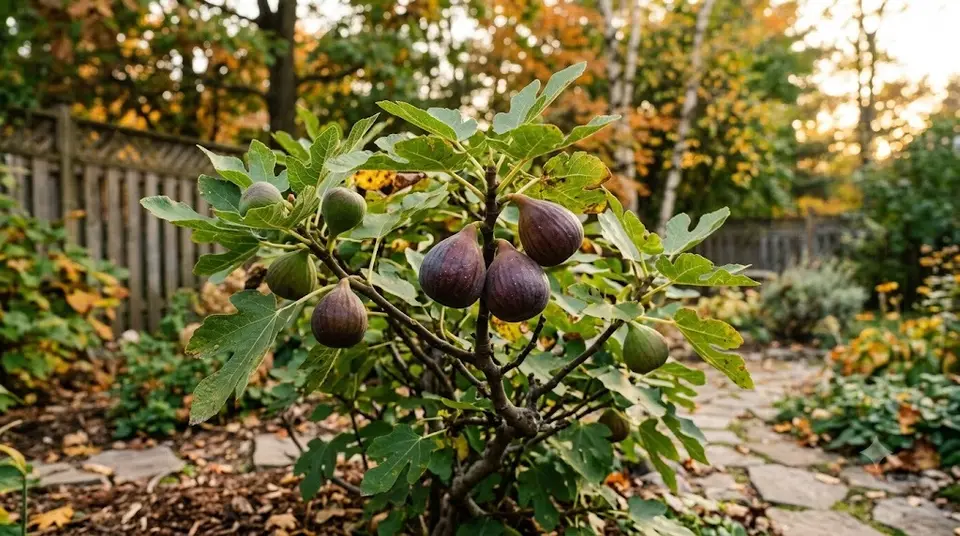
The fig that grows in Chicago sounds like a nursery tall tale, but the mechanism is honest: Hardy Chicago's roots survive brutal winters even when the top dies completely, and (the crucial part) it regrows fast enough to ripen a crop on the NEW wood by September. Mulch the stool like a rose, let it resurrect each spring, and northern gardeners pick genuine sweet figs where the species has no business succeeding.
Fruit & flavor
Small-medium, purple-brown with strawberry-pink flesh; sweet and jammy with a berry note - a legitimately good fig, not a compromise, just smaller than Mediterranean showpieces.
Tree size & rootstocks
In cold zones it lives as a die-back perennial shrub, 1.5-2.5 m of vigorous annual regrowth from a mulched base; in zone 7+ it grows as a normal 3-4 m fig tree.
Pollination
Self-fruiting common fig.
Climate & hardiness
The headline: root-hardy to roughly -20°C and beyond with mulch (zone 5 with protection, 6 reliably); needs a warm autumn to finish the new-wood crop - a south wall and black mulch buy the extra weeks.
Site & soil
The warmest microclimate on the property - south wall, sun-trap corner, or a big black pot moved to shelter in winter (the zero-drama alternative).
Pruning & care
In cold zones nature prunes it: cut dead top growth away in spring, mound 20-30 cm of mulch/leaves over the crown each November, unwrap in April. Pinch tips at 5 leaves in summer to hurry fruit. In mild zones treat as any fig.
Harvest & storage
September-October, racing the frost - the annual drama; droop-and-soften rule as always, and a fleece over late September nights saves the tail of the crop. Eat fresh or jam immediately.
Problems
The only real one is the calendar: cool autumns can strand a crop unripe. Microclimate, pinching and patience are the tools; pests barely register this far north.
FAQ
The whole plant died to the ground - is it over?
No - that's the design. Scratch the base in May: green under the bark means the roots lived, and the regrowth will carry this year's figs.
Pot or ground in zone 5?
Pot is the sure thing (overwinter dormant in a garage at 0-7°C); in-ground works with serious mulching and a wall, but ripening becomes a September gamble.
Varieties behave differently by region, rootstock and season - ripening months here assume a mid-temperate northern-hemisphere garden. Check local nursery guidance for your exact climate, and never rely on a single source for spray decisions.
Kit for fruit trees
Links go to Amazon or a partner store (such as Adagio Teas) and may earn us a commission at no extra cost to you. As an Amazon Associate we earn from qualifying purchases. We link gear types, not sponsors' picks: you choose the exact product.