Celeste Fig
Fig variety
Celeste - the Southern 'sugar fig' - bears small violet fruit of outstanding candy sweetness with a tightly closed eye that keeps rain and insects out; the quality fig for humid climates.
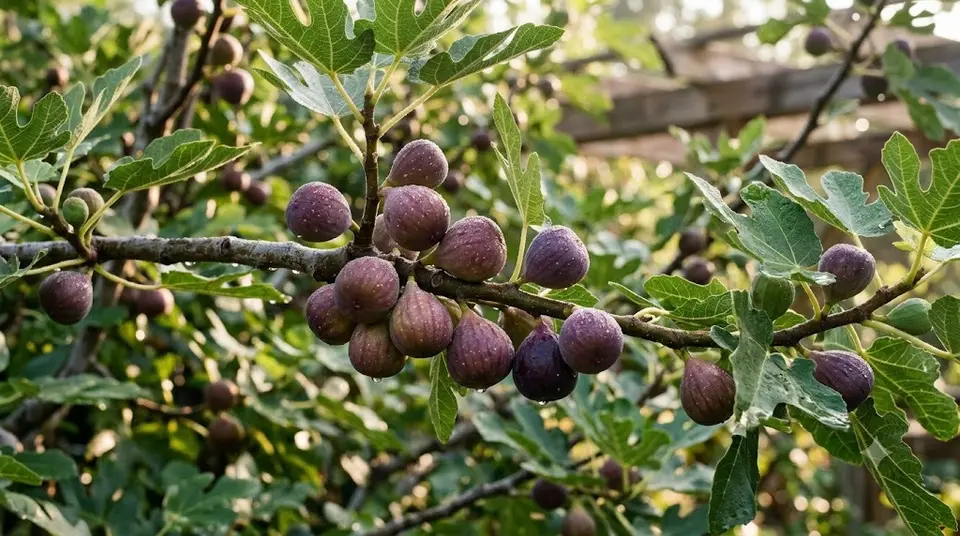
Across the American South, the fig in grandmother's yard is Celeste - the 'sugar fig' whose small violet-bronze fruit outclasses bigger figs on pure flavor: dense, jammy, closer to confection than produce. Its secret weapon in humid country is anatomy: a tightly closed eye (the pore at the fig's base) that locks out the rain, beetles and souring organisms that ruin open-eyed varieties in wet summers.
Fruit & flavor
Small-medium, violet-brown with rose-amber flesh; exceptionally sweet, rich and clean - widely rated the best-flavored fig of the humid-climate standards. The traditional preserving fig of the South, and a premium fresh one.
Tree size & rootstocks
Own-rooted, vigorous, eventually 3-5 m unpruned - keep it lower for picking. Notably cold-tough wood for a fig.
Pollination
Self-fruiting common fig - nothing required.
Climate & hardiness
Zones 7-10, with better humid-summer performance than any comparable-quality fig (the closed eye again) and respectable cold tolerance. One caution: main crop comes on new wood, and hard winter dieback delays it.
Site & soil
Sun, ordinary drained soil, the usual fig preference for a bit of hardship over luxury.
Pruning & care
Light: prune minimally in early spring - Celeste resents hard cutting (it can skip its crop after severe pruning). Pinch tips in June, mulch the base, and let it be.
Harvest & storage
July-August, earlier than most; harvest at the droop-and-soften stage. The dense flesh dries and preserves beautifully - Celeste fig preserves are a Southern institution.
Problems
Fewest of any fig in humid regions - the closed eye prevents the on-tree souring that plagues open figs; birds remain the honest competition.
FAQ
Why did my hard-pruned Celeste skip a year of figs?
A known variety quirk - it fruits from buds formed on modest new growth, and drastic cuts push vegetative regrowth instead. Prune lightly, thin rarely.
What is the 'eye' everyone mentions?
The ostiole - the pore at the fig's bottom. Open-eyed figs let rain and insects in to sour the interior; Celeste's is sealed tight, the humid-climate superpower.
Varieties behave differently by region, rootstock and season - ripening months here assume a mid-temperate northern-hemisphere garden. Check local nursery guidance for your exact climate, and never rely on a single source for spray decisions.
Kit for fruit trees
Links go to Amazon or a partner store (such as Adagio Teas) and may earn us a commission at no extra cost to you. As an Amazon Associate we earn from qualifying purchases. We link gear types, not sponsors' picks: you choose the exact product.