Brown Turkey Fig
Fig variety
Brown Turkey is the world's default garden fig - self-fertile, wasp-free, cold-tolerant for a fig and endlessly forgiving, with dependable crops of mild honeyed fruit almost anywhere.
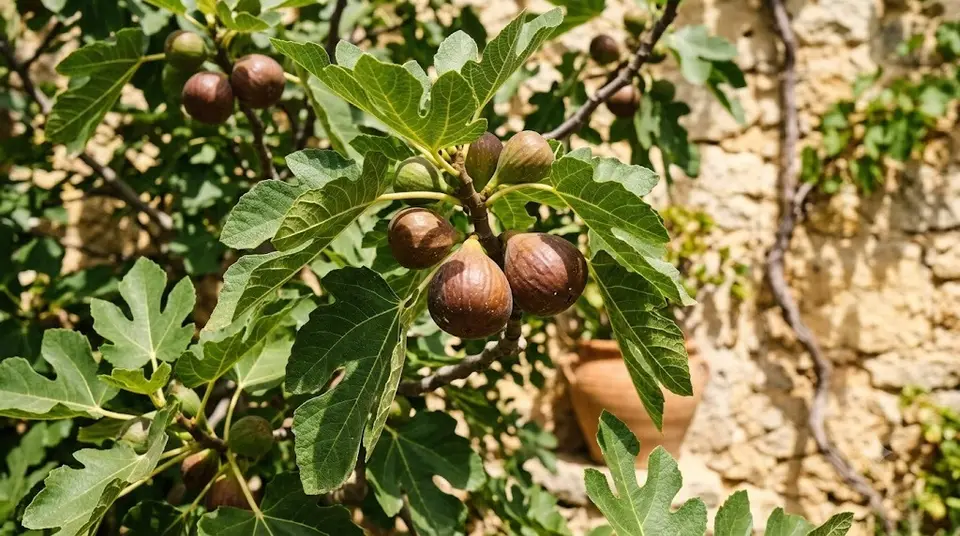
Every fig conversation starts at Brown Turkey - the variety nurseries hand to beginners because it simply works: no pollinating wasp needed (all garden figs are 'common' self-fruiting types), tolerance of cold and neglect that borders on comic, and up to two crops a year of purple-brown, honey-mild fruit. Connoisseurs chase fancier figs later; almost everyone's first ripe fig is a Brown Turkey, warm from an August wall.
Fruit & flavor
Medium, pear-shaped, brown-purple with amber-pink flesh; mildly sweet and honeyed - not the most intense fig, but consistently pleasant and prolific. Often gives a small early 'breba' crop on old wood plus the main autumn crop.
Tree size & rootstocks
Own-rooted always (figs need no rootstock): a spreading 3-4 m bush/tree, easily fan-trained on walls or grown in large pots. Root restriction (pots, planting pits) famously pushes fruit over leaves.
Pollination
Fully self-fruiting - no fig wasp exists in most temperate countries and none is needed for common figs.
Climate & hardiness
Zones 7-10 outdoors; in zone 6 it survives with wrapping or as die-back shrub (regrowing and fruiting on new wood in warm-autumn areas). The definitive 'fig for marginal fig country'.
Site & soil
The hottest wall or corner you own; poor-to-ordinary drained soil is fine - rich soil makes leaves, restriction makes figs. Container culture (30-50 L) is genuinely excellent.
Pruning & care
Minimal: thin crowded wood in early spring, pinch shoot tips at 5 leaves in June to push fruit set, protect in cold zones (wrap, mulch high, or wheel the pot into a shed). No spraying - figs are nearly pest-free in temperate gardens.
Harvest & storage
August-October: a ripe fig droops on its neck, softens fully and may tear a honey drop at the eye - unripe figs never ripen off the tree, so patience at the branch. Eat within a day or two; excess dries or jams.
Problems
Almost none in dry-temperate gardens; birds and wasps at ripening, fruit split after harvest rain, winterkill beyond its zone. The lowest-maintenance fruit on this list.
FAQ
My fig grows huge but fruitless - why?
Too much comfort: rich open soil grows wood, not figs. Restrict roots (pot or planting pit), stop feeding nitrogen, and pinch summer tips.
Do figs need a fig wasp?
Wild Mediterranean types do - but all garden varieties sold in temperate countries are parthenocarpic 'common figs' that fruit entirely alone.
Varieties behave differently by region, rootstock and season - ripening months here assume a mid-temperate northern-hemisphere garden. Check local nursery guidance for your exact climate, and never rely on a single source for spray decisions.
Kit for fruit trees
Links go to Amazon or a partner store (such as Adagio Teas) and may earn us a commission at no extra cost to you. As an Amazon Associate we earn from qualifying purchases. We link gear types, not sponsors' picks: you choose the exact product.