Bosc Pear
Pear variety
Bosc is the elegant one - long-necked, cinnamon-russeted, with dense honeyed flesh that holds its shape under heat; the chef's pear for poaching, roasting and tarts.
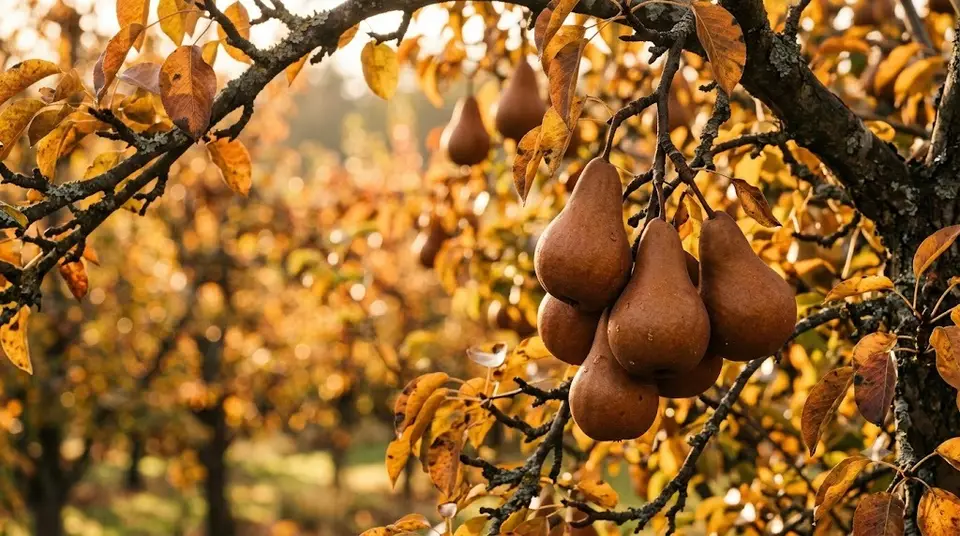
With its swan neck and matte bronze skin, Bosc looks like a still-life painting - and cooks like a dream. The flesh is denser and less melting than Bartlett's, honey-sweet with a hint of spice, and it is precisely that firmness that makes Bosc the pear chefs reach for: poached whole, roasted, or fanned across a tart, it keeps its shape where softer pears dissolve.
Fruit & flavor
Large, long-necked, fully russeted bronze-brown; crisp-dense ivory flesh, honeyed and faintly spiced (tasters say nutmeg). Unusually for a European pear, it's good eaten firm - and unrivalled cooked.
Tree size & rootstocks
Vigorous and strongly upright - the gawkiest young pear tree you'll train; spread limbs early. 3.5-4 m on quince-type stock.
Pollination
Self-sterile; Bartlett, Anjou or Comice partner well and together cover the season.
Climate & hardiness
Zones 5-8; the russet skin resists sunburn well, and the variety takes both cold and heat gamely once established. Early bloom = usual frost-pocket caveat.
Site & soil
Full sun, deep well-drained loam. Give the big fruit steady late-summer water for size and to prevent early drop.
Pruning & care
Spread and tie young scaffolds hard - Bosc's vertical habit delays fruiting otherwise; then the standard restrained pear pruning. Slower to first crop (4-6 years) but long-lived and generous after.
Harvest & storage
September-October, picked firm-mature; unlike Anjou it will ripen without chilling but improves with a couple of cold weeks. Eat or cook it on the firm side; stores 3-4 months.
Problems
Fireblight moderately, psylla, and a habit of early fruit drop in drought - water evenly in August. The russet hides scab well, a quiet cosmetic bonus.
FAQ
When is a Bosc ripe if it's already brown and firm?
Gentle give at the neck plus a sweet aroma at the stem - Bosc is meant to be eaten (and cooked) firmer than other pears.
Why does my young tree grow straight up with no fruit?
Classic Bosc adolescence: bend and tie limbs toward 60° from vertical and fruit buds follow within two seasons.
Varieties behave differently by region, rootstock and season - ripening months here assume a mid-temperate northern-hemisphere garden. Check local nursery guidance for your exact climate, and never rely on a single source for spray decisions.
Kit for fruit trees
Links go to Amazon or a partner store (such as Adagio Teas) and may earn us a commission at no extra cost to you. As an Amazon Associate we earn from qualifying purchases. We link gear types, not sponsors' picks: you choose the exact product.