Watch Chain Plant (Crassula muscosa)
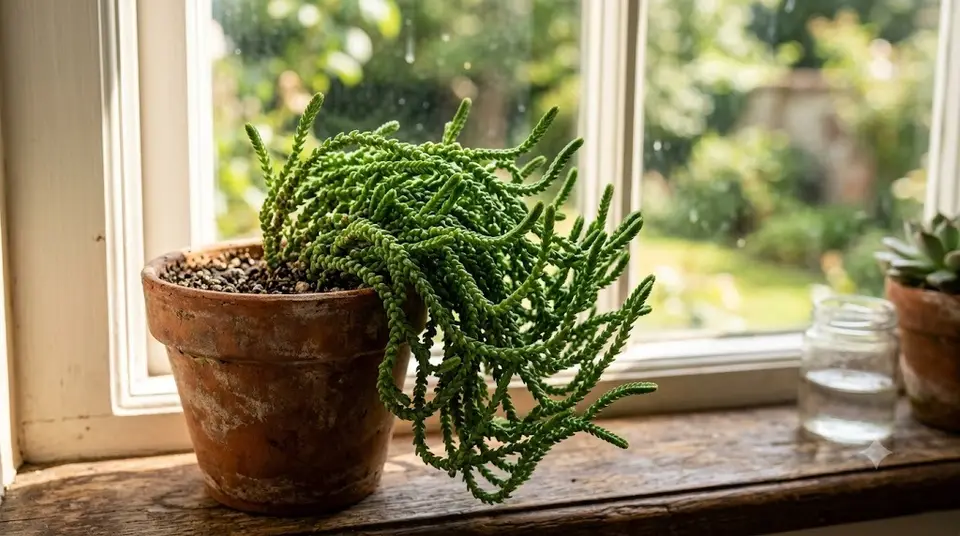
The watch chain plant is a curious crassula whose tiny, scale-like leaves stack so tightly along the stems that each one looks like a braided watch chain or a strand of green zipper.
Last reviewed: October 2026
 AI illustration
 Overview
The watch chain plant is a curious crassula whose tiny, scale-like leaves stack so tightly along the stems that each one looks like a braided watch chain or a strand of green zipper. Fast, tough and endlessly textural, it is an easy filler that adds fine detail no other succulent quite matches.
Origin & Natural Habitat
Crassula muscosa (also called Crassula lycopodioides for its clubmoss look) comes from southern Africa, growing in rocky, dry ground. It is one of the fastest and most forgiving crassulas.
Appearance
Slender, square-sectioned stems completely sheathed in minute, overlapping triangular leaves, forming dense chains that grow upright then arch and sprawl. Tiny musty-scented yellowish flowers appear along the stems in spring. Stems reach 15-30 cm and branch freely.
Why People Love It - Qualities & Benefits
People love the fine braided texture (it reads as a miniature conifer forest in arrangements), and its speed and ease. It fills gaps, trails over edges and takes shearing without complaint.
Care
Light
Bright light with some direct sun keeps the chains tight and dense - a sunny windowsill is ideal. In shade the stems stretch and the braid opens up.
Watering
Soak when the soil is fully dry, then wait; keep drier in winter. Like all crassulas it stores water and rots if kept constantly damp.
Soil & Potting
A gritty, free-draining succulent mix in a pot with drainage.
Humidity & Temperature
Ordinary dry room air suits it; keep above about 5°C. It tolerates cool, bright rooms well.
Feeding
A dilute succulent feed once or twice in the growing season is plenty.
Repotting
Repot every couple of years in spring, or simply trim and restart from cuttings - it grows fast enough to renew itself. Shearing leggy plants keeps them dense.
Propagation
Extremely easy from stem cuttings: snip a chain, callus a day or two, and push it into gritty mix - it roots in days to weeks. Dropped fragments often root on their own.
Common Problems & Pests
Overwatering rot and mealybugs hiding between the tiny leaves are the main issues. Leggy, open growth means too little light - shear and brighten. The spring flowers' musty scent divides opinion (it is normal).
Toxicity & Safety
Like its cousin the jade plant, the watch chain plant is considered mildly toxic to cats and dogs if eaten - keep it out of reach of nibbling pets.
Pros & Cons
Pros: unique braided texture, very fast and easy, shears and propagates effortlessly. Cons: mildly toxic to pets, stretches without sun, flowers smell musty.
Best Suited For
A textural filler for succulent bowls and sunny sills - great for beginners who want quick, forgiving growth with fine detail.
FAQ
Why does it smell odd in spring? The tiny flowers have a musty scent - normal, and it passes.
My chains have gone loose and leggy - can I fix them? Yes: shear back hard, give more sun, and restart the trimmings as cuttings.
Gear for growing watch chain plant (crassula muscosa)
Links go to Amazon or a partner store (such as Adagio Teas) and may earn us a commission at no extra cost to you. As an Amazon Associate we earn from qualifying purchases. We link gear types, not sponsors' picks: you choose the exact product.