Star Cactus
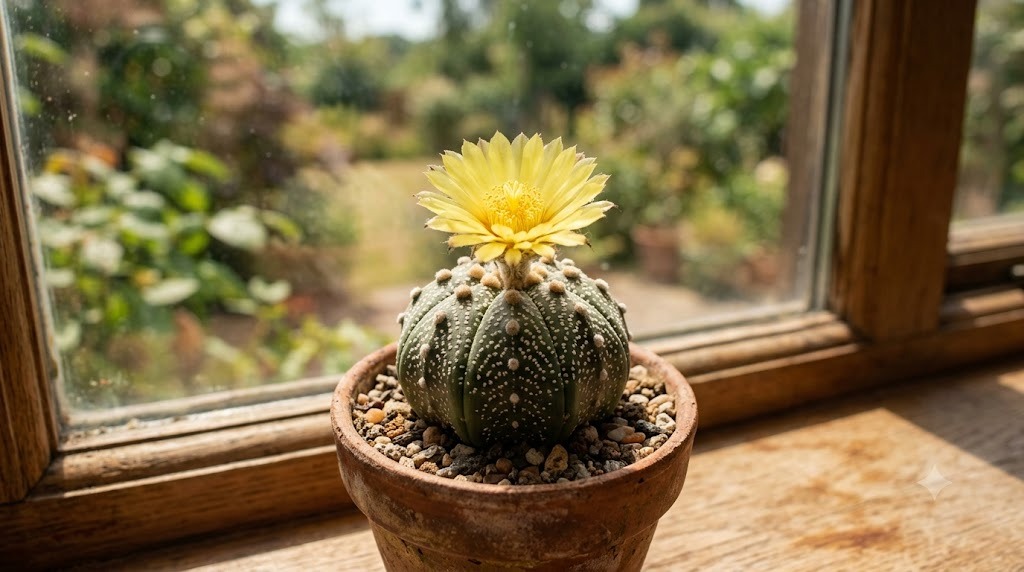
The star cactus is a small, spineless, geometric gem - a low, ribbed dome divided into neat segments like a star or a sand dollar, often speckled with tiny white flecks.
Last reviewed: September 2026
Overview
The star cactus is a small, spineless, geometric gem - a low, ribbed dome divided into neat segments like a star or a sand dollar, often speckled with tiny white flecks. Slow, tidy and utterly distinctive, it is a prized collector's cactus that is easier to keep than it looks.
Origin & Natural Habitat
Astrophytum species come from the deserts of Mexico and southern Texas, growing on flat, sun-baked ground. Some, like the sand dollar cactus (Astrophytum asterias), are rare in the wild, so buy nursery-grown plants only.
Appearance
A low, rounded, ribbed body divided into a small number of segments giving a distinct star shape from above, usually spineless or nearly so, and often dusted with small white woolly flecks. Yellow flowers with a red throat open at the crown in the growing season.
Why People Love It - Qualities & Benefits
Collectors love the clean geometry, the spineless (child- and hand-friendly) form, and the subtle speckled patterning. It is a small, slow, sculptural jewel that flowers generously for its size.
Care
Light
Bright light with some direct sun keeps the star form tight and encourages flowering - a sunny windowsill is ideal. Too little light and the neat shape distorts.
Watering
Soak, then let the soil dry out completely before watering again. Keep it nearly dry in winter. The flat, spineless body is prone to rot, so lean dry and ensure water never sits on the crown.
Soil & Potting
A very gritty, sharply draining cactus mix in a pot with drainage. Astrophytums are especially prone to root rot, so extra grit and mineral content help.
Humidity & Temperature
Warm, dry air is essential; humidity is unwelcome. Ordinary dry room air suits it; keep it warm and give a cool, dry, frost-free winter rest.
Feeding
A dilute cactus feed once or twice in the growing season is plenty; these slow plants need very little.
Repotting
Repot rarely, only when pot-bound, in spring. The spineless body is easy to handle. Take care with the sensitive roots and wait a week before watering after repotting.
Propagation
Star cacti are grown from seed, which germinates readily but grows slowly. They rarely offset, so seed (from a reputable source) is the main route - a rewarding project for the patient.
Common Problems & Pests
Root and base rot from overwatering or cold, wet soil is the main risk with this rot-prone genus. Mealybugs can appear. A shrivelled, sunken look usually signals root problems rather than simple thirst.
Toxicity & Safety
The star cactus is not toxic to people or pets, and being nearly spineless it is one of the more hand-friendly cacti - though it is still best kept out of reach of curious pets that might chew it.
Pros & Cons
Pros: striking geometry, spineless and safe to handle, flowers well for its size, compact. Cons: slow-growing, quite rot-prone so needs careful watering, grown from seed rather than cuttings.
Best Suited For
A superb choice for collectors and anyone wanting an unusual, spineless, sculptural cactus for a bright windowsill - just water it carefully.
FAQ
Is it safe that it has no spines? Yes - star cacti such as Astrophytum asterias are naturally near-spineless, which makes them pleasant to handle.
Why did mine suddenly collapse? Almost always root rot from overwatering or cold, wet soil - lean much drier.
Gear for growing star cactus
Links go to Amazon or a partner store (such as Adagio Teas) and may earn us a commission at no extra cost to you. As an Amazon Associate we earn from qualifying purchases. We link gear types, not sponsors' picks: you choose the exact product.