Sempervivum (Hens and Chicks)
Sempervivums, or hens and chicks, are tough little rosette succulents that multiply into tidy mats of offsets - the 'hen' surrounded by her 'chicks'.
Last reviewed: October 2026
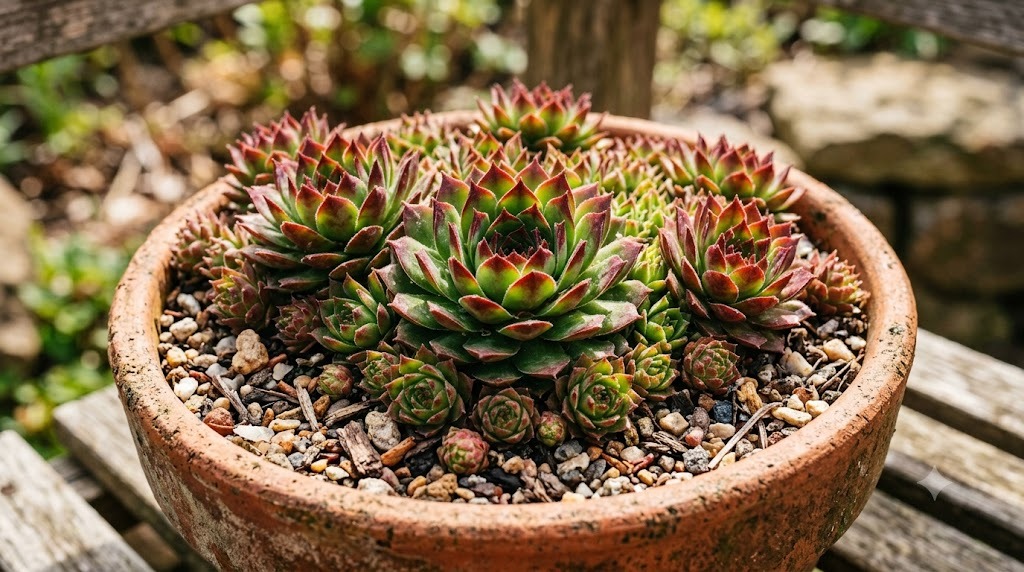
Overview
Sempervivums, or hens and chicks, are tough little rosette succulents that multiply into tidy mats of offsets - the 'hen' surrounded by her 'chicks'. Remarkably cold-hardy, they thrive outdoors in gritty pots, walls and rockeries as well as on a bright sill, and are about as easy as succulents get.
Origin & Natural Habitat
Native to the mountains of Europe, from the Alps to the Balkans, sempervivums grow on rocky, exposed slopes and are adapted to cold, sun and poor soil - which is why they are so hardy and undemanding.
Appearance
Low, tight rosettes of fleshy, pointed leaves in greens, reds, purples and bronzes, often flushing brighter in strong sun and cold. Each rosette sends out little offset rosettes ('chicks') on short runners, forming a spreading mat. The main rosette flowers once, then dies, replaced by its offsets.
Why People Love It - Qualities & Benefits
People love how cold-hardy, drought-proof and self-multiplying they are - a single plant becomes a colony. They shift colour with the seasons, suit rockeries, walls, and shallow pots, and need almost no care.
Care
Light
Give full sun for the best colour and tightest rosettes - a sunny windowsill indoors, or (better) a bright spot outdoors. Too little light and the rosettes open up, pale and stretch.
Watering
Water only when the soil is fully dry; they are extremely drought-tolerant and rot easily if kept wet. Outdoors they often need no watering at all beyond rainfall. Keep dry in winter.
Soil & Potting
A very gritty, sharply draining mix (or even mostly grit) in a pot or crevice with excellent drainage. They thrive in lean, poor soil and hate sitting wet.
Humidity & Temperature
They love fresh, airy, dry conditions and are exceptionally cold-hardy, surviving frost and snow outdoors in many climates. Indoors they prefer a cool, bright, airy spot; they dislike warm, stuffy, humid rooms.
Feeding
Little to no feeding needed - they thrive on poverty. A very dilute feed once a year at most is ample; overfeeding spoils their tight form and colour.
Repotting
Repot or divide every year or two as the mat fills its container, in spring. Simply lift and separate rooted chicks and replant them - it is that easy.
Propagation
Wonderfully easy: detach a rooted (or unrooted) chick and press it onto gritty soil, where it roots in no time. This is the classic pass-along succulent.
Common Problems & Pests
Rot from overwatering or wet winters is the main risk, especially indoors. Vine weevil can attack roots outdoors. A rosette that flowers and dies is normal - its chicks carry on. Etiolation means too little light.
Toxicity & Safety
Sempervivums are not toxic to people or pets and are among the safest succulents to grow around children and animals - though it is always best to discourage pets from chewing houseplants.
Pros & Cons
Pros: extremely hardy (frost-proof), drought-proof, self-multiplying, non-toxic, effortless. Cons: each rosette dies after flowering (offsets replace it), dislike warm humid indoor rooms, need strong light for colour.
Best Suited For
Perfect for beginners, cold-climate gardeners, rockeries, walls and low-maintenance pots - one of the easiest, hardiest, safest succulents you can grow, indoors or out.
FAQ
Can they survive frost outside? Yes - sempervivums are very cold-hardy and thrive outdoors through frost and snow in many climates.
One rosette flowered and died - is something wrong? No, that's normal; the surrounding chicks carry the plant on.
Gear for growing sempervivum (hens and chicks)
Links go to Amazon or a partner store (such as Adagio Teas) and may earn us a commission at no extra cost to you. As an Amazon Associate we earn from qualifying purchases. We link gear types, not sponsors' picks: you choose the exact product.