Prickly Pear Cactus
The prickly pear, or opuntia, is the classic flat-padded cactus, forming chains of paddle-shaped segments that can flower brightly in good light.
Last reviewed: July 2026
Overview
The prickly pear, or opuntia, is the classic flat-padded cactus, forming chains of paddle-shaped segments that can flower brightly in good light. Tough, fast-growing by cactus standards and easy to propagate, it is a rewarding and characterful desert plant for a very sunny spot.
Origin & Natural Habitat
Opuntias are native across the Americas, from the deserts of the Southwest US and Mexico to South America, and have naturalised in warm regions worldwide - so successfully that some are invasive weeds abroad. Grow yours in a pot and never plant it out where it isn't native.
Appearance
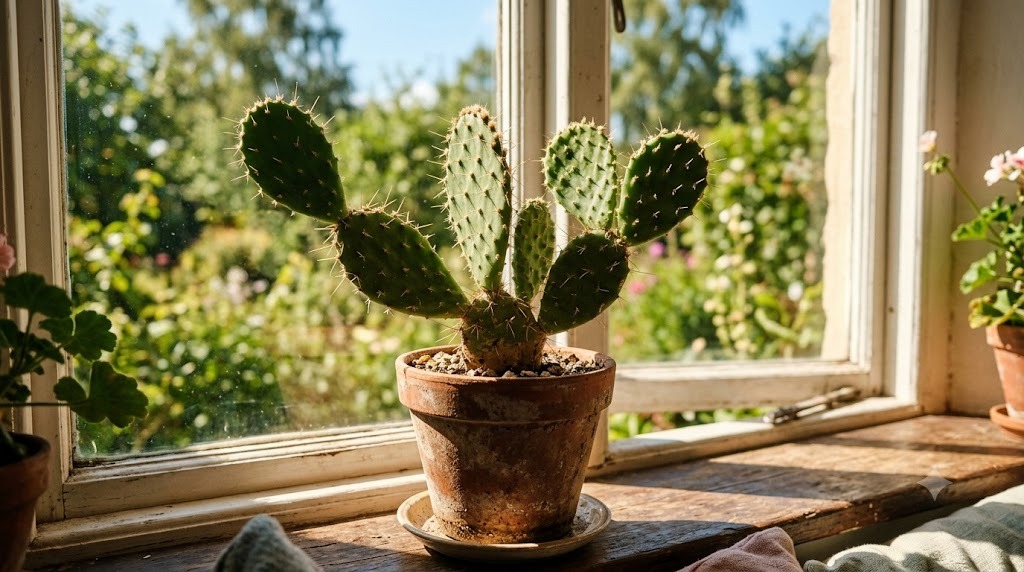
Flattened, oval, paddle-like pads (segments) growing one from another in branching chains, green to blue-green, dotted with areoles that bear spines and, crucially, tiny barbed glochids. Mature plants in strong light can produce showy yellow, orange or pink flowers.
Why People Love It - Qualities & Benefits
People love the bold, sculptural pads, the easy propagation (a single pad roots readily), and the bright flowers in a sunny position. It grows faster than most cacti, so it rewards you with visible progress.
Care
Light
Give it as much direct sun as possible - a hot, south-facing window or a summer spot outdoors. Full sun keeps the pads firm and flat and encourages flowering; too little light makes weak, pale, floppy growth.
Watering
Water when the soil has dried out completely, roughly every one to two weeks in summer, and very sparingly in winter. It stores water in its thick pads, so it tolerates drought far better than overwatering, which rots it.
Soil & Potting
A gritty, sharply draining cactus mix in a pot with a drainage hole. Opuntias are vigorous, so they appreciate a bit of nutrition in the mix, but drainage comes first.
Humidity & Temperature
Wants warm, dry air; dislikes humidity. Ordinary room air is fine. Keep frost-tender potted plants above about 5-10°C, and give a cool, dry winter rest to firm them up and encourage blooms.
Feeding
Feed with a dilute cactus fertiliser a couple of times through the growing season - opuntias are hungrier than most cacti and respond with strong growth and better flowering.
Repotting
Repot every couple of years in spring as it fills the pot. Handle with extreme care using thick gloves and folded newspaper, because the tiny glochids detach and lodge painfully in skin. Wait a week before watering after repotting.
Propagation
Propagation is easy and satisfying: twist off a healthy pad, let the cut end callus over for several days, then set it upright in dry, gritty soil. It roots in a few weeks - water only lightly until then.
Common Problems & Pests
The glochids are the main hazard to you; the plant's main enemy is rot from overwatering or cold, wet soil. Watch for soft, discoloured pads. Scale and mealybugs can appear on the pads and areoles.
Toxicity & Safety
Prickly pear is not toxic, but the barbed glochids are a real irritant that embed in skin and are hard to remove, so handle only with thick protection and keep well away from children and pets. Never let a pet brush against it.
Pros & Cons
Pros: fast-growing for a cactus, easy to propagate, bold pads and bright flowers in sun. Cons: the barbed glochids are genuinely irritating, needs lots of light, can get large.
Best Suited For
Great for anyone with a very sunny window who wants a fast, characterful, easy-to-multiply cactus - just site it where no one will brush against the glochids.
FAQ
What are the tiny hairs that got stuck in my skin? Glochids - fine barbed bristles. Remove with tape or tweezers, and always handle the plant with thick gloves.
Can I grow a new plant from a pad? Yes - callus a cut pad for a few days, then root it in dry gritty soil.
Gear for growing prickly pear cactus
Links go to Amazon or a partner store (such as Adagio Teas) and may earn us a commission at no extra cost to you. As an Amazon Associate we earn from qualifying purchases. We link gear types, not sponsors' picks: you choose the exact product.