Old Man Cactus
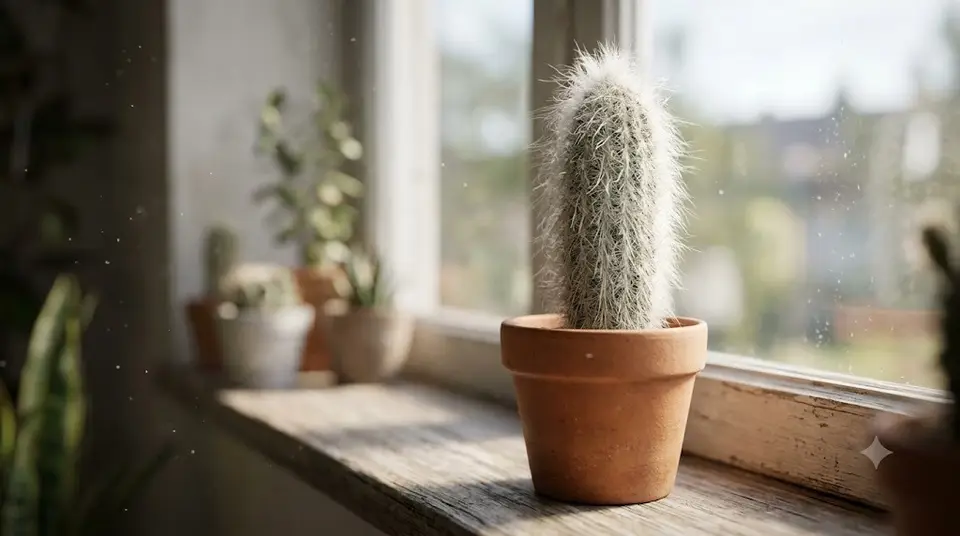
The old man cactus is an unmistakable columnar cactus draped in long, shaggy white hairs, like the flowing beard of an old man.
Last reviewed: July 2026
 AI illustration
 Overview
The old man cactus is an unmistakable columnar cactus draped in long, shaggy white hairs, like the flowing beard of an old man. Those wispy hairs are a desert adaptation to shade the plant from fierce sun - but sharp spines hide beneath them. Slow, striking and surprisingly easy, it is a real character for a bright windowsill.
Origin & Natural Habitat
Cephalocereus senilis is native to a small area of Guanajuato and Hidalgo in eastern Mexico, where it grows tall and slow on sun-baked limestone slopes. It is endangered in the wild, so any plant you buy should be nursery-grown.
Appearance
An upright, ribbed green column almost hidden beneath a dense coat of long, shaggy, silvery-white hairs (modified spines) that give it its whiskery, old-man look. Beneath the soft hairs are sharp yellowish spines. It grows slowly as a single column and flowers only when very old and tall - not something to expect on a windowsill plant.
Why People Love It - Qualities & Benefits
People love the extraordinary, unmistakable white-haired look, its slow and forgiving nature, and its presence as a living desert curiosity. It is one of the most characterful cacti you can grow.
Care
Light
Give the brightest, sunniest position you have - the white hairs evolved to cope with intense sun, and strong light keeps them dense and the column firm. Poor light gives pale, thin growth and a thinner coat of hair.
Watering
Soak thoroughly, then let the soil dry out completely before watering again, roughly fortnightly in summer and rarely in winter. Water into the soil rather than over the hairs, which can trap water and encourage rot. Err dry.
Soil & Potting
A gritty, free-draining cactus mix, ideally with added limestone or grit to suit its alkaline home, in a pot with drainage. Sharp drainage is essential.
Humidity & Temperature
Warm, dry air is essential; humidity mats the hairs and invites rot. Ordinary dry room air is ideal; keep it above about 10°C and give a cool, dry winter rest.
Feeding
A dilute cactus feed once or twice in the growing season is plenty for this slow plant. Do not overfeed.
Repotting
Repot rarely, only when pot-bound, in spring, handling with thick folded card - the soft hairs hide genuinely sharp spines. Choose a pot only slightly larger and wait a week before watering.
Propagation
Old man cacti are usually grown from seed, as they rarely branch or offset. Seed is slow but reliable; from a reputable source, never the wild.
Common Problems & Pests
Overwatering rot is the main danger, made worse if water sits in the hairs. The hairs can yellow, mat or collect dust over time; keep them dry and gently groom if needed. Mealybugs can hide in the coat. To keep the hairs white and full, strong light and dry conditions matter most.
Toxicity & Safety
The old man cactus is not toxic to people or pets, but sharp spines hide beneath the soft-looking hairs, so keep it out of reach of children and animals and never handle it bare-handed thinking the fluff is safe.
Pros & Cons
Pros: extraordinary, unmistakable look, slow and forgiving, a real conversation piece. Cons: sharp spines hidden under the hairs, hairs can mat or discolour, slow and won't flower indoors, needs strong light and dry air.
Best Suited For
A striking, characterful choice for anyone with a very sunny window who wants an unusual, low-care desert curiosity - just remember the soft hairs conceal sharp spines.
FAQ
Are the white hairs soft and safe to touch? The hairs are soft, but sharp spines hide beneath them, so handle with care.
How do I keep the hair white? Strong light and dry conditions; water into the soil, not over the hairs, and gently groom out dust.
Gear for growing old man cactus
Links go to Amazon or a partner store (such as Adagio Teas) and may earn us a commission at no extra cost to you. As an Amazon Associate we earn from qualifying purchases. We link gear types, not sponsors' picks: you choose the exact product.