Old Lady Cactus
The old lady cactus is a plump, globe-shaped Mammillaria wrapped in a soft-looking veil of fine white hairs, giving it its affectionate name.
Last reviewed: July 2026
Overview
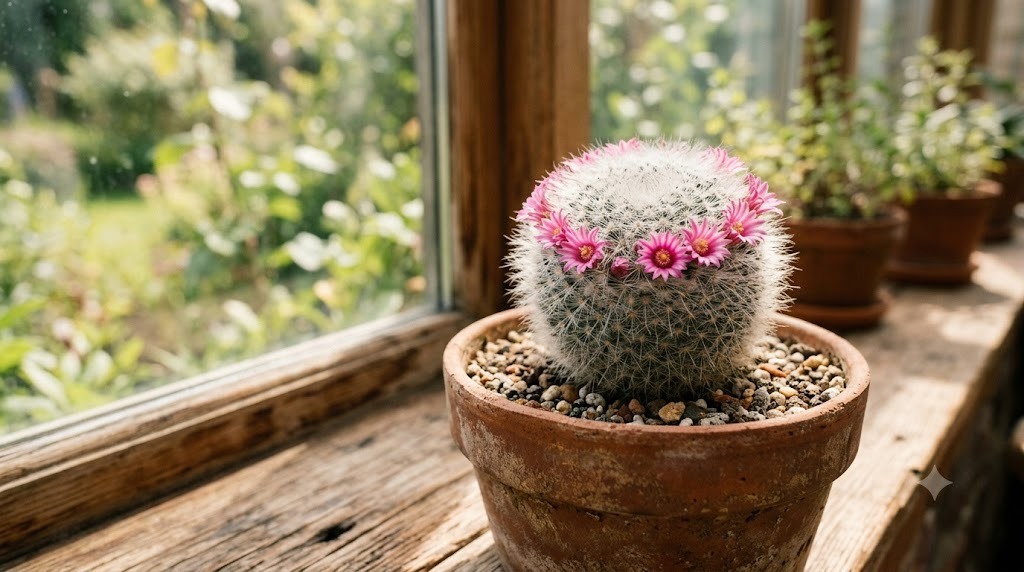
The old lady cactus is a plump, globe-shaped Mammillaria wrapped in a soft-looking veil of fine white hairs, giving it its affectionate name. Beneath the fluff it is a tough, easy desert cactus that rings itself with a crown of deep-pink flowers in spring.
Origin & Natural Habitat
Mammillaria hahniana is native to central Mexico, growing on rocky, sun-drenched limestone slopes. It is a long-standing favourite in cultivation for its distinctive woolly appearance and reliable flowering.
Appearance
A rounded, blue-green body densely covered in white spines and long white hairs that give a soft, whiskery, silvery look. In spring a neat ring of small, deep-pink to purple flowers opens around the crown; older plants form clusters of heads.
Why People Love It - Qualities & Benefits
Growers love the charming woolly coat, the reliable ring of bright flowers, and its easy, forgiving nature. It looks delicate but is genuinely tough.
Care
Light
Bright light with some direct sun keeps it compact, well-clothed in white hairs and flowering - a sunny windowsill is ideal. Poor light gives soft, stretched growth and no flowers.
Watering
Soak, then let the soil dry out fully before watering again. Keep nearly dry in winter - a cool, dry rest sets the spring flowers. Overwatering, especially with water trapped in the woolly top, invites rot.
Soil & Potting
A gritty, free-draining cactus mix in a pot with drainage. Good drainage is important as the clustering roots rot easily if kept wet.
Humidity & Temperature
Warm, dry air suits it; humidity is unwelcome and can mat the white hairs and encourage rot. Ordinary dry room air is ideal; give a cool, dry, frost-free winter.
Feeding
A dilute cactus feed once or twice in the growing season supports the flowering. Little and infrequent is right.
Repotting
Repot every couple of years in spring when the cluster fills the pot. Handle gently with folded card; try to water around the base rather than over the hairy crown.
Propagation
Easy from offsets: remove a pup, callus for a day or two, and root on gritty soil. It also grows from seed. Splitting a clustered plant at repotting is straightforward.
Common Problems & Pests
Overwatering rot is the main danger, made worse if water sits in the wool. Mealybugs hide among the hairs and can be tricky to spot; check regularly and dab with alcohol. No flowers usually means too little light or no cool winter rest.
Toxicity & Safety
The old lady cactus is not toxic to people or pets, but its spines beneath the soft hairs can prick, so keep it out of reach of children and animals.
Pros & Cons
Pros: charming woolly look, reliable flowers, tough and easy, easy to propagate. Cons: hairs can trap water and hide pests, needs a cool dry winter to bloom, spiny under the fluff.
Best Suited For
A lovely, characterful, easy cactus for a sunny windowsill - great for beginners who want something a bit different that still flowers reliably.
FAQ
Can I mist the white hairs to clean them? Avoid it - trapped water encourages rot; keep the plant dry and let air do the cleaning.
Why won't it flower? More light and a cool, dry winter rest are usually what's missing.
Gear for growing old lady cactus
Links go to Amazon or a partner store (such as Adagio Teas) and may earn us a commission at no extra cost to you. As an Amazon Associate we earn from qualifying purchases. We link gear types, not sponsors' picks: you choose the exact product.