Ice Plant
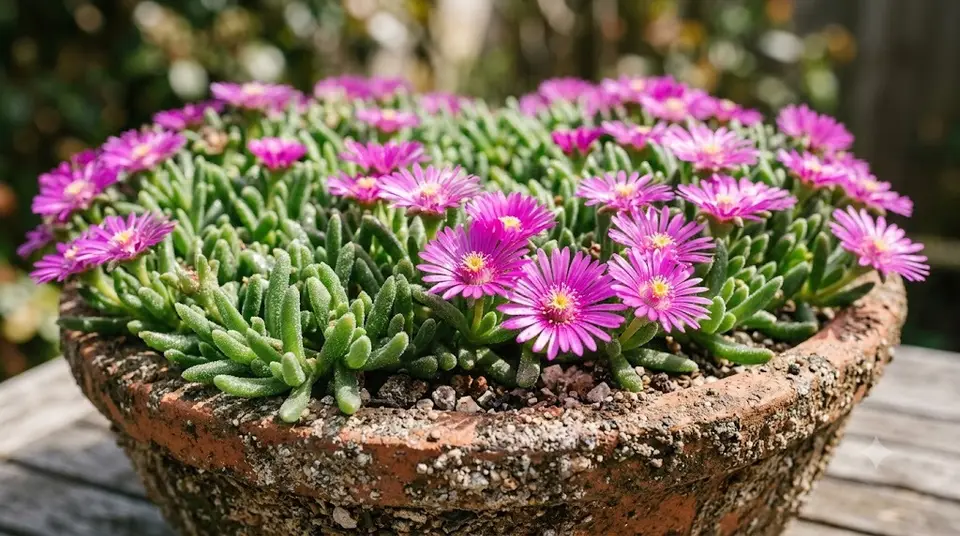
The ice plant is a low, spreading succulent smothered, in summer, in brilliant daisy-like flowers so vivid they seem to shimmer - in magenta, pink, orange and yellow.
Last reviewed: October 2026
 AI illustration
 Overview
The ice plant is a low, spreading succulent smothered, in summer, in brilliant daisy-like flowers so vivid they seem to shimmer - in magenta, pink, orange and yellow. Remarkably cold-hardy for a succulent, it is as happy tumbling over a sunny wall or rockery outdoors as on a bright windowsill, and it is one of the easiest, most rewarding flowering succulents you can grow.
Origin & Natural Habitat
Delosperma species (the hardy ice plants) come from the mountains and grasslands of southern Africa, where many endure cold, sun and poor, sharp-draining soil - which is why they are unusually frost-tolerant for succulents and thrive outdoors in many climates.
Appearance
A low, spreading mat of narrow, plump, fleshy green leaves (sometimes glistening as if dusted with ice crystals, hence the name), covered in summer with masses of brilliant, daisy-like flowers in dazzling magenta, pink, orange, red or yellow that open in the sun.
Why People Love It - Qualities & Benefits
People love the dazzling, shimmering summer flowers, the tough, drought- and cold-proof nature, and how easily it spreads to carpet a sunny spot. It is a superb, low-care flowering succulent for rockeries, walls, containers and bright sills.
Care
Light
Full sun is essential - it is what opens those brilliant flowers and keeps the mat tight. A very sunny windowsill indoors, or (better) a bright, hot spot outdoors. In shade it sprawls and barely flowers.
Watering
Water only when the soil is fully dry; it is very drought-tolerant and rots if kept wet. Outdoors it often needs little beyond rainfall once established. Keep dry in winter, especially in cold, damp climates.
Soil & Potting
A very gritty, sharply draining mix (or lean, stony ground outdoors) with excellent drainage. Wet, heavy soil in winter is its main enemy; sharp drainage lets it survive the cold.
Humidity & Temperature
Loves fresh, airy, dry conditions and, unusually for a succulent, tolerates real cold - many delospermas are frost-hardy outdoors. Indoors give it a cool, bright, airy spot; it dislikes warm, stuffy rooms.
Feeding
Little feeding needed - a very dilute feed once or twice in the growing season is ample. It thrives on lean, poor soil.
Repotting
Repot or divide every year or two as the mat spreads, in spring. It is easy to lift and split, and rooted pieces re-establish quickly.
Propagation
Very easy from stem cuttings or division: a piece of stem pressed onto gritty soil roots readily, and spreading mats can simply be divided. One plant quickly becomes many.
Common Problems & Pests
Rot from wet, cold soil in winter is the main risk, especially in damp climates - sharp drainage is the answer. Aphids and mealybugs can appear. Few or no flowers usually means too little sun.
Toxicity & Safety
The ice plant is not toxic to people or pets and is one of the safer flowering succulents to grow around children and animals, though it is best to discourage pets from chewing it.
Pros & Cons
Pros: dazzling shimmering summer flowers, unusually cold-hardy, drought-proof, spreads easily, non-toxic. Cons: needs full sun to flower, rots in wet winter soil, dislikes warm stuffy indoor rooms.
Best Suited For
Perfect for sunny rockeries, walls, containers and bright cool windowsills, and for cold-climate gardeners wanting a hardy, brilliant flowering succulent - one of the easiest and showiest you can grow.
FAQ
Why won't the flowers open? Ice plant flowers need full sun to open - a shady or dull spot keeps them closed.
Can it survive frost outside? Many hardy delospermas can - given sharp drainage so the roots aren't sitting wet and cold.
Gear for growing ice plant
Links go to Amazon or a partner store (such as Adagio Teas) and may earn us a commission at no extra cost to you. As an Amazon Associate we earn from qualifying purchases. We link gear types, not sponsors' picks: you choose the exact product.