Gymnocalycium (Chin Cactus)
Gymnocalyciums are rounded, easy-going desert cacti named for their smooth, spineless flower buds ('naked calyx').
Last reviewed: July 2026
Overview
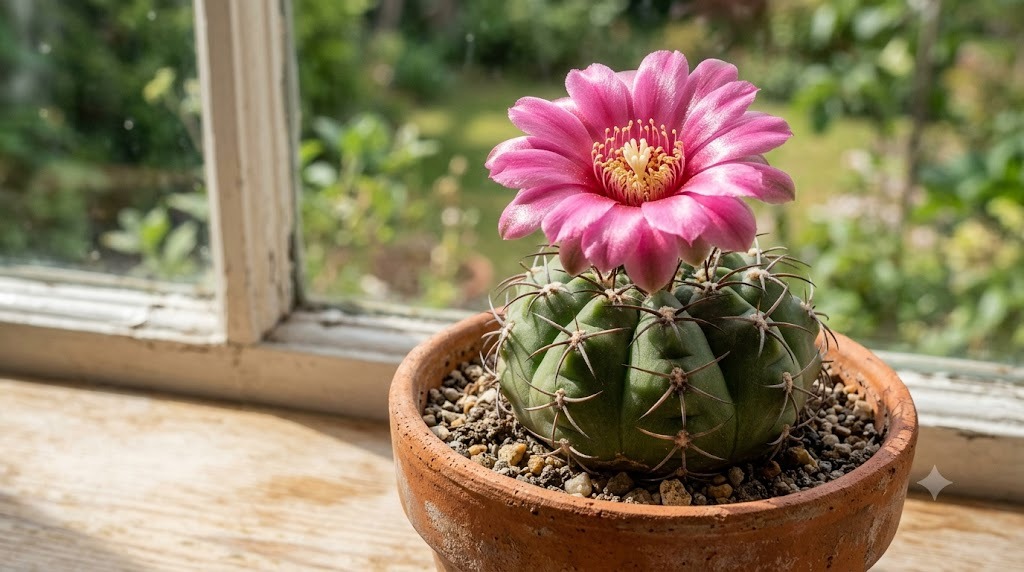
Gymnocalyciums are rounded, easy-going desert cacti named for their smooth, spineless flower buds ('naked calyx'). Tolerant of a little more shade than most cacti and free with their large, delicate flowers, the chin cacti are among the most forgiving and rewarding globular cacti for a windowsill.
Origin & Natural Habitat
The genus comes from South America - Argentina, Bolivia, Paraguay, Uruguay and Brazil - where the plants grow among grasses and shrubs that give them some shade. That habit makes them more shade-tolerant than open-desert cacti.
Appearance
Squat, globular, ribbed green to grey-green bodies, the ribs often notched into 'chin'-like bumps beneath the areoles, with modest curved spines. The flowers, borne near the crown, are relatively large, satiny, and range from white and pink to green and red, opening from those distinctively smooth, scaly buds.
Why People Love It - Qualities & Benefits
People love how easy and forgiving they are, their tolerance of less-than-perfect light, their reliable and delicate flowers, and the huge variety of species and forms. They are an ideal, low-drama globular cactus.
Care
Light
Bright light suits them, but unlike most cacti they appreciate a little shade from the fiercest midday sun, reflecting their grassland home - a bright windowsill out of scorching direct glare is ideal. Some direct sun still helps flowering.
Watering
Soak, then let the soil dry out completely before watering again, roughly fortnightly in summer and rarely in winter. Keep drier and cooler in winter to set flowers. Overwatering rots them, so err dry.
Soil & Potting
A gritty, free-draining cactus mix in a pot with drainage. Sharp drainage keeps the rounded roots healthy; add pumice or grit if your mix is heavy.
Humidity & Temperature
Warm, dry air suits them; they dislike humidity. Ordinary dry room air is fine. Give a cool, dry, frost-free winter rest to encourage the spring and summer flowers.
Feeding
A dilute cactus feed once or twice in the growing season is plenty; these easy plants need little feeding.
Repotting
Repot every couple of years in spring when pot-bound, handling gently with folded card. Some species offset and can be divided at repotting.
Propagation
Grow from seed, which is easy and gives the widest variety, or remove and root offsets from clustering species after callusing. Seed-grown plants often flower within a few years.
Common Problems & Pests
Overwatering rot is the main risk. Red spider mite can bronze the tops of some species; mealybugs can appear. Reddening or bronzing of the body is often just a sun response, not a problem.
Toxicity & Safety
Gymnocalyciums are not toxic to people or pets, but their spines can prick, so keep them out of reach of children and animals and handle with a little care.
Pros & Cons
Pros: easy and forgiving, tolerate less-than-perfect light, flower reliably, huge variety of forms. Cons: still rot if overwatered, need a cool dry winter to bloom well, spines can prick.
Best Suited For
An excellent choice for beginners and for windows that aren't blazing all day - one of the most forgiving and varied globular cacti to grow and collect.
FAQ
Do chin cacti really tolerate some shade? Yes - from their grassland home they cope with less intense light than most cacti, though some sun helps flowering.
Why is my gymnocalycium turning reddish? Usually a harmless response to strong light; only worry if the body also softens or shrivels.
Gear for growing gymnocalycium (chin cactus)
Links go to Amazon or a partner store (such as Adagio Teas) and may earn us a commission at no extra cost to you. As an Amazon Associate we earn from qualifying purchases. We link gear types, not sponsors' picks: you choose the exact product.