Golden Barrel Cactus
The golden barrel is a plump, globe-shaped cactus wrapped in dense golden-yellow spines, one of the most popular and rewarding desert cacti to grow.
Last reviewed: July 2026
Overview
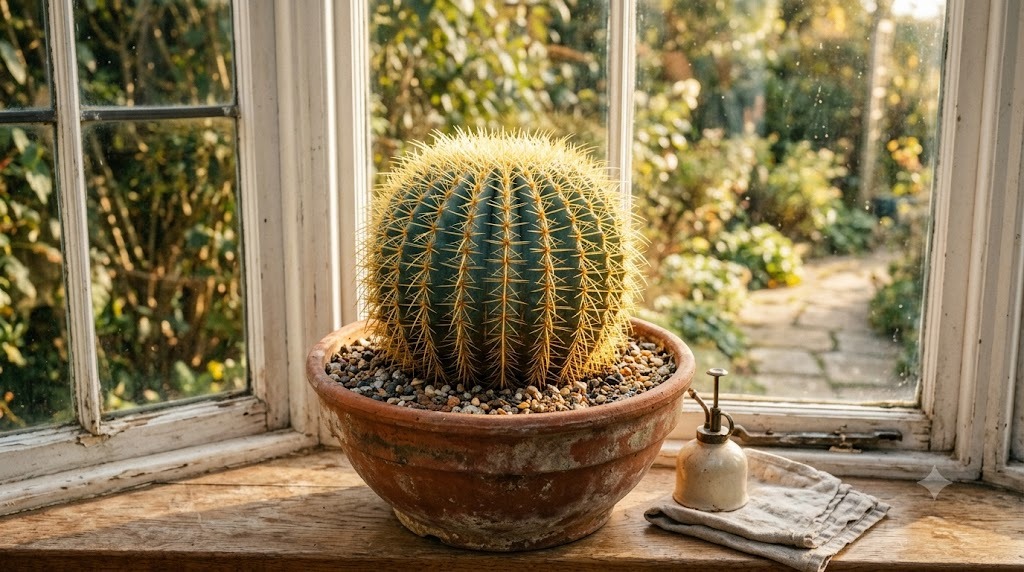
The golden barrel is a plump, globe-shaped cactus wrapped in dense golden-yellow spines, one of the most popular and rewarding desert cacti to grow. Slow but steady, it forms a perfect ribbed ball that becomes a glowing centrepiece on a sunny windowsill.
Origin & Natural Habitat
Native to a small area of central Mexico, where it is actually endangered in the wild, the golden barrel is now widely nursery-grown around the world. Buy only cultivated plants to protect the wild populations.
Appearance
A rounded, ribbed, blue-green globe densely armed with stiff, golden-yellow spines along the ridges, often with a crown of woolly fuzz at the top. Young plants are ball-shaped; with age and size they can become slightly barrel-like, hence the name.
Why People Love It - Qualities & Benefits
Growers love it for its neat, sculptural symmetry and that glowing golden armour, which catches the light beautifully. It is tough, forgiving of neglect, and one of the easiest 'proper' cacti to keep looking good.
Care
Light
Wants the brightest light you can give - a sunny, south-facing window with several hours of direct sun keeps the spines dense and golden and the body tight and round. In poor light it dulls and distorts.
Watering
Soak thoroughly, then let the soil dry out completely before watering again, roughly every couple of weeks in summer and only occasionally in winter. It stores plenty of water in its fat body, so err dry - rot from overwatering is the main risk.
Soil & Potting
A gritty, free-draining cactus mix is essential, in a pot with drainage. Add extra pumice or perlite if your mix holds water. The roots must dry out between waterings.
Humidity & Temperature
Prefers warm, dry air and dislikes humidity. Normal room air suits it; keep it above about 10°C and give it a cooler, drier winter rest to encourage the round shape and, on mature plants, flowers.
Feeding
Feed lightly with a dilute cactus fertiliser once or twice in the growing season only. It is adapted to lean soil, so little and infrequent feeding is all it needs.
Repotting
Repot every few years in spring when pot-bound, handling with thick gloves and folded card because of the dense spines. Choose a pot only slightly larger, and wait a week before watering after repotting.
Propagation
Golden barrels are usually grown from seed, as they rarely offset. Seed-grown plants are slow but produce the best, most symmetrical bodies. Occasionally an old plant produces pups that can be removed and rooted.
Common Problems & Pests
Overwatering causes soft, brown rot at the base - the classic killer. Mealybugs hide among the spines; dab with alcohol. Corky brown patches low down are often just age. Poor light causes pale, uneven, stretched growth.
Toxicity & Safety
The golden barrel is not toxic to people or pets, but its dense, sharp spines can cause nasty injuries, so site it well away from children, pets and walkways. Handle only with thick protection.
Pros & Cons
Pros: beautiful golden symmetry, very tough and drought-tolerant, easy and long-lived. Cons: slow-growing, extremely spiny, needs strong light to stay dense and round.
Best Suited For
Ideal for anyone wanting a classic, striking, low-care cactus for a bright sunny spot - a superb beginner 'trophy' cactus, as long as it gets enough sun.
FAQ
Why is my golden barrel going pale and lopsided? Not enough light - move it to your sunniest window.
How often should I water it? Only when the soil is completely dry, roughly fortnightly in summer, rarely in winter.
Gear for growing golden barrel cactus
Links go to Amazon or a partner store (such as Adagio Teas) and may earn us a commission at no extra cost to you. As an Amazon Associate we earn from qualifying purchases. We link gear types, not sponsors' picks: you choose the exact product.